Gertrude Lawrence
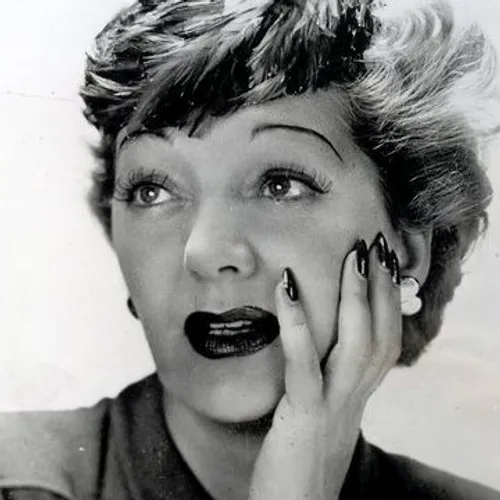
An English actress, singer, dancer and musical comedy performer known for her stage appearances in London's West End and on New York's Broadway.
Gertrude Lawrence was a luminous performer whose talents transcended the boundaries of theater, radio, and early television. Born in London in 1898, she would become one of the most captivating performers of her era, known for her magnetic stage presence and versatile artistic abilities.
Early Life and Theatrical Beginnings
Gertrude Alice Dagmar Klasen was born into a challenging family environment. Her father, Arthur Lawrence, was a performer who struggled with heavy drinking, which led to her mother Alice leaving him shortly after Gertrude's birth. Her first taste of performance came in 1904 when, at her mother's urging, she sang at a concert and was rewarded with a prize. Her theatrical training began early when her mother secured her a role in a Christmas pantomime in 1908. It was here that she was introduced to Italia Conti, who recognized her potential and offered her free lessons. Lawrence quickly developed her skills, joining Conti's production and adopting her father's professional surname.
Radio and Broadcasting Career
Lawrence's transition into radio was a natural extension of her theatrical career. In 1943, she hosted a weekly series of American radio shows that featured diverse content, including guest discussions and adaptations of Hollywood films. Her radio work demonstrated her versatility as a performer, showcasing her ability to engage audiences through sound alone. Her broadcasting career wasn't limited to radio. She was also a pioneer in early television, participating in groundbreaking broadcasts. In 1938, she was part of the first full-length play live-broadcast on television, performing Susan and God for NBC. This historic moment highlighted Lawrence's adaptability in emerging media technologies.
Professional Achievements and Collaborations
Lawrence's most notable professional relationship was with playwright Noël Coward. They starred together in Private Lives in 1930-31, a production that triumphed both in the UK and on Broadway. Her collaboration with Coward was considered one of the most important professional relationships of her career. Her talents extended beyond stage and radio. In 1941, she starred in Lady in the Dark, a musical that stretched her performing abilities. Her performance was so remarkable that critics called her "the greatest feminine performer in the American theatre".
Later Career and Legacy
In her later years, Lawrence continued to innovate. In 1951, she became a faculty member at Columbia University's School of Dramatic Arts, teaching an advanced class in role and scene study. Her passion for nurturing talent was evident in her approach to teaching, hoping to discover and encourage emerging performers. Tragically, Lawrence's life was cut short. She passed away in 1952, leaving behind a remarkable legacy. She was buried in the champagne-colored gown from The King and I, symbolizing her enduring connection to the stage.
Conclusion
Gertrude Lawrence was more than just a performer; she was a pioneering artist who embraced new media and continually pushed the boundaries of her craft. Her influence extended across theater, radio, and early television, making her a true icon of 20th-century entertainment.
Works and Appearances
Radio
- Weekly American radio shows (1943)
- Various guest and adaptation programs
Television
- Susan and God live broadcast (1938)
- NBC productions
- Various interview and variety shows
Theater
- Private Lives with Noël Coward (1930-31)
- Lady in the Dark (1941)
- The King and I
Film
- The Battle of Paris (1929)
- Aren't We All? (1932)
- Stage Door Canteen (1943, uncredited)
- The Glass Menagerie (1950)
Teaching
- Columbia University, School of Dramatic Arts (1951-1952)
- Class 107: Study of Roles and Scenes