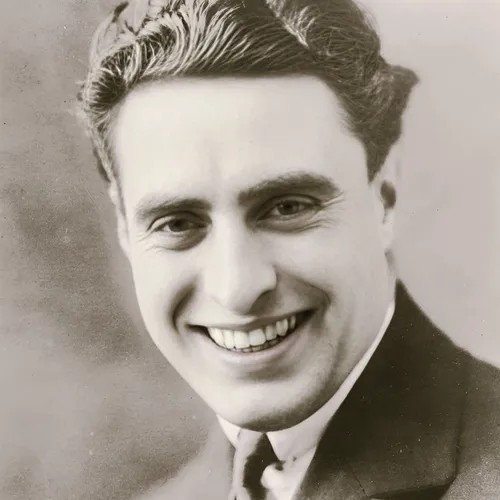
George Walsh
An American actor of the silent era. He appeared in 81 films between 1914 and 1936.
In the golden age of early Hollywood, few actors embodied the dynamic spirit of silent film as completely as George Walsh. A remarkable athlete turned actor, Walsh captivated audiences with his physical prowess and magnetic screen presence during the silent film era.
Early Life and Athletic Beginnings
Born on March 16, 1889, in New York City, George Frederick Walsh emerged from a family with creative roots. His father, Thomas W. Walsh, was an English immigrant clothing manufacturer, and his mother, Elizabeth T. Bruff, came from Irish Catholic immigrant stock. Most notably, he was the brother of renowned film director Raoul Walsh. Walsh's athletic talents were evident from his high school years. He excelled in track and field and demonstrated exceptional skills as a running back and punter in football. His athletic abilities would later become a defining characteristic of his film career, earning him nicknames like "the Laughing Athletic Thunderbolt" and "the Screen's Greatest Athlete".
Entry into Motion Pictures
Walsh's journey into cinema was somewhat serendipitous. While recuperating from an injury in California in late 1914, he entered motion pictures through his brother Raoul's connections. His first role was as an extra in a film, and he quickly progressed from bit parts to more significant roles. His breakthrough came with small but notable roles in films like The Fencing Master (1915) and D.W. Griffith's masterpiece Intolerance (1916). During this period, he also met his first wife, actress Seena Owen, with whom he had a daughter named Patricia.
Rise to Stardom in Silent Cinema
Walsh's career truly took off when he joined Fox Studios, where he became a serious rival to other leading actors of the time. His films were characterized by daring stunts, dramatic pursuits, and crowd-pleasing happy endings. He perfected his comedy timing and became adept at generating laughs. A significant moment in his career was his role as Don Diego opposite Mary Pickford in Rosita (1923), where global audiences saw "America's Sweetheart" receive her first grown-up kiss from Walsh. He was even initially selected to portray Judah Ben-Hur in the planned adaptation of the classic story.
Transition and Later Career
However, Walsh's career was not without challenges. He was unexpectedly replaced in the Ben-Hur production, a devastating blow that left him frustrated. Despite this setback, he continued working, appearing in various independent productions and eventually transitioning to talkies. His brother Raoul revived his career by casting him in Me and My Gal (1932), where Walsh played a criminal. For the next four years, he worked steadily as a supporting actor before retiring as he approached fifty.
Legacy and Retirement
After Hollywood, Walsh returned to his earlier passion of horse training and breeding. He trained horses for his brother Raoul and enjoyed a peaceful retirement. In the 1940s, he remarried and lived contentedly, occasionally being sought out by historians and journalists for Hollywood stories. George Walsh passed away on June 13, 1981, in Pomona, California, at the age of 92, leaving behind a legacy of approximately 80 film productions that spanned the early days of American cinema.
Works and Appearances
Radio
- Gunsmoke (1952–1962
Film (Selected Filmography)
- Intolerance (1916)
- Rosita (1923)
- Me and My Gal (1932)
- Final film: Unnamed production in 1936
Other Media
- Horse training and breeding post-Hollywood career