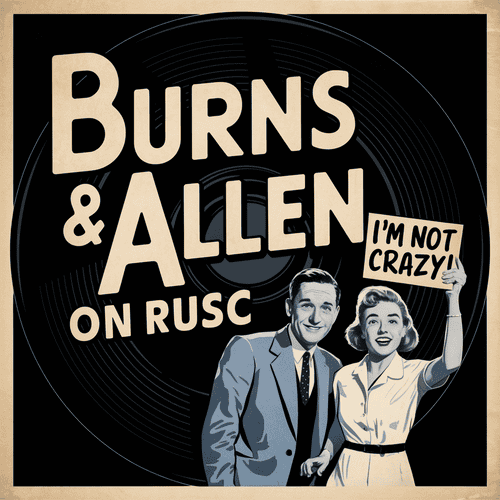
George Burns and Gracie Allen
In the golden age of radio, few comedy duos captured the hearts of America quite like George Burns and Gracie Allen. Their unique comedic partnership, spanning vaudeville, radio, film, and television, revolutionized entertainment with their distinctive style of humor and unparalleled chemistry. For over four decades, they delighted audiences with Gracie's endearingly nonsensical logic and George's deadpan reactions, creating a comedy formula that would influence generations of performers.
The Birth of a Comedy Partnership
George Burns and Gracie Allen first met in 1922, beginning a professional and personal relationship that would become legendary in American entertainment. Initially performing in vaudeville, they quickly discovered their comedic potential when audiences began laughing more at Gracie's seemingly nonsensical straight lines. They strategically adjusted their act, with Burns playing the straight man and Allen portraying a delightfully confused character that became her trademark. Their early years were challenging. Burns candidly admitted they were not immediate headliners, often receiving fourth billing in eight-act shows. However, their persistence and unique comedic approach gradually won over audiences. Their breakthrough came with their first film appearances, particularly in Paramount shorts, which helped establish their national reputation.
Radio Stardom and Innovative Comedy
The duo's radio career began in 1929 with a BBC broadcast in London, followed by various network shows. Their big break came with The Adventures of Gracie, which later became The George Burns and Gracie Allen Show. They pioneered innovative comedic techniques, including running gags that became cross-network phenomena. One memorable stunt involved Gracie's fictional search for her "lost brother," which became a nationwide sensation. In 1941, recognizing their comedy needed evolution, Burns transformed their radio format into a more situational comedy that incorporated their real-life marriage. This strategic shift not only maintained their popularity but actually increased their ratings. Their radio show featured a remarkable ensemble of performers and became a staple of American entertainment, running until May 17, 1950.
Television Triumph and Later Years
Transitioning seamlessly to television in 1950, Burns and Allen created The George Burns and Gracie Allen Show, which ran for eight successful seasons. The show was groundbreaking, with George often breaking the fourth wall by commenting directly to the audience. Their television series received 11 Emmy Award nominations and became a beloved fixture of 1950s entertainment. Gracie Allen retired in 1958, with their final show filmed on June 4th of that year. Burns attempted to continue the show without her, but it lasted only one season. Allen's retirement was well-deserved; Burns noted the immense mental effort required to deliver her famously convoluted comedic lines.
Enduring Legacy and Impact
The comedy team's influence extended far beyond their performances. Burns continued working well into his later years, winning an Oscar at 79 and becoming a beloved elder statesman of comedy. Their contributions were recognized through numerous honors, including induction into the Radio Hall of Fame in 1994. Their legacy is perhaps best exemplified by their philanthropic work. Burns was particularly known for his contributions to Cedars-Sinai Medical Center in Los Angeles, where roads were named in their honor and a research institute was dedicated.
Works and Appearances
Radio
- The Adventures of Gracie (1934-1935)
- The Burns and Allen Show (1936-1950)
- Maxwell House Coffee Time (1945-1949)
Television
- The George Burns and Gracie Allen Show (1950-1958)
Film
- Lambchops (1929)
- The Big Broadcast (1932)
- A Damsel in Distress (1937)
- Honolulu (1939)
Notable Awards
- Radio Hall of Fame (1994)
- 11 Emmy Award Nominations
- George Burns' Oscar for The Sunshine Boys (1975)
Their unique comedic style, enduring partnership, and groundbreaking performances ensure that George Burns and Gracie Allen remain immortal figures in American entertainment history.