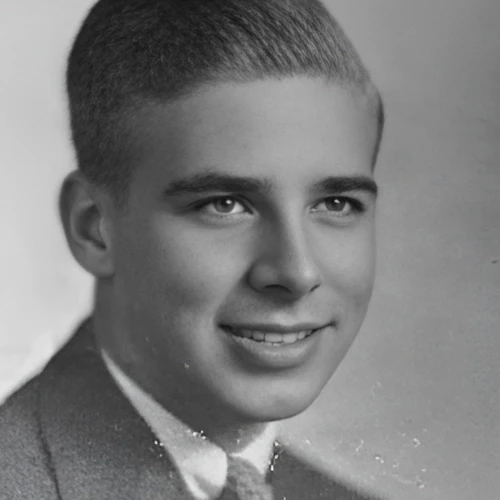
Gene Roddenberry
Gene Roddenberry's journey from a young radio script writer to the visionary creator of Star Trek is a testament to his remarkable storytelling abilities and innovative spirit. Long before he imagined interstellar voyages, Roddenberry honed his craft in the gritty world of radio westerns, laying the groundwork for his future groundbreaking science fiction narratives.
Early Influences and Writing Beginnings
Born in El Paso, Texas, in 1921, Eugene Wesley Roddenberry developed a passion for storytelling early in life. Growing up in Los Angeles, he devoured pulp fiction magazines like Astounding Science Fiction and dreamed of worlds beyond the ordinary. His early career was anything but straightforward – a mix of military service, commercial piloting, and law enforcement that would ultimately shape his unique narrative perspective. After surviving three plane crashes, Roddenberry transitioned to writing, initially working for the Los Angeles Police Department while pursuing his creative ambitions. Radio and television became his primary mediums, with radio westerns playing a crucial role in his professional development.
The Western that Shaped a Sci-Fi Legacy
Have Gun – Will Travel became Roddenberry's most significant radio writing experience. He penned an impressive 24 episodes for the series, which ran from 1957 to 1963. The show's protagonist, Paladin, was a sophisticated gunslinger who preferred intellectual solutions to violent confrontations – a character archetype that would later influence Roddenberry's approach to science fiction storytelling. Roddenberry's episodes for Have Gun – Will Travel were particularly noteworthy. His Christmas episode, "The Hanging Cross," demonstrated his ability to craft narratives that challenged traditional genre expectations. In this story, Paladin deliberately hangs up his gun to prevent unnecessary violence, a theme that would become central to Star Trek's philosophical underpinnings.
Bridging Genres: From Western to Science Fiction
The lessons Roddenberry learned writing westerns directly influenced his later science fiction work. His episodes of Have Gun – Will Travel often explored complex cultural interactions and sought peaceful resolutions – themes that would become hallmarks of Star Trek. The show's progressive approach to storytelling, which rarely portrayed Native Americans negatively and often explored nuanced cultural conflicts, was revolutionary for its time.
The Path to Star Trek
By the early 1960s, Roddenberry had established himself as a versatile television writer. His experience with Have Gun – Will Travel and other shows provided him with the narrative skills and industry connections that would eventually lead to Star Trek. The show's creator saw television as a medium for exploring complex social issues, much like he had done in his western scripts.
Legacy and Impact
Gene Roddenberry's journey from radio script writer to science fiction visionary represents a remarkable transformation. His early work in westerns like Have Gun – Will Travel was not just a stepping stone but a crucial training ground for his later revolutionary storytelling. By the time Star Trek premiered in 1966, Roddenberry had developed a unique narrative approach that would inspire generations of storytellers and dreamers.
Works and Appearances
Radio
- Have Gun – Will Travel (1957-1963)
- Wrote 24 episodes across six seasons
- Notable episodes include "The Hanging Cross" and "Helen of Abajinian"
Television
- Mr. District Attorney (Technical Advisor and Script Writer)
- The Lieutenant (Creator, 1963)
- Star Trek (Creator, 1966-1969)
- Star Trek: The Next Generation (Creative Consultant, 1987-1991)
Film
- Pretty Maids All in a Row (Writer, 1971)
Roddenberry's legacy extends far beyond his credited works, having fundamentally reshaped how television could explore complex social and philosophical ideas through the lens of imaginative storytelling.