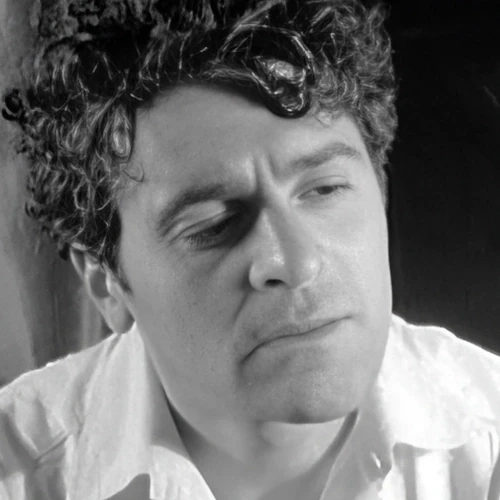
Francis Lederer
A film and stage actor with a successful career, first in Europe, then in the United States. Francis Lederer fell in love with acting when he was young, and was trained at the Academy of Music and Academy of Dramatic Art in Prague. After service in the First World War, he made his stage debut as an apprentice with the New German Theater, a walk-on in the play Burning Heart.
In the vibrant landscape of mid-20th century entertainment, few performers embodied the spirit of artistic versatility quite like Francis Lederer. A transnational artist who seamlessly navigated between European and American stages, Lederer's remarkable career spanned radio, film, and theater, making him a quintessential figure of the golden age of performing arts.
From Prague to the Performing Arts
Born František Lederer on November 6, 1899, in Prague, Czechoslovakia, Lederer's journey into the performing arts was anything but conventional. The son of a leather merchant, he began his professional life as a department store delivery boy, but his passion for acting quickly emerged. By his early twenties, he was touring Central Europe, sharing stages with emerging talents like Peter Lorre.
European Beginnings and Transition to Hollywood
Lederer's early career was marked by remarkable success in European cinema. Using the name Franz Lederer, he quickly became one of Germany's top silent film stars, transitioning smoothly into talking pictures. Interestingly, when he first entered films in 1928, he did not speak English - a challenge he would overcome with remarkable adaptability. By 1934, Lederer had begun working in America, now using the anglicized name Francis. Irving Thalberg had ambitious plans to make Lederer "the biggest star in Hollywood," though these plans were cut short by Thalberg's untimely death. Despite this setback, Lederer continued to build a successful career in film and television.
Radio: A Platform of Artistic Expression
While Lederer's film career is well-documented, his radio work represents a fascinating chapter in his artistic journey. He appeared in several major American radio programs that defined the medium's golden age:
- Lux Radio Theater: A prestigious anthology series that adapted successful plays and films
- Columbia Workshop: An experimental series known for innovative dramatic works
- The Pepsodent Show: A popular variety program featuring prominent guest stars
- The Charlie McCarthy Show: A comedy program hosted by Edgar Bergen
These radio appearances showcased Lederer's remarkable vocal range and dramatic versatility.
Legacy and Later Years
Beyond performance, Lederer was deeply committed to arts education. In 1954, he began teaching acting without pay, and he founded the American National Academy of Performing Arts. He continued giving acting seminars until his death, embodying a lifelong dedication to his craft. Lederer was also a civic leader in Canoga Park, California, serving as an honorary mayor for 25 years and contributing to local arts, education, and cultural development. His philosophy of acting was profoundly respectful of the writer's vision: "The actor is a tool of the writer, and his sole ambitions should be to fulfill his conception of the work."
Conclusion
Francis Lederer's career was a testament to artistic adaptability and passion. From the stages of Prague to Hollywood's silver screen and the airwaves of radio, he demonstrated an extraordinary ability to reinvent himself while maintaining an unwavering commitment to his craft. He passed away in 2000 at the remarkable age of 100, having lived a life rich with artistic achievement.
Works and Appearances
Radio
- Lux Radio Theater: Multiple appearances, adaptation of plays and films
- Columbia Workshop: Experimental dramatic performances
- The Pepsodent Show: Guest appearances
- The Charlie McCarthy Show: Guest performances
Film
- Romance in Manhattan (1934)
- One Rainy Afternoon (1936)
- The Return of Dracula (1958)
Stage
- Autumn Crocus (Broadway, 1932-1933)
- Multiple Broadway and theater productions between 1937-1958
Television
- Various guest appearances in 1950s and 1960s television shows
- Final TV appearance in 1971 on Night Gallery
