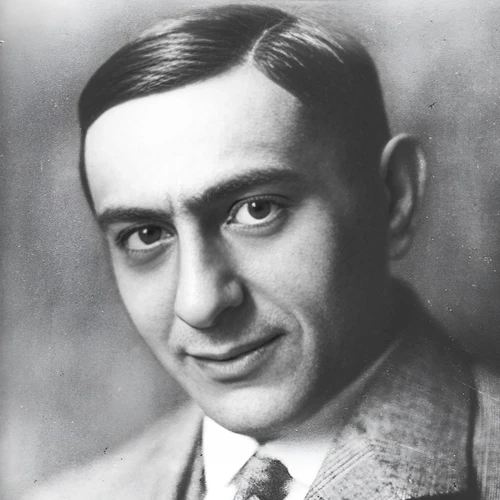
Ernst Lubitsch
comedy and storytelling revolutionized Hollywood cinema in the early 20th century. Known for his distinctive "Lubitsch Touch", he transformed the landscape of filmmaking with his sophisticated wit, elegant staging, and nuanced storytelling.
Early Life and Theatrical Beginnings
Born into a Jewish family in Berlin, Ernst Lubitsch discovered his passion for performance early. At the Sophien Gymnasium, he decided to pursue a theatrical career, despite his father's initial reservations. Compromising with his family, he continued to manage the family's tailor business accounts while simultaneously performing in cabarets and music halls by night. In 1911, Lubitsch joined the prestigious Deutsches Theater, quickly advancing to leading acting roles. He simultaneously explored film acting, taking a job as a handyman at Berlin's Bioscope film studios. By 1912, he began appearing in comedies that showcased traditional Jewish slice-of-life characters, which became his initial pathway into filmmaking.
Rise in European Cinema
Lubitsch's breakthrough came in 1918 with The Eyes of the Mummy, a tragedy starring Pola Negri. His remarkable versatility became evident as he demonstrated genius in both comedy and historical drama. In 1919, he directed seven films, including the lavish Madame Du Barry and the witty parody The Oyster Princess. The "Lubitsch Touch" emerged during this period - a style characterized by sophisticated humor and economical visual storytelling that could communicate entire narratives through clever staging and subtle visual cues.
Hollywood Transformation
Lubitsch's European success brought him to America, where he seamlessly transitioned between silent and sound films. His unprecedented run of sophisticated films mirrored the American social landscape, always with a unique, slightly foreign perspective. By 1935, his remarkable work led Paramount to make him their production chief.
Wartime Filmmaking and Legacy
During World War II, Lubitsch created some of his most politically charged and beloved works. To Be or Not to Be stands out as a razor-sharp satirical comedy about Nazi occupation, featuring a bold critique of fascism through the lens of a Warsaw acting troupe. Despite suffering a massive heart attack in 1943, Lubitsch continued working. In 1947, he received a special Academy Award for his 25-year contribution to motion pictures. His impact was so profound that fellow directors Billy Wilder and William Wyler poignantly remarked at his funeral: "No more Lubitsch" and "Worse than that - no more Lubitsch films".
Works and Appearances
Cinema
- The Eyes of the Mummy (1918)
- Madame Du Barry (1919)
- The Oyster Princess (1919)
- To Be or Not to Be (1942)
Theater
- Performances with Deutsches Theater (1911-1914)
Notable Quotes
- "Nobody should try to play comedy unless they have a circus going on inside."
- "I let the audience use their imaginations. Can I help it if they misconstrue my suggestions?"
Lubitsch's legacy continues to inspire filmmakers, with directors like Billy Wilder keeping his memory alive through tributes and admiration for his unparalleled cinematic style.