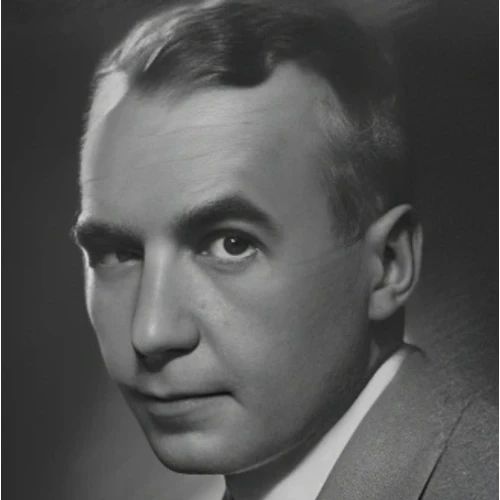
Elmer Davis
In the tumultuous landscape of mid-20th century American media, few personalities embodied journalistic integrity and public service as completely as Elmer Davis. A masterful reporter, radio commentator, and government communicator, Davis emerged as a critical voice during World War II, bridging the gap between journalism and national information strategy.
Early Life and Journalistic Beginnings
Born on January 13, 1890, in Aurora, Indiana, Elmer Holmes Davis displayed intellectual promise from an early age. As the son of a local bank cashier, Davis's academic brilliance became evident when he received a scholarship to Oxford in 1910, an opportunity that would shape his future professional trajectory. His journalistic career began with diverse reporting experiences, working for The New York Times and covering stories ranging from pugilists to evangelists. His coverage of Billy Sunday, a prominent evangelist, particularly gained him national recognition. Davis's versatility as a writer was further demonstrated by his notable work, History of the New York Times, 1851–1921, and his forays into fiction with novels like I'll Show You the Town and Giant Killer.
Rise to Radio Prominence
Davis's transition to radio marked a pivotal moment in his career. In August 1939, he was asked to fill in as a news analyst, quickly becoming a national sensation. His friendly, accessible midwestern accent and insightful commentary resonated with millions of Americans. By 1941, his nightly five-minute newscast attracted an impressive audience of 12.5 million listeners. CBS sponsored his daily broadcasts, which were carried on 95 stations nationwide, solidifying his status as a trusted voice of information during increasingly uncertain times. Davis's ability to communicate complex global events with clarity and authenticity set him apart from his contemporaries.
Wartime Leadership and Information Strategy
In 1942, President Franklin D. Roosevelt appointed Davis as Director of the Office of War Information (OWI), a role that would define his most significant public service. Despite earning a substantial salary from CBS, Davis chose to work in government during the national crisis. Davis was instrumental in transforming wartime communication strategies. He advocated for more transparent reporting, arguing that the American public "had a right to be truthfully informed" about the war. His most notable achievement was persuading Roosevelt to lift censorship restrictions, allowing Life magazine to publish the first photograph of American soldiers killed in battle.
Postwar Advocacy and Broadcasting Career
After the war, Davis continued his broadcasting career, using his platform to critique political movements, particularly Senator Joseph McCarthy's anti-communist investigations. He remained an influential media personality, even hosting an ABC television series and appearing in a 1951 film. Davis's commitment to journalistic integrity and public service was recognized through numerous awards, including three Peabody Awards and international honors from Dutch and Czechoslovak governments.
Legacy and Impact
Elmer Davis represented a unique blend of journalistic excellence, public service, and moral courage. During a critical period in American history, he used media not just as a tool for information, but as a means of fostering national understanding and resilience.
Works and Appearances
Radio
- CBS Nightly Newscast (1939-1942)
- Post-War Radio Commentary (1945-1953)
Television
- ABC Television Series (1950-1952)
Books
- History of the New York Times, 1851–1921 (1921)
- I'll Show You the Town (1924)
- Giant Killer (1928)
Government Service
- Director, Office of War Information (1942-1945)
Elmer Davis passed away on May 18, 1958, leaving behind a legacy of journalistic integrity and public service that continues to inspire media professionals today.