Dick Todd
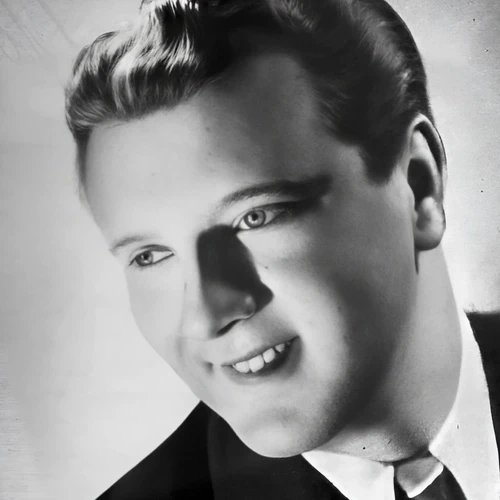
In the golden age of radio, few voices captured the hearts of listeners quite like Dick Todd, the charismatic Canadian singer who became a household name across North America. Known as the "Canadian Crosby" for his smooth vocal style, Todd's remarkable journey from a small-town Canadian boy to a national radio sensation epitomizes the transformative power of mid-20th century broadcasting.
Early Years and Musical Beginnings
Born on August 4, 1914, in Montreal, Quebec, Dick Todd showed an early aptitude for performance. His musical talents emerged surprisingly early, with Todd singing in school programs as young as six years old. The young Todd was not just a musical prodigy but also demonstrated remarkable versatility - at just 14, he worked as a log driver, showcasing the hardworking spirit typical of Canadian youth of his era.
Todd's educational path was equally interesting. He attended public school and went on to study at McGill University, where accounts differ about his focus - some sources suggest he studied engineering, while others claim he was a music major. During his time at McGill, he was also active in football, revealing a multifaceted personality that would serve him well in his entertainment career.
Breaking into Radio and National Stardom
Todd's professional musical journey began in 1933 when he first sang on a Canadian radio program. However, his career truly took off after moving to the United States in 1938, where he began singing with a prominent orchestra. This move proved pivotal, transforming him from a local performer to a favorite radio personality across the country.
His radio career was marked by remarkable diversity and prolific work. Todd became a soloist on numerous popular programs, including Melody and Madness, Rinso-Spry Vaudeville Theatre, Hometown Incorporated, and Show Boat. During World War II, he demonstrated his patriotism by spending 1944-1945 on a tour entertaining troops, further endearing himself to the American public.
Recording Success and Musical Achievements
In the late 1930s, Todd signed with RCA and began recording for their Bluebird label. His recording schedule was unprecedented - a 1940 magazine article noted he had "the heaviest record-making schedule of any singer in the country". His repertoire included hit songs like "It's A Hap-Hap-Happy Day" and "Blue Orchids".
Todd's chart success was impressive. Between 1938 and 1953, he consistently placed singles in the top 20, with notable hits like "The Girl in the Bonnet of Blue", "The Gaucho Serenade", and a duet with Dinah Shore called "You Can't Brush Me Off". His versatility allowed him to appeal to multiple audiences, though he was primarily known as a pop and crooner-style singer.
Later Career and Legacy
After a vibrant career spanning from 1933 to 1959, Dick Todd remained a significant figure in mid-century American entertainment. He made a few short film features and continued to be a beloved radio personality. On July 28, 1945, he returned to network radio, replacing another singer on a popular program and solidifying his status as a premier male vocalist.
Todd passed away in May 1973 in New York City, leaving behind a rich musical legacy. He was more than just a singer; he was a cultural icon who represented the optimism and entertainment spirit of his era.
Works and Appearances
Radio
- Melody and Madness (Various years)
- Rinso-Spry Vaudeville Theatre (Various years)
- Hometown Incorporated (Various years)
- Show Boat (Various years)
- Your Hit Parade (1945-onwards)
Recordings
- Notable Singles (1938-1953):
- "The Girl in the Bonnet of Blue"
- "The Gaucho Serenade"
- "Daddy's Little Girl"
- "Till I Waltz Again with You"
Film
- Short features for unnamed production company
Dick Todd's journey from a young Canadian singer to a celebrated American radio personality represents the quintessential story of mid-20th century entertainment - a tale of talent, hard work, and the transformative power of radio.