Dick Simmons
Richard Simmons was an American actor whose career spanned several decades of radio, film, and television, embodying the versatility of mid-20th century performers. Though often overlooked in contemporary discussions of entertainment history, Simmons represented a quintessential journeyman actor who navigated the changing landscapes of media with remarkable adaptability.
Early Life and Roots in Performance
Born on August 19, 1913, in Saint Paul, Minnesota, Richard Simmons demonstrated an early passion for performance and adventure. During his educational years, he attended West Side High School and subsequently pursued drama studies at a university, where he not only honed his acting skills but also developed diverse talents. Notably, Simmons was a competitive athlete, participating in fencing and swimming while simultaneously engaging in theater productions. Interestingly, before fully committing to acting, Simmons was a professional pilot, a skill that would later intersect with his entertainment career. In the 1930s, he made the pivotal decision to leave the Twin Cities and pursue a career in film acting, launching his professional journey in 1937.
The Rise of a Character Actor
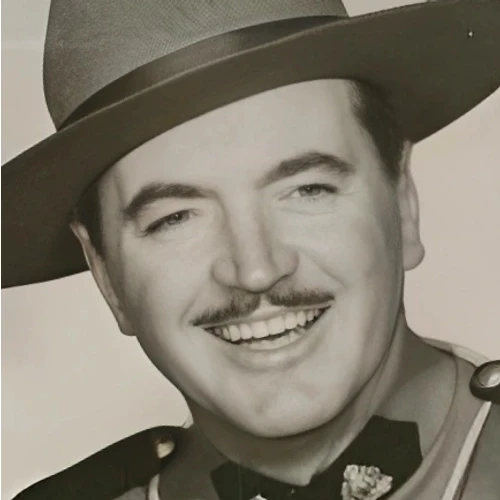
Simmons quickly became a contract player in Hollywood, initially accepting numerous uncredited roles throughout the 1940s. His early career was characterized by persistence and versatility, with roles ranging from minor film appearances to portraying a Mountie in an unspecified production. By 1943, Simmons began receiving credited roles, marking a significant milestone in his professional trajectory. Between 1943 and 1949, he appeared in 17 films, with 10 of those roles listing him in the credits. His career was temporarily interrupted by World War II, during which he served as a pilot.
Television and Iconic Roles
The 1950s proved to be a transformative decade for Simmons. He continued appearing in films and television series, often in uncredited capacities. His most notable achievement came in 1955 when he won the role that would define much of his public recognition: portraying Sergeant Preston in a television series. Following the conclusion of the Sergeant Preston series in 1958, Simmons maintained a successful acting career primarily through television guest appearances. His versatility was evident in roles across various shows, including appearances in Perry Mason and Leave It to Beaver. His final acting role came in a 1982 television episode, marking the end of a nearly five-decade entertainment career.
Later Life and Transition
As acting opportunities became scarcer in the 1970s, Simmons demonstrated remarkable adaptability by managing a mobile home park in Carlsbad, near San Diego. This transition highlighted his practical nature and ability to reinvent himself professionally. In his later years, Simmons faced health challenges. He passed away on January 11, 2003, at the age of 89 in a nursing home, leaving behind a legacy of consistent, reliable performance across multiple entertainment mediums.
Legacy and Impact
Richard Simmons exemplified the quintessential mid-century character actor - versatile, hardworking, and adaptable. While he might not have been a headline-grabbing star, his consistent presence in entertainment from the late 1930s to early 1980s represents an important narrative of American media history.
Works and Appearances
Radio
- Radio Mystery and Adventure
Television
- Sergeant Preston (1955-1958) - Lead Role
- Perry Mason - Guest Appearance
- Leave It to Beaver - Guest Appearance
- The Munsters - Guest Appearance (1964)
- Final television appearance in 1982
Film
- Multiple uncredited and credited film roles between 1937-1949
- Specific film titles not detailed in the provided context
Personal Details
- Born: August 19, 1913, in Saint Paul, Minnesota
- Died: January 11, 2003, in Oceanside, California
- Marriages: Joni Simmons (1941-1987), Billie Simmons (2002-2003)
- Children: 2
Richard Simmons' career serves as a testament to the resilience and adaptability required of performers in the mid-20th century American entertainment landscape.