Dick Martin
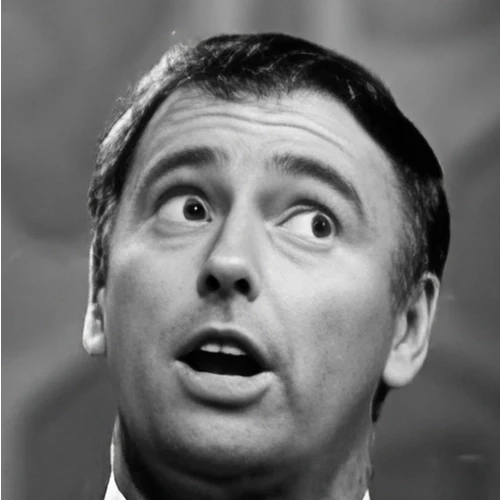
Thomas Richard Martin, better known as Dick Martin, was a groundbreaking American comedian who revolutionized television comedy in the late 1960s. His unique comedic style and innovative approach to entertainment would leave an indelible mark on American popular culture, transforming the landscape of comedy through his work on Rowan & Martin's Laugh-In.
Early Life and Radio Beginnings
Born on January 30, 1922, in Battle Creek, Michigan, Dick Martin emerged from humble midwestern roots. His father William was a salesman, and his mother Ethel a homemaker. During his teenage years, Martin faced a significant health challenge when he contracted tuberculosis, which prevented him from serving in the military and would later impact his later life. Martin's early career in entertainment began in radio, where he worked as a staff writer for a radio situation comedy. This experience would prove crucial in developing his comedic skills and understanding of performance. In 1952, he formed a comedy partnership with Dan Rowan, creating the comedy team Rowan and Martin. The duo quickly became popular, performing in nightclubs across the United States and overseas.
The Rise of a Comedy Duo
Rowan and Martin developed a distinctive comedic style that set them apart from other performers of their era. Martin often played a character described as "a kind of inept lech" - a persona that audiences found both hilarious and endearing. Their comedy routines were memorable, with Martin famously playing a drunk heckling a Shakespearean performer, a bit that became a mainstay of their act. Their breakthrough came in 1966 when they were asked to host a summer replacement series, which ultimately led to their most significant opportunity: Rowan & Martin's Laugh-In. The show, which aired from 1968 to 1973, was a revolutionary comedy program that transformed television comedy with its fast-paced, stream-of-consciousness style.
Laugh-In and Television Stardom
Laugh-In became an immediate cultural phenomenon, becoming the number one American television program within two months of its debut. The show's unique format, featuring rapid-fire jokes, topical satire, and memorable catchphrases, made it a defining program of the late 1960s. Martin and Rowan positioned themselves as "two relatively normal guys wandering through a sea of madness," providing a comedic anchor to the show's wild energy. At the height of the show's popularity, Martin expanded his career, appearing in films and becoming a frequent panelist on game shows like Match Game. After Rowan's retirement, Martin continued to work in television, hosting game shows and making guest appearances.
Later Career and Personal Life
Beyond his comedic performances, Martin also found success as a television director, notably directing 33 episodes of the popular sitcom Newhart between 1982 and 1990. His personal life was equally dynamic, with marriages to Peggy Connelly and Dolly Read, with whom he ultimately remained until his death. Martin passed away on May 24, 2008, in Santa Monica, California, due to breathing complications - a result of the tuberculosis he had contracted as a teenager. His legacy as a comedy innovator remained intact, having fundamentally changed the landscape of American television comedy.
Works and Appearances
Radio
- Early career as a radio situation comedy staff writer
Television
- Rowan & Martin's Laugh-In (1968-1973) - Co-host
- The Lucy Show (1962-1963) - Harry Conners
- Match Game (1975-1979) - Panelist
- Newhart (1982-1990) - Director
Film
- The Glass Bottom Boat (1966)
- The Maltese Bippy (1969)
- Air Bud: Golden Receiver (1998)
- Bartleby (2001) - Final film role
Game Shows Hosted
- Rowan & Martin's Laugh-In Game Show (1978)
- High Rollers (1979)
Dick Martin's career exemplified the transformative power of comedy, bridging radio, television, and film with his distinctive comedic sensibility and innovative approach to entertainment.