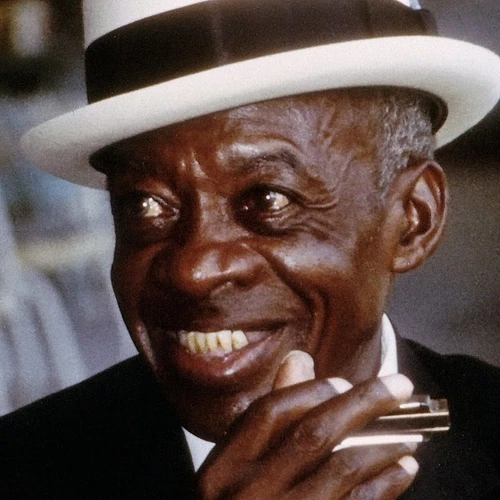
DeFord Bailey
In the nascent days of country music broadcasting, few performers were as groundbreaking and influential as DeFord Bailey, the first African American star of the Grand Ole Opry. A virtuoso harmonica player who transformed the instrument into a storytelling medium, Bailey pioneered a unique musical style that bridged racial divides during a challenging era in American entertainment.
Roots of a Musical Prodigy
Born on December 14, 1899, in Smith County, Tennessee, DeFord Bailey emerged from a rich musical heritage. His family was deeply rooted in what he called "black hillbilly music," with multiple family members playing various instruments. Tragically, Bailey lost his mother when he was just a year old and was raised by his aunt Barbara Lou. A pivotal moment in his early life came when he contracted polio, an experience that would profoundly shape his musical journey. During his year-long recovery, confined to bed and able to move only his head and arms, Bailey developed an extraordinary musical skill. He began imitating the sounds around him - the calls of animals, the rhythms of trains, and the ambient noises of rural Tennessee. This unique approach would become his signature style, earning him the nickname "Harmonica Wizard".
Breaking Barriers in Radio Broadcasting
Bailey's radio career began in the mid-1920s, marking a revolutionary moment in broadcasting history. His first documented radio appearances were in 1926, but it was his debut on WSM's Barn Dance (later known as the Grand Ole Opry) on December 10, 1927, that would define his legacy. During his introduction, station manager George D. Hay famously declared, "From now on, we will present 'The Grand Ole Opry'," with Bailey's performance symbolizing a transformative moment in American music. As a pioneering African American performer in a segregated entertainment landscape, Bailey faced significant challenges. Despite these obstacles, he became one of the Opry's most popular early performers, touring with major country stars like Roy Acuff. Acuff himself acknowledged Bailey's drawing power, stating that Bailey helped launch his own career.
Musical Innovation and Artistic Expression
Bailey's musical repertoire was remarkably diverse. While best known for the harmonica, he also played guitar, banjo, and mandolin. His compositions were deeply rooted in storytelling, with pieces like "Pan American Blues" and "Dixie Flyer Blues" capturing the sounds and rhythms of rural life. His recordings were groundbreaking, with some releases strategically placed in both "race" and "hillbilly" music series, reflecting the complex racial dynamics of the era. Bailey's music transcended racial categories, presenting a universal artistic expression that resonated with diverse audiences.
Later Life and Enduring Legacy
Bailey's professional career was abruptly halted in 1941 due to a licensing conflict between music organizations, which effectively ended his performance and recording opportunities. Undeterred, he supported his family by running a shoe-shining business and renting rooms in his home. Despite this setback, Bailey's influence never waned. In 1974, he was invited to perform at the Opry's Old-Timers show, rekindling interest in his remarkable musical journey. In 2005, he was posthumously inducted into the Country Music Hall of Fame, cementing his status as a pioneering artist.
Conclusion
DeFord Bailey represents more than a musician; he was a cultural pioneer who used his extraordinary harmonica skills to bridge racial and musical divides. His ability to transform everyday sounds into compelling musical narratives made him a unique figure in early 20th-century American music.
Works and Appearances
Radio
- WSM Barn Dance/Grand Ole Opry (1927-1941)
- First African American performer
- Regular featured artist
Recordings
- Brunswick Records (1927)
- Victor Records (1928-1933)
- Notable recordings: "Pan American Blues", "Dixie Flyer Blues"
Documentaries
- DeFord Bailey: A Legend Lost (PBS, 2005)
Posthumous Honors
- Country Music Hall of Fame Induction (2005)
- DeFord Bailey Tribute Garden Dedication (2007)