Clarence Nash
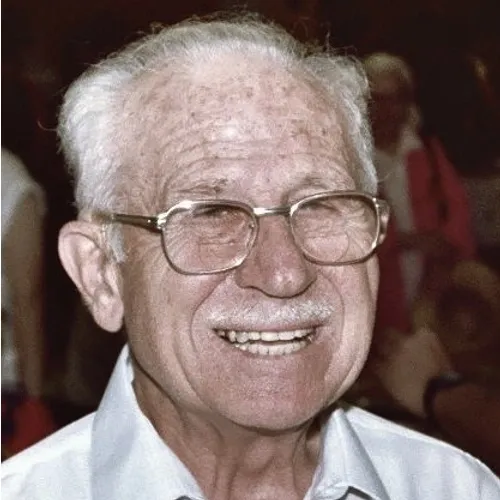
In the golden age of animation and radio, few voices have become as instantly recognizable and beloved as that of Clarence Nash. Known primarily as the original voice of Donald Duck, Nash revolutionized character vocalization and became an integral part of Walt Disney's creative legacy. His unique vocal talents would transform a simple cartoon duck into one of the most iconic characters in entertainment history.
Early Life and Unexpected Talent
Born on December 7, 1904, in Watonga, Oklahoma Territory, Clarence Charles Nash discovered his extraordinary vocal abilities early in life. Growing up in a rural community, he developed a remarkable skill for mimicking animal sounds, particularly the distinctive bleating of goats. This childhood pastime would unexpectedly become the foundation of his legendary career. Nash's vocal prowess wasn't just a party trick; it was a genuine talent that would set him apart in the entertainment world. As a young man, he began performing in shows where he would often use what he called a "nervous baby goat" voice, hinting at the unique vocal techniques that would later define his career.
The Path to Disney and Donald Duck
Nash's journey to becoming Donald Duck's voice was serendipitous. In the late 1920s, he made a name for himself as an impressionist, performing on radio shows like The Merrymakers. He even worked for the Adohr Milk Company, earning the nickname "Whistling Clarence, the Adohr Bird Man". In 1932, Nash's life changed forever when he visited the Disney Studio. Carrying a publicity sheet from his milk company work, he caught the attention of Walt Disney's team. During an impromptu audition, Nash demonstrated his vocal range, including an impression of a billy goat. The Disney team was immediately captivated. As legend has it, a director reached for the intercom and declared, "I think we have found our duck".
Mastering the Donald Duck Voice
Nash's Donald Duck voice was a technical marvel, achieved through a technique called buccal speech. This unique method involved using the inside of his cheek to produce sound, rather than traditional vocal techniques. The voice was so distinctive that it became instantly recognizable worldwide. Remarkably, Nash didn't just voice Donald Duck in English. To maintain the character's consistency, he voiced Donald in all foreign language translations, ensuring the duck's trademark incomprehensibility remained intact globally. This dedication meant that whether in America, Europe, or elsewhere, Donald Duck sounded exactly the same.
A Legacy Beyond Donald Duck
While Donald Duck was Nash's most famous role, his vocal talents extended far beyond one character. He provided voices for numerous Disney characters, including Donald's nephews Huey, Dewey, and Louie, his girlfriend Daisy Duck, and even animal sounds in various animated shorts. During World War II, Nash became more than just a voice actor. With a ventriloquist puppet of Donald Duck built by Disney's character modeling department, he performed at war bond rallies, using his talents to support the national effort.
Conclusion
Clarence Nash was more than a voice actor; he was an artist who transformed vocal performance. His work with Donald Duck spanned an incredible 51 years, during which he voiced the character in over 120 shorts and films. When he passed away on February 20, 1985, he left behind a legacy that had fundamentally shaped animation and character vocalization.
Works and Appearances
Radio
- The Mickey Mouse Theater of the Air (1938) - Donald Duck
- The George Burns and Gracie Allen Show (1941-1943) - Herman the Duck
- Command Performance (1945) - Donald Duck
Film
- The Wise Little Hen (1934) - Donald Duck (voice)
- Pinocchio (1940) - Figaro (voice)
- Saludos Amigos (1942) - Donald Duck
- Bambi (1942) - Bullfrog, Hunter Dogs
- Mickey's Christmas Carol (1983) - Nephew Fred/Donald Duck
Television
- Walt Disney's Wonderful World of Color (1954-1985) - Donald Duck/Himself
- What's My Line? (1954) - Himself
- To Tell the Truth (1963) - Himself-Challenger