Bill Quinn
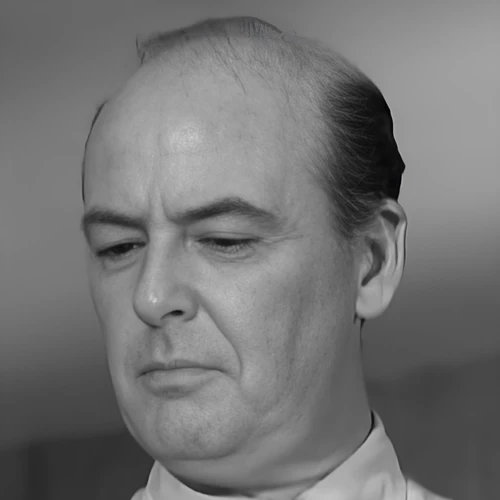
In the golden age of radio and early television, few performers could match the versatility and enduring presence of Bill Quinn. A character actor with a career spanning seven decades, Quinn became a familiar voice and face to audiences across multiple entertainment mediums, leaving an indelible mark on American broadcasting and cinema.
Early Years and Theatrical Beginnings
Born William Tyrell Quinn on May 6, 1912, in New York City, he was destined for entertainment from the start. His father, Edward Quinn, worked as a supervisor in the United States Shipping Board's copying department, while his mother, Lillian Tyrrell, was an actress in films and a Broadway chorus girl. These artistic roots would profoundly influence young Bill's career trajectory. Quinn's earliest performances were in vaudeville, where he performed with his older brothers in a children's act. As a teenager, he began working in films and touring with stock theater companies during the 1920s, laying the groundwork for his future versatile career.
Radio: The Foundation of a Broadcast Career
In 1934, Quinn transitioned into radio, quickly establishing himself as a reliable and versatile performer. He starred as a detective on Little Herman on ABC in the late 1940s, and appeared in numerous radio programs including several notable series of the era. His radio work demonstrated his ability to inhabit diverse characters and bring scripts to life through his vocal talents. Quinn's radio performances were characterized by their authenticity and range. Whether playing a hard-boiled detective, a comedic supporting character, or a dramatic lead, he brought nuance and believability to each role. His work during this period helped solidify his reputation as a skilled voice actor.
Expanding into Television and Film
As television emerged, Quinn seamlessly transitioned between mediums. He became a prolific character actor, appearing in more than 150 roles over seven decades. On television, he became known for memorable recurring characters, such as Mr. Van Ranseleer, the wise, blind bar patron, and Dr. Melnitz on The Odd Couple. His film career was equally impressive, with appearances in notable movies throughout the 1960s and 1970s. From Sam in It's a Mad, Mad, Mad, Mad World (1963) to various supporting roles, Quinn demonstrated remarkable adaptability across different genres and formats.
Personal Life and Legacy
In 1939, Quinn married Mary Catherine Roden, with whom he had three daughters. Interestingly, one of his daughters, Virginia "Ginnie" Quinn Newhart, was married to comedian Bob Newhart. Quinn even occasionally appeared in small supporting roles on Newhart's sitcoms, showcasing the interconnected nature of mid-20th century entertainment. Quinn's career was a testament to his professionalism and adaptability. From silent films in the 1920s to his final film role in 1989, he consistently worked and evolved with the changing entertainment landscape. His ability to transition between radio, television, and film made him a true journeyman of American entertainment.
Conclusion
Bill Quinn represented the quintessential character actor of his era - versatile, reliable, and seemingly omnipresent. His seven-decade career bridged multiple entertainment mediums, making him a unique figure in 20th-century American media. Though he might not have been a headline-grabbing star, Quinn's consistent work and memorable character portrayals made him an essential part of the entertainment fabric of his time.
Works and Appearances
Radio
- Little Herman (Late 1940s) - Detective
- Multiple unnamed radio programs throughout 1930s-1940s
Television
- The Odd Couple - Dr. Melnitz
- The Bob Newhart Show - Various roles
- Mary Tyler Moore Show - Mary's father
- Numerous guest appearances from 1950s-1980s
Film
- No Mother to Guide Her (1923) - Billy Mills
- It's a Mad, Mad, Mad, Mad World (1963) - Sam
- McCoy's Father (1989) - Final film role
Bill Quinn passed away on April 29, 1994, in Camarillo, California, leaving behind a rich legacy of performance.
Heard in