Bill Bouchey
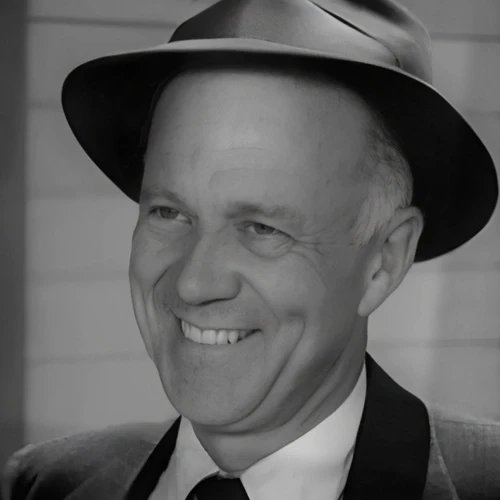
Willis Ben Bouchey emerged as a versatile character actor whose resonant voice and commanding presence made him a distinctive figure in mid-20th century radio and television. Born on May 24, 1907, in Vernon, Michigan, Bouchey would become a prolific performer whose career spanned multiple entertainment mediums, with radio serving as his initial launching pad.
Early Life and Radio Beginnings
Willis Bouchey's journey into broadcasting began during the golden age of radio, a period when audio storytelling captivated millions of American households. His early radio work demonstrated remarkable versatility, with Bouchey taking on diverse roles that showcased his vocal range and dramatic capabilities. He became a notable presence in radio productions, playing significant characters in various programs. During his radio career, Bouchey portrayed multiple memorable roles. He played the title role in one production, essayed Charles Williams in another, and took on characters like Stanley Bartlett in Midstream and Pa Barton in The Story of Bud Barton. His involvement with Your Parlor Playhouse further cemented his reputation as a reliable ensemble performer.
Transition to Television and Film
As radio gradually gave way to television, Bouchey seamlessly transitioned between mediums. He became a frequent guest star, appearing in numerous television series throughout the 1950s and 1960s. His versatility was evident in the wide range of characters he portrayed, from judges to doctors, military officers to professionals. Notably, Bouchey was a recurring presence in several popular television shows. He appeared multiple times on Perry Mason, played Judge Neilson in The Alfred Hitchcock Hour, and was a guest star on The Twilight Zone, where he portrayed Dr. Samuel Thorne. His television work was characterized by authoritative performances that often typecast him in roles of professional authority.
Collaboration with John Ford
One of the most significant aspects of Bouchey's career was his extensive collaboration with legendary director John Ford. Throughout his career, Bouchey worked in twelve productions with Ford and was considered one of the more frequently-used members of Ford's stock company. His memorable role in The Man Who Shot Liberty Valance, where he delivered the iconic final line, "Nothing's too good for the man who shot Liberty Valance," exemplifies his importance in Ford's cinematic universe.
Legacy and Impact
Willis Bouchey's career spanned from 1951 to 1972, during which he became a quintessential character actor of his era. His ability to inhabit diverse roles across radio, television, and film made him a versatile performer who embodied the professional character actor of mid-20th century American entertainment. While often playing supporting roles, Bouchey brought depth and authenticity to every character he portrayed.
Works and Appearances
Radio
- Your Parlor Playhouse (Ensemble Cast)
- Midstream (as Stanley Bartlett)
- The Story of Bud Barton (as Pa Barton)
Television
- Perry Mason (Multiple Episodes)
- The Alfred Hitchcock Hour (Judge Neilson)
- The Twilight Zone (Dr. Samuel Thorne)
- Colt .45
- Have Gun – Will Travel
Film
- The Man Who Shot Liberty Valance
- Numerous uncredited roles in films throughout the 1950s and early 1960s
Willis Bouchey passed away on August 26, 1977, in Burbank, California, leaving behind a rich legacy of performances that captured the essence of mid-century American entertainment.
Heard in