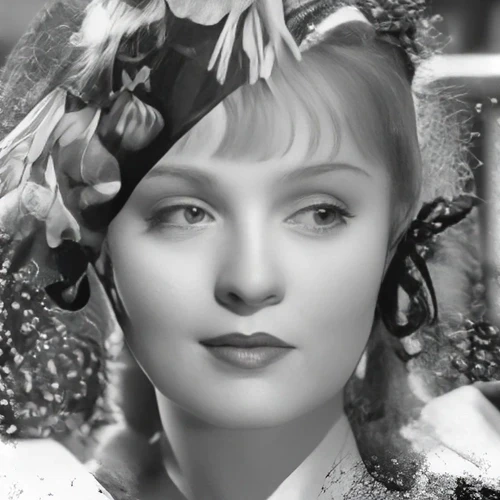
Anna Sten
A Russian Empire-born silent film actress and later a Hollywood film star. She began her career in stage plays and films in Russia before travelling to Germany, where she starred in several films.
In the golden age of Hollywood, few actresses captured the imagination quite like Anna Sten, a luminous talent whose journey from the stages of Kiev to the bright lights of American cinema was as dramatic as the roles she portrayed. Born Anna Petrivna Fesak on December 3, 1908, in Kiev, then part of the Russian Empire, Sten would become a symbol of international artistic promise and Hollywood's ambitious attempts to create a new kind of star.
Early Life and Artistic Beginnings
Anna Sten's path to stardom began early. Born to a Swedish mother and a Cossack father who worked as a theater artist and producer, she was immersed in the performing arts from childhood. At just 15, she was discovered by the legendary Konstantin Stanislavsky, the father of method acting, who arranged an audition for her at the Moscow Film Academy. Her early career was marked by performances in Soviet theater and silent films, including Boris Barnet's comedy The Girl with a Hatbox in 1927.
European Success and Hollywood Beckons
After establishing herself in Russian cinema, Sten relocated to Germany, where she starred in several notable films that caught international attention. Her performances in movies like Salto Mortale (1931) drew the eye of Hollywood mogul Samuel Goldwyn, who saw in her the potential to rival Greta Garbo. Goldwyn brought Sten to the United States with grand ambitions, investing two years in tutoring her in English and Hollywood acting techniques.
Hollywood Challenges and Artistic Resilience
Despite Goldwyn's efforts, Sten's Hollywood breakthrough proved challenging. Her first American productions, including Nana (1934) and We Live Again (1934), failed to capture audience imagination. Even a witty reference in Cole Porter's song "Anything Goes" - which playfully noted Goldwyn's attempts to "instruct Anna Sten in diction" - couldn't overcome her initial struggles.
Diversifying Her Artistic Landscape
Undeterred, Sten continued to work in film throughout the 1940s, appearing in movies like The Man I Married (1940), So Ends Our Night (1941), and Three Russian Girls (1943). Interestingly, she also expanded her artistic repertoire into radio, making notable appearances on programs like the Lux Radio Theater.
Radio and Television Contributions
In the 1950s, Sten transitioned more actively into television and radio work. She appeared in television series such as The Red Skelton Show (1956), The Walter Winchell File (1957), and Adventures in Paradise (1959). Her radio work, particularly her performance in a Lux Radio Theater episode of "Graustark", showcased her versatility as a performer.
Legacy and Final Years
Though her Hollywood stardom never fully materialized, Anna Sten remained a respected and intriguing figure in entertainment. Her final film role came in The Nun and the Sergeant (1962). She passed away on November 12, 1993, in New York City, leaving behind a unique legacy as an international artist who bridged multiple performance mediums.
Conclusion
Anna Sten's career represents a fascinating chapter in entertainment history - a tale of artistic ambition, international mobility, and the complex dynamics of Hollywood's star-making machinery. While she may not have become the "next Garbo" that Goldwyn envisioned, she carved out a distinctive path that spanned Soviet cinema, European films, Hollywood, radio, and television.
Works and Appearances
Radio
- Lux Radio Theater: Appeared in "Graustark" episode
- Various other radio performances
Film (Selected)
- The Girl with a Hatbox (1927)
- Nana (1934)
- We Live Again (1934)
- The Wedding Night (1935)
- Three Russian Girls (1943)
- The Nun and the Sergeant (1962)
Television
- The Red Skelton Show (1956)
- The Walter Winchell File (1957)
- Adventures in Paradise (1959)
- Arrest and Trial (1964)