Alexander Courage
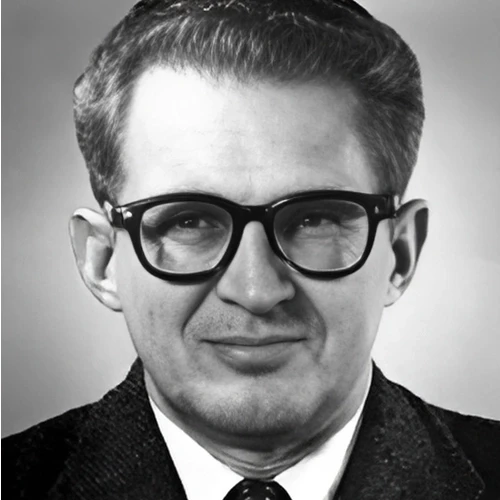
In the vibrant world of mid-20th century entertainment, few musicians bridged as many creative domains as Alexander "Sandy" Courage. A composer, arranger, and orchestrator of remarkable versatility, Courage's musical genius touched television, film, and radio, leaving an indelible mark on American popular culture. His most iconic contribution—the legendary Star Trek theme—would become a cornerstone of science fiction musical history, but his talents extended far beyond that singular achievement.
Early Musical Foundations
Born on December 10, 1919, in Philadelphia, Pennsylvania, Alexander Courage emerged from a multicultural background that would shape his artistic sensibilities. His Scottish father and French-American mother provided an environment that nurtured his musical potential from an early age. Young Sandy's musical journey began with piano lessons, where his instructive tendency to play by ear often frustrated traditional instructors. Courage's musical education took a formal turn when he was admitted to the Eastman School of Music in 1937. Despite initial challenges—failing his introductory composition course twice—he persevered and graduated with a piano performance degree in 1941. His time at Eastman was marked by an improvisational spirit that would define his later career, studying under notable composers and participating in prestigious musical programs.
Military Service and Professional Beginnings
World War II provided Courage's first significant professional musical opportunity. Serving in the military, he became a horn player, composer, arranger, and band leader. During this period, he launched a monthly radio program featuring his own band arrangements, demonstrating early signs of his remarkable musical versatility. After military service, Courage's connections propelled him into the entertainment industry. Through a network of professional relationships, he began working for CBS Radio and quickly established himself as a sought-after orchestrator and arranger. His early work included orchestrations for significant film productions, collaborating with renowned composers and creating memorable musical moments in cinema.
Television and Film Scoring
Courage's career flourished across multiple media platforms. He composed original scores for films, including westerns like Buchanan Rides Alone (1958) and Ride Lonesome (1959), and continued writing movie music throughout the 1980s and 1990s. His television work was equally impressive, with contributions to shows like Dr. Kildare and The Twilight Zone. Perhaps his most significant musical legacy emerged through his collaboration with legendary composer Jerry Goldsmith. Together, they worked on numerous television and film projects, with Courage often serving as Goldsmith's primary orchestrator. Their partnership was particularly notable in science fiction and dramatic productions.
The Star Trek Legacy
While Courage had an illustrious career, he is most remembered for composing the iconic Star Trek theme. Hired by Gene Roddenberry after Bernard Herrmann declined, Courage created a theme that would become synonymous with space exploration in popular culture. Interestingly, Roddenberry added lyrics to the theme—not for performance, but to claim co-writing credits and royalties. The Star Trek theme's impact extended far beyond the original series. Its distinctive fanfare became a musical touchstone, used in multiple motion pictures and television series, cementing Courage's place in entertainment history.
Works and Appearances
Radio
- Monthly radio program during military service (1940s)
- CBS Radio arrangements and orchestrations
Film Scores
- Buchanan Rides Alone (1958)
- Ride Lonesome (1959)
- Superman IV: The Quest for Peace (1987)
Television
- Dr. Kildare
- The Twilight Zone
- Star Trek (original series theme and incidental music)
Awards
- Emmy Award for Music Direction (1988) for Julie Andrews: The Sound of Christmas
Alexander Courage passed away on May 15, 2008, in Pacific Palisades, California, leaving behind a rich musical legacy that spanned decades and genres. His ability to adapt, innovate, and create memorable musical experiences made him a true maestro of 20th-century American entertainment.