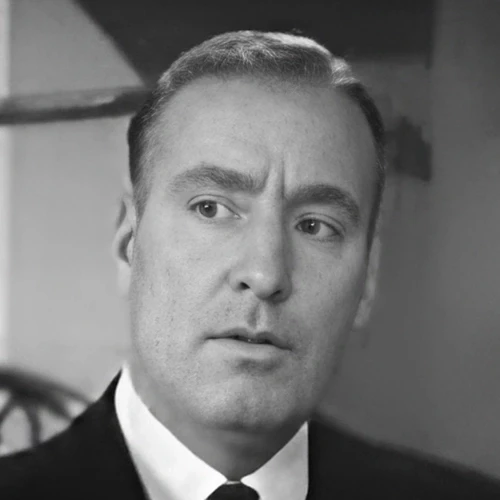
Alan Mowbray
An English stage and film actor who found success in Hollywood.
In the golden age of Hollywood, few actors embodied the quintessential character role with as much wit and precision as Alan Mowbray. From his distinctive clipped accent to his impeccable portrayal of butlers, aristocrats, and genteel professionals, Mowbray carved a unique niche in entertainment history that spanned stage, radio, film, and television.
From London to Broadway: The Early Years of a Performer
Born Alfred Ernest Allen on August 18, 1896, in London, England, Alan Mowbray's journey to stardom began with a distinguished military service. During World War I, he served with remarkable distinction, earning prestigious awards for his bravery, including the French Croix de Guerre. His military experience, however, was just a prelude to his true calling in entertainment. Mowbray's theatrical career commenced in London in 1922, where he worked as an actor and stage manager. In 1923, he made the pivotal decision to arrive in the United States, quickly becoming involved with New York stock companies. His Broadway debut in The Sport of Kings in 1926 marked the beginning of a prolific performance career.
Hollywood's Quintessential Character Actor
Mowbray's film career took off in 1931 when he made his cinematic debut, notably typecast as a butler - a role that would become his trademark. Contemporary critics even joked about his distinctive speech, with one story describing a butler as having "a wing collar and an accent like Alan Mowbray". Throughout the 1930s and 1940s, Mowbray worked prolifically, appearing in over 120 films. He became particularly memorable for his roles in Thorne Smith-derived films like Topper (1937), where he played the butler Wilkins, a character he would reprise in subsequent sequels.
Transition to Television and Later Career
As film roles began to decrease in the 1950s, Mowbray seamlessly transitioned to television. He played the title role in a TV series and appeared in various shows, demonstrating his remarkable adaptability. Notably, he portrayed characters in series like Hey, Mulligan and Tate, showcasing his continued relevance in the evolving entertainment landscape.
A Multifaceted Personality Beyond Performance
Beyond his acting career, Mowbray was a significant figure in the entertainment industry. He was a founding member of the Screen Actors Guild in 1933, personally funding the group's incorporation and serving as its first vice president. His commitment extended to various professional organizations, including the British United Services Club. Mowbray's personal life was equally interesting. He married Lorraine Carpenter in 1927, and they had two children. In a fascinating twist, his daughter Patricia married his friend, Douglass Dumbrille, when she was 28 and he was 70 years old.
Legacy and Final Years
Alan Mowbray passed away on March 25, 1969, in Hollywood, leaving behind a rich legacy of performances. His career was characterized by versatility, professionalism, and an unmistakable screen presence that made him a beloved character actor of his era.
Works and Appearances
Television
- Hey, Mulligan (1954-55)
- Tate (1960-61)
- Various episode appearances in different series
Theater
- The Sport of Kings (1926) - Broadway debut
- Dinner Is Served (1929) - wrote, directed, and starred
Alan Mowbray's career exemplified the versatility and charm of Hollywood's golden age character actors, leaving an indelible mark on American entertainment.