Adelaide Bishop
An American operatic soprano, musical theatre actress, opera director, stage director, and voice teacher.
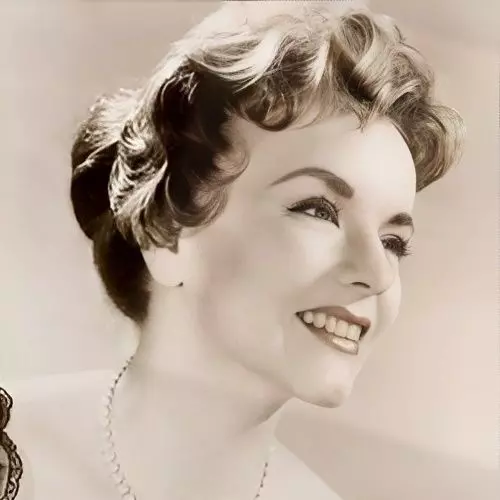
Adelaide Bishop stands as a testament to artistic versatility in American entertainment. Though perhaps not as widely recognized as some contemporaries, Bishop carved out a significant career spanning opera, Broadway, television, and beyond. Her journey from classical vocal training to diverse performance media demonstrates the adaptability required of mid-20th century performers. While her radio work represented just one facet of her career, it formed part of a rich tapestry of artistic expression that characterized her five decades in performance.
From Classical Foundations to Professional Success
Adelaide Bishop's journey into the world of performance began with classical training at the Juilliard School in New York City. This prestigious education laid the groundwork for her career as an opera singer and performer across multiple media. Her formal education at Juilliard provided her with the technical skills and artistic foundation that would serve her throughout her diverse career.
Bishop's professional career began in the realm of opera, where she established herself as a talented soprano. Her operatic work demonstrated both her classical training and her ability to connect with audiences through this traditional form. While details about her earliest performances are limited, her operatic background would provide the technical skill and performance discipline that informed her later work across different entertainment media. The transition from purely classical performances to other forms of entertainment was common for artists of Bishop's era, as performers often needed versatility to maintain steady work. Bishop exemplified this adaptability, moving between opera, Broadway, television, and other media with remarkable fluency. This versatility would become one of her defining characteristics as a performer.
By building on her classical foundations, Bishop positioned herself for a career that would touch multiple entertainment formats during a transformative period in American performance history. Her ability to apply her operatic training to various contexts speaks to both her talent and her pragmatic approach to sustaining a long-term career in the arts.
Broadway and Stage Career
Adelaide Bishop made significant contributions to Broadway and stage productions throughout her career. One of her most notable roles came in 1956 when she originated the role of Tuptim in the Rodgers and Hammerstein musical The King and I. This production represented a major milestone in American musical theater, and Bishop's participation connected her to one of the most celebrated creative teams in Broadway history.
Her stage career extended well beyond this signature role. Bishop appeared in numerous productions that showcased her vocal talents and acting abilities. The theatrical stage provided Bishop with opportunities to combine her classical vocal training with dramatic performance, creating memorable characters for live audiences. Her Broadway work demonstrated her ability to adapt her operatic background to the different demands of musical theater.
Bishop's theatrical performances required her to maintain the technical excellence of her classical training while embracing the storytelling and character development central to stage productions. This balance of technical skill and expressive artistry characterized her approach to stage work throughout her career. Her success in theatrical productions indicates her ability to connect with audiences in the immediate and unforgiving context of live performance. The collaborative nature of stage productions also allowed Bishop to work with numerous directors, composers, and fellow performers, expanding her artistic network and influences. These creative partnerships enriched her performance style and contributed to her growth as an artist beyond her formal training.
Television and Broadcast Work
Adelaide Bishop extended her performing career into television and broadcasting, reaching wider audiences through these emerging media. Her television appearances included roles on the NBC Opera Theatre, where she could showcase her classical training for the growing television audience of the mid-20th century. This program represented an important effort to bring operatic performances to mainstream American viewers through the relatively new medium of television.
Beyond her operatic television appearances, Bishop demonstrated her versatility by appearing on variety programs and television specials. These formats allowed her to present different aspects of her performance abilities to viewers across America. Her television work required adaptations to her performance style, as the intimacy of the camera called for different techniques than stage productions or radio broadcasts.
Bishop's broadcast career also included radio work, though specific details of her radio performances are less documented than her stage and television appearances. Radio provided yet another medium through which Bishop could reach audiences, requiring her to convey character and emotion solely through her voice – a challenge well-suited to her vocal training. The golden age of radio in America overlapped with the early part of Bishop's career, potentially providing performance opportunities as she established herself professionally.
The transition between these broadcast media reflected the changing landscape of American entertainment during Bishop's active years. As television gradually replaced radio as the dominant broadcast medium, performers like Bishop adapted to new visual and technical requirements. Her ability to work across these evolving formats demonstrated her professional flexibility and commitment to reaching audiences through whatever means were most relevant.
Legacy and Later Career
Adelaide Bishop's impact extends beyond her individual performances to include her contributions as an educator and mentor. Later in her career, she devoted considerable energy to teaching, taking on the role of Professor of Voice at the University of Texas at Austin. In this capacity, she shaped a new generation of performers, passing on both technical skills and professional wisdom accumulated throughout her diverse career.
Her educational work represented a natural evolution of her professional journey, allowing her to transform her performance experience into guidance for emerging artists. As a professor, Bishop could draw on her firsthand knowledge of multiple performance contexts to prepare students for the realities of artistic careers. This transition from performer to educator represents a meaningful second act that extended her influence beyond her own performances.
Bishop's legacy lives on primarily through her recordings, which preserve her vocal performances for future generations, and through the students she mentored throughout her teaching career. While she may not have achieved the household-name status of some contemporaries, her contributions to multiple performance traditions and her educational impact create a meaningful artistic legacy.
The versatility that characterized Bishop's performance career – moving fluidly between opera, Broadway, television, and radio – reflects a particular moment in American entertainment history when boundaries between performance traditions were becoming more permeable. Her career thus serves as a case study in mid-20th century artistic adaptation and evolution, demonstrating how classically trained performers could navigate an increasingly diverse media landscape.
Works and Appearances
Opera:
- Performed with NBC Opera Theatre (1950s)
- Various operatic performances leveraging her soprano training from Juilliard
Broadway/Theater:
- The King and I (1956) - Originated the role of Tuptim in the Rodgers and Hammerstein production
- Various other stage productions throughout her career
Television:
- NBC Opera Theatre - Featured performer
- Various television appearances showcasing her vocal talents
Education:
- Studied at the Juilliard School in New York City
- Served as Professor of Voice at the University of Texas at Austin
Radio:
- Various radio appearances throughout her career, though specific programs are not well-documented