Xavier Cugat
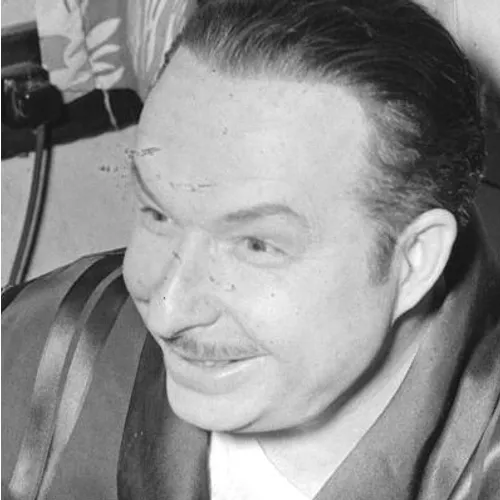
Few bandleaders did more to popularize Latin music across the United States in the mid-20th century than Xavier Cugat. With his orchestra, suave style, and flair for blending rhythms, Cugat helped bring Cuban and Latin American music into mainstream American entertainment — including through radio broadcasts, recordings, and films. His career provides a fascinating case of how a musical immigrant shaped cultural tastes and left a lasting imprint.
Early Life and Musical Beginnings
Born Joaquín Máximo Francisco Ricardo Cugat Mingall de Bru y Deulofeu on January 1, 1900, in Gavà, Catalonia, Spain, Cugat moved with his family to Cuba at a young age. His Cuban upbringing exposed him to Afro-Cuban rhythms and Latin musical styles — a formative background that would become the core of his musical identity. Cugat learned violin as a child and later studied music formally before entering the entertainment world. In the 1910s and early 1920s, he began working as a violinist with Cuban orchestras, absorbing both the classical tradition and vernacular Latin rhythms. This dual grounding — in formal technique and popular music — gave him the versatility to later assemble orchestras that could swing, salsa, or waltz in turn. By the late 1920s, he migrated to the United States, landing in New York City and then Los Angeles — two hubs that would help him launch a career bridging Latin America and the U.S.
Rise to Fame: Band, Broadcasts, and Cross-Cultural Appeal
In the 1930s and 1940s, Cugat established himself as leader of a large orchestra — a big band that brought Latin rhythms to the American mainstream. With charisma, a trademark mustache, and tuxedoed presence, he and his band performed in nightclubs, theaters, films, and importantly, radio broadcasts. These broadcasts allowed audiences who might never see him live to experience the energy of Latin music: rumba, mambo, bolero, conga beats. Cugat’s orchestra became a symbol of cosmopolitan glamour: during the height of his popularity, he was often billed as “the Rumba King.” He brought Latin dance music — previously confined largely to immigrant communities — to Americans across the country, across ethnic lines. He collaborated with popular vocalists, dancers, and Hollywood productions, merging Latin rhythms with mainstream entertainment. In doing so, he played a central role in shaping Americans’ first sustained exposure to Latin music. Cugat’s timing was important: in the 1940s, big bands and radio orchestras reigned, and swing and dance music filled the airwaves. His Latin-inflected big band offered something fresh and exciting — exotic rhythms, sensual dance, and a mood that was at once festive and sophisticated. Radio allowed his music to reach a wide audience beyond club-goers in Miami or New York.
Musical Style, Innovations, and Showmanship
What made Cugat’s orchestra stand out was its fusion of Latin rhythms with big-band arrangements. He used violins, brass, percussion, and vocals to create a sound that could swing, dance, or sway. His repertoire often included rumba, mambo, bolero, and other Latin genres, but arranged in a format accessible to American ears. That hybrid sensibility made his band a bridge between cultures. Cugat also brought a strong sense of showmanship to his performances. In clubs, theaters, or film sets, he projected elegance and flair — a polished conductor leading his orchestra with theatrical gestures, well-timed cues, and an air of charm. On radio broadcasts, though the audience could not see him, the band’s energy, tight rhythm, and rhythmic precision conveyed a kind of visual imagination through sound alone. Listeners could “hear” the dance, the movement, the excitement. That combination — authenticity rooted in Latin tradition, polished big-band arrangement, and showman’s charm — made Cugat one of the first truly cross-cultural music stars in America. He helped lay the groundwork for later waves of Latin influence in pop, jazz, and dance music.
Later Career, Film Appearances, and Legacy
Over the decades, Cugat’s career expanded beyond music alone. He appeared in Hollywood films — bringing his orchestra’s music into movies and exposing even wider audiences to Latin rhythms. This cinematic exposure, in turn, reinforced his musical brand and helped ensure that Latin music would not remain a niche. Even as musical fashions shifted — with rock ’n’ roll, rhythm and blues, and later pop dominating — Cugat’s influence endured. He had shown that Latin music could be mainstream; that audiences would respond to conga drums, maracas, and mambo—not just big-band swing. Later Latin-music stars and cross-genre artists owe part of their path to the bridges Cugat built. He continued to perform, record, and maintain a public presence well into his later years, earning admiration for both his musical legacy and his role in cultural exchange. He died on October 27, 1990, leaving behind decades of recordings and a legacy as “the Rumba King.”
Conclusion: A Cultural Bridge in Sound
Xavier Cugat’s career embodies a fascinating moment in American cultural history — when radio, film, immigration, and music converged to reshape tastes and expand horizons. As a bandleader, arranger, and performer, he helped bring Latin rhythms into the American mainstream. Through radio broadcasts, nightclub performances, film appearances, and recordings, he built a bridge between cultures. Cugat’s legacy is not only musical but social: he brought people together on dance floors, on radio waves, and in cinemas, forging connections across geography and heritage. He proved that music could cross borders — and that the sound of maracas, trumpets, and violins, set to a Latin beat, could resonate with listeners anywhere. His career remains a testament to the power of music to unite, transform, and endure.
Works and Appearances
Radio
- Regular broadcasts with the Xavier Cugat Orchestra — 1930s–1940s
Film / Cinema
- Multiple Hollywood film appearances
Recordings
- Numerous studio recordings and records under his bandleader name, bringing Latin rhythms into American households and dance halls.
Live Performance
- Nightclub and theater performances