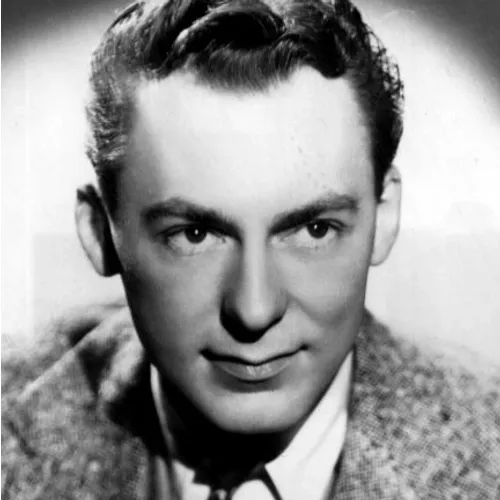
Woody Herman
Woodrow Charles "Woody" Herman (May 16, 1913 – October 29, 1987), was an American jazz clarinetist, alto and soprano saxophonist, singer, and big band leader. Leading various groups called "The Herd," Herman was one of the most popular of the 1930s and '40s bandleaders. His bands often played music that was experimental for its time. He was a featured halftime performer for Super Bowl VII.
Early life and career Herman was born Woodrow Charles Thomas Herrman in Milwaukee, Wisconsin on May 16, 1913. His parents were Otto and Myrtle Herrman.His father had a deep love for show business and this influenced Woody Herman at an early age. As a child he worked as a singer and tap-dancer in Vaudeville, then started to play the clarinet and saxophone by age 12. In 1931, he met Charlotte Neste, an aspiring actress; they married on September 27, 1936. Woody Herman joined the Tom Gerun band and his first recorded vocals were "Lonesome Me" and "My Heart's At Ease".Herman also performed with the Harry Sosnick orchestra, Gus Arnheim and Isham Jones. Isham Jones wrote many popular songs, including "It Had To Be You" and at some point was tiring of the demands of leading a band. Jones wanted to live off the residuals of his songs; Woody Herman saw the chance to lead his former band, and eventually acquired the remains of the orchestra after Jones' retirement. The Band That Plays The Blues and the First Herd 1936-1946 Woody Herman's first band became known for its orchestrations of the blues and was sometimes billed as "The Band That Plays The Blues". This band recorded for the Decca label, at first serving as a cover band, doing songs by other Decca artists. The first song recorded was "Wintertime Blues" on November 6, 1936. In January 1937, George T. Simon closed a review of the band with the words: "This Herman outfit bears watching; not only because it's fun listening to in its present stages, but also because its bound to reach even greater stages." After two and a half years on the label, the band had its first hit, "Woodchopper's Ball" recorded in 1939. Woody Herman remembered that "Woodchopper's Ball" started out slowly at first. "t was really a sleeper. But Decca kept re-releasing it, and over a period of three or four years it became a hit. Eventually it sold more than five million copies—the biggest hit I ever had." Other hits for the band include "The Golden Wedding" and "Blue Prelude". Musicians and arrangers that stand out include Cappy Lewis on trumpet and Dean Kincaide, a noted big band arranger. In jazz, swing was gradually being replaced by bebop. Dizzy Gillespie, a trumpeter and one of the originators of bop, wrote three arrangements for Woody Herman, "Woody'n You", "Swing Shift" and "Down Under". These were arranged in 1942. "Woody'n You" was not used at the time. "Down Under" was recorded November 8, 1943. The fact that Herman commissioned Dizzy Gillespie to write arrangements for the band and that Herman hired Ralph Burns as a staff arranger, heralded a change in the style of music the band was playing. In February 1945, the band started a contract with Columbia Records. Herman liked what drew many artists to Columbia, Liederkrantz Hall, at the time the best recording venue in New York City. The first side Herman recorded was "Laura", the theme song of the 1944 movie of the same name. Herman's version was so successful that it made Columbia hold from release the arrangement that Harry James had recorded days earlier. The Columbia contract coincided with a change in the band's repertoire. The 1944 group, which he called the First Herd, was famous for its progressive jazz. The First Herd's music was heavily influenced by Duke Ellington and Count Basie. Its lively, swinging arrangements, combining bop themes with swing rhythm parts, were greatly admired. As of February 1945 the personnel included Sonny Berman, Pete Candoli, Billy Bauer (later replaced by Chuck Wayne), Ralph Burns, Davey Tough and Flip Phillips. On February 26, 1945 in New York City, the Woody Herman band recorded "Caldonia". Neal Hefti and Ralph Burns collaborated on the arrangement of "Caldonia" that the Herman band used. "Ralph caught Louis Jordan in an act and wrote the opening twelve bars and the eight bar tag." "But the most amazing thing on the record was a soaring eight bar passage by trumpets near the end." These eight measures have wrongly been attributed to a Dizzy Gillespie solo, but were in fact originally written by Neal Hefti. George T. Simon compares Neal Hefti with Dizzy Gillespie in a 1944 review for Metronome
