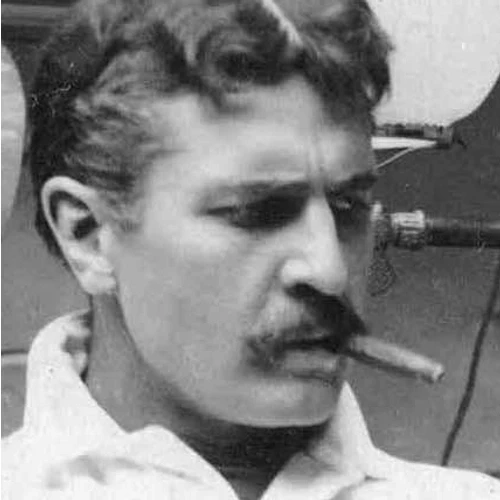
William Gillette
William Gillette was a pioneering American actor, playwright, and stage manager whose contributions to theater and radio left a lasting impact on American entertainment. Best known for his portrayal of Sherlock Holmes, Gillette helped define the character for generations of audiences, both on stage and in early radio adaptations.
Early Life and Theatrical Roots
William Hooker Gillette was born on February 27, 1853, in Hartford, Connecticut. He grew up in a family that valued education and the arts, which fostered his early interest in performance and literature. Gillette began acting professionally in the late 19th century, quickly gaining recognition for his charm, presence, and innovative approach to stagecraft. His early theatrical experiences included touring with regional theater companies and performing in classic plays, which allowed him to develop versatility and mastery of dramatic timing. These formative years laid the groundwork for his later fame and influence.
Stage Career and Sherlock Holmes
Gillette achieved widespread acclaim for his portrayal of Sherlock Holmes, a role he first played in the stage adaptation he co-wrote in 1899. His performance was so influential that it shaped popular perceptions of the character, including Holmes’ iconic deerstalker hat and curved pipe. Over the years, Gillette performed as Holmes in more than 1,300 performances, touring extensively in the United States and Europe. His interpretation of Holmes emphasized intellect, subtle humor, and a calm yet commanding presence, setting a standard for future actors portraying the detective.
Radio and Other Performances
Later in his career, Gillette appeared in early radio adaptations of Sherlock Holmes, bringing his stage expertise and distinctive voice to a new medium. These performances helped introduce the character to a broader audience and demonstrated Gillette’s adaptability as entertainment evolved from stage to radio. In addition to radio, he was active in writing and managing stage productions, often taking control of direction, design, and adaptation of scripts. Gillette’s attention to detail and insistence on creative control influenced theater production practices for years to come.
Legacy and Influence
William Gillette’s career is remembered for his definitive portrayal of Sherlock Holmes and his innovative contributions to American theater. He influenced both acting and production techniques, pioneering a professional approach to touring, stage design, and character development. He passed away on April 29, 1937, in Hartford, Connecticut, leaving behind a legacy as one of the foremost actors of his generation. His influence extended beyond the stage, shaping the depiction of Sherlock Holmes in popular culture for decades.
Works and Appearances
Radio
- Early Sherlock Holmes adaptations
Stage
- Sherlock Holmes (1899–1930s)
- Numerous touring productions of classic and contemporary plays
Film
- Sherlock Holmes (1916 silent film)