William Demarest
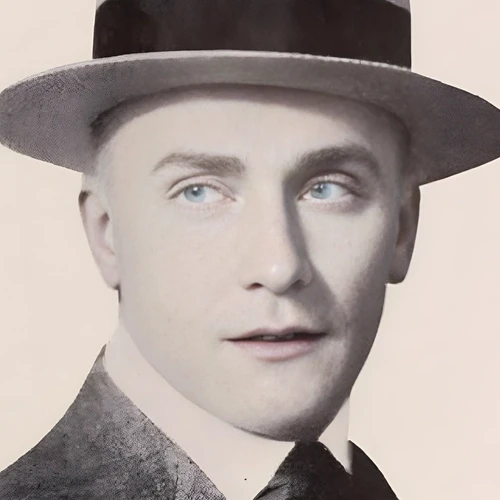
William Demarest was a consummate character actor whose career spanned vaudeville, early talkies, classic Hollywood comedies, and a beloved run on television. With his distinctive tough-but-tender screen persona, expressive face, and impeccable comic timing, he became a reliable presence in over a hundred films — and later, a household name to television audiences as the crusty but warm Uncle Charley. His longevity and adaptability made him a defining figure in American entertainment across much of the 20th century.
Early Life and Vaudeville Beginnings
Carl William Demarest was born on February 27, 1892, in Saint Paul, Minnesota, the youngest of three sons of Wilhelmina and Samuel Demarest. In his infancy, the family moved to New Bridge, New Jersey, a small hamlet in Bergen County; it was there that Demarest first entered show business. From a young age, he performed in vaudeville alongside his two older brothers — an act that often played resort hotels and variety circuits. For a time he even boxed professionally under the name “Battling McGovern,” an episode of his life he rarely spoke about. His stage work preceded his film career by more than two decades. After vaudeville and some traveling performances — which included a stint in the Alcazar Theatre stock company — Demarest gradually transitioned toward motion pictures.
Rise in Film: The Sturges Era and Comic Strength
Demarest’s first film appearances began in 1926, and by the late 1920s and early 1930s, he was working steadily in Hollywood, including in the early “talkies.” Over time, his talents — especially his ability to play cantankerous, world‑weary but fundamentally decent characters — made him a go-to supporting actor. His most significant breakthrough came through his work with director-screenwriter Preston Sturges. Demarest became a regular in Sturges’ informal stock company, appearing in a string of landmark screwball comedies and social satires. Memorable films from that period include The Lady Eve, Sullivan’s Travels, Hail the Conquering Hero, and The Miracle of Morgan’s Creek. Known for his “crusty but good‑hearted” characters, Demarest often played tough cops, skeptical businessmen, or weary sidekicks — roles that allowed him to deploy his trademark deadpan expressions and gruff voice to comedic and dramatic effect. In 1946, Demarest earned an Academy Award nomination for Best Supporting Actor for his role in The Jolson Story, marking a rare nod of formal recognition for a character actor of his type.
Television Stardom: Uncle Charley and Later Roles
As Hollywood shifted and television rose in prominence, Demarest transitioned smoothly into the new medium. His most famous television role came as Uncle Charley O’Casey on the sitcom My Three Sons, which he joined in 1965. Over the course of seven seasons (until 1972), he portrayed the retired sea captain with warmth, gruff humor, and genuine heart — a performance that brought the affectionate, rough-around-the-edges charm he’d honed in film to a new generation of viewers. Beyond My Three Sons, Demarest continued to work in both television and film into the 1960s and 1970s. He appeared in character roles in a variety of productions, showcasing his continuing versatility and staying power as a working actor.
Character, Craft, and Legacy
What made William Demarest remarkable was his reliability and authenticity as a character actor. Directors such as Frank Capra praised him as a “strong anchorman” — someone around whom a scene could be built with confidence. His comic timing, expressive face, and gruff voice became trademarks of his persona. He often embodied “crusty but kindhearted” or “exasperated but loyal” archetypes, adding a depth and human dimension even to supporting roles. Despite a career of over a hundred films and numerous television appearances, he never became a traditional leading man — instead, he became one of Hollywood’s most dependable character actors, a performer whose presence always added realism, humor, or gravitas to whatever production he joined. In recognition of his contributions to cinema, he was awarded a star on the Hollywood Walk of Fame on August 8, 1979. William Demarest passed away on December 28, 1983, in Palm Springs, California, at the age of 91. His long career across vaudeville, film, and television reflects both the evolution of American entertainment and the enduring power of a great character actor.
Works and Appearances
Film
- When the Wife's Away (1926)
- The First Auto (1927)
- The Jazz Singer (1927)
- The Lady Eve (1941)
- Sullivan’s Travels (1941)
- Hail the Conquering Hero (1944)
Television
- My Three Sons (1965–1972)
- Guest and supporting roles in various television series throughout the 1950s–1970s
Theatre / Vaudeville / Early Performance
- Vaudeville performer (from childhood, with his two older brothers)
- For a time, he also performed as part of the duo “Demarest and Collette” with his first wife
Recognitions
- Academy Award Nomination, Best Supporting Actor
- Emmy Nomination, Supporting Actor in Comedy
- Star on the Hollywood Walk of Fame — awarded August 8, 1979