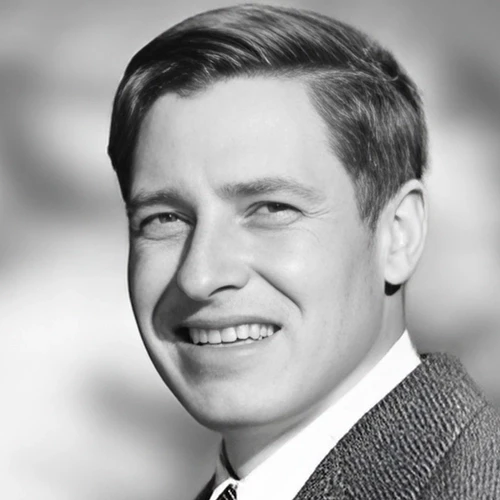
Will Rogers Jr.
Will Rogers Jr. carried forward the legacy of his father, the legendary humorist and entertainer Will Rogers, while establishing his own identity as an actor, military officer, and public servant. Known for his work in radio, film, and politics, Rogers Jr. bridged entertainment and civic engagement, demonstrating the versatility and charisma that defined the Rogers family name.
Early Life and Family Background
William Presley Rogers Jr. was born on June 30, 1911, in New York City, the son of the iconic entertainer Will Rogers and his wife, Betty Blake. Growing up under the shadow of a father celebrated for wit, humor, and political commentary, Rogers Jr. was immersed in an environment that valued public communication, performance, and civic responsibility. This upbringing instilled in him a blend of charm, intelligence, and an awareness of national affairs that would later define his career. Rogers Jr. pursued higher education at Stanford University, where he developed a foundation for both public service and performance. The combination of formal education and early exposure to the entertainment world gave him a unique perspective, allowing him to navigate both the media landscape and civic responsibilities with ease. His upbringing, steeped in humor and public engagement, prepared him to follow in his father’s footsteps while forging his own path.
Radio and Early Entertainment Career
Rogers Jr. began his professional career in radio and film, drawing upon his family’s legacy while developing his own identity. He appeared in various radio programs, where his voice and delivery echoed the approachable charm for which his father was renowned. Though specific radio shows and years of activity are not detailed, his early work on air showcased his ability to communicate with audiences through warmth, wit, and a keen understanding of timing. In addition to radio, Rogers Jr. appeared in film, including biographical portrayals that honored his father’s legacy, helping to introduce Will Rogers’ persona to new audiences. These performances allowed him to both pay tribute to his family heritage and establish credibility as a performer in his own right. His radio and film work in the 1930s and early 1940s marked a period of professional development and public recognition.
Military Service and Civic Engagement
During World War II, Rogers Jr. served in the U.S. Army, attaining the rank of Captain. His military service exemplified his dedication to public duty, paralleling the patriotic undertones often present in his father’s commentary. Rogers Jr.’s involvement in the armed forces demonstrated a commitment to national service and provided experiences that informed both his later political career and his performances portraying military or civic figures. Following his military service, Rogers Jr. became increasingly active in public affairs and politics, reflecting his family’s longstanding engagement with national issues. He leveraged his public profile, cultivated through entertainment and military service, to participate in civic discourse, demonstrating the seamless blending of media presence and public responsibility that characterized his career.
Political Career and Public Life
Rogers Jr. transitioned into politics in the post-war era, serving as a U.S. Congressman from California from 1943 to 1945. Representing California’s 16th congressional district, he brought the same affable, articulate presence to Capitol Hill that had defined his radio and film work. His tenure in Congress reflected a commitment to public service, civic engagement, and the application of communication skills honed through entertainment. Although his time in office was relatively brief, Rogers Jr.’s political career highlighted his ability to navigate multiple spheres of influence. He combined public familiarity, persuasive communication, and personal integrity to connect with constituents and colleagues alike. This dual engagement in media and politics set him apart from many contemporaries and underscored the versatility for which he was known.
Later Career and Legacy
Following his congressional service, Rogers Jr. continued to be active in both entertainment and public life. He appeared in film, television, and radio productions that celebrated his father’s legacy, while also participating in initiatives and organizations dedicated to public service. His career demonstrated a sustained ability to balance performance with civic engagement, reinforcing the Rogers family’s enduring influence on American culture. Rogers Jr. passed away on July 9, 1993, in Los Angeles, California, at the age of 82. His life exemplified a dedication to both performance and public service, bridging the worlds of media, entertainment, and politics in a manner that honored his father’s legacy while forging his own identity. Rogers Jr.’s contributions to radio, film, and civic life remain a testament to the power of versatility, communication, and public engagement.
Works and Appearances
Radio
- Rogers of the Gazette
Film
- The Story of Will Rogers (1952)

