Warner Anderson
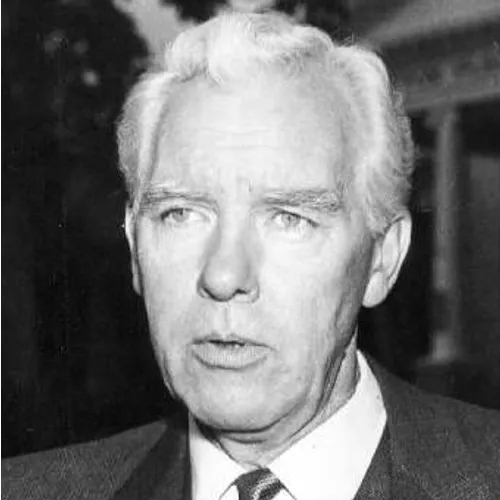
Warner Anderson commanded presence both behind the microphone and in front of the camera, becoming one of broadcasting's most distinctive personalities during the golden age of radio and television. His deep, authoritative voice and no-nonsense demeanor made him ideal for roles of power and responsibility, whether as a corporate executive, military officer, or law enforcement detective. Anderson's career spanned multiple decades and mediums, establishing him as a versatile performer who successfully navigated the transition from radio to television when many of his contemporaries struggled to adapt.
A Life in Broadcasting
Warner Anderson entered the entertainment world during the early years of commercial radio's expansion. Though specific details about his early life remain limited, his career demonstrated a commitment to professional excellence that would define his decades-long presence in American media. His commanding voice became his calling card, opening doors across multiple entertainment platforms and establishing him as a recognizable figure to audiences across the country. Anderson's ability to convey authority and professionalism made him particularly valuable during an era when vocal performance alone often determined an actor's suitability for particular roles.
The Radio Years
During the 1940s, Anderson established himself as a respected voice in broadcasting, working as the announcer for The Bell Telephone Hour, one of the era's prestigious radio programs. This prominent role showcased his polished delivery and professional bearing, qualities that would serve him well throughout his career. Later, he transitioned into acting roles on various radio programs, demonstrating his versatility beyond mere announcement work. Anderson appeared as Ryan on Terry and the Pirates, the popular adventure serial that captivated audiences with its exotic locales and action-packed narratives. The radio medium allowed Anderson to showcase the vocal range and dramatic timing that distinguished accomplished performers of the era. His work during this period established the foundation for a career that would extend well beyond radio's golden age, proving that an actor could successfully pivot to visual media without losing the credibility and skill that made them valuable in audio broadcasting.
Television and Film Success
Anderson achieved perhaps his most enduring recognition through his role as Lt. Ben Guthrie in the television series The Lineup, which ran from 1954 to 1960Paired with costar Tom Tully, Anderson portrayed a detective in this early police procedural that proved popular enough to warrant a theatrical release. The 1958 film version of The Lineup maintained Anderson in his signature role, demonstrating the character's appeal across different mediums. In syndication, reruns of The Lineup circulated under the alternative title San Francisco Beat, extending the show's reach and Anderson's visibility to new audiences. Beyond his detective work in The Lineup, Anderson appeared in numerous films throughout the 1940s and 1950s, building an impressive filmography that reflected his suitability for authoritative roles. His physical presence on screen complemented the commanding vocal quality that had made him successful in radio, allowing him to dominate scenes through both performance and bearing. Anderson's film appearances ranged from military officers to corporate figures, roles that leveraged his natural authority and professional demeanor. Television also brought Anderson into American homes as Matthew Swain, the newspaper publisher on Peyton Place, where he served dual duty as both cast member and narrator. His narration at the beginning of each episode became part of the show's distinctive appeal, and Anderson continued in this role even after his character was written out of the series, demonstrating both his value to the production and the producers' confidence in his ability to frame the drama. This unique arrangement highlighted the confidence the program's creators placed in Anderson's voice and presence as essential to the show's identity.
Legacy and Impact
Warner Anderson died on August 26, 1976, at the age of 65 in a hospital in Santa Monica, California. He left behind a widow and a son, along with a career that spanned multiple decades and mediums. Anderson's impact on broadcasting extended beyond his individual performances; he exemplified the professional actor who brought credibility and gravitas to every role, whether wielding authority as a general, judge, or detective. His success in radio proved that skilled performers could transition to television without diminishing their appeal or professional standing, a reassuring message during an era of technological and cultural change in entertainment. The careers of countless character actors in television owe something to performers like Anderson, who demonstrated that distinctive vocal quality combined with physical presence could create memorable, authoritative characters that audiences accepted and valued. His work helped establish templates for how authority figures should be portrayed on screen, influencing casting decisions and character development for generations of television producers.
Works and Appearances
Radio
- The Bell Telephone Hour (1940s) – Announcer
- Terry and the Pirates – Ryan
Television
- The Lineup (1954–1960) – Lt. Ben Guthrie
- Peyton Place (1964–1969) – Matthew Swain / Narrator
- Bearcats! (1971) – Mr. Huddleston
- The Rockford Files (1975) – Alfred Bannister
Cinema
- The Sunbeam (1916) – Bobby Rutherford
- This Is the Army (1943) – Kate Smith's Announcer
- Destination Tokyo (1943) – Andy
- Objective, Burma! (1945) – Col. J. Carter
- Dangerous Partners (1945) – Miles Kempen
- Bad Bascomb (1946) – Luther Mason