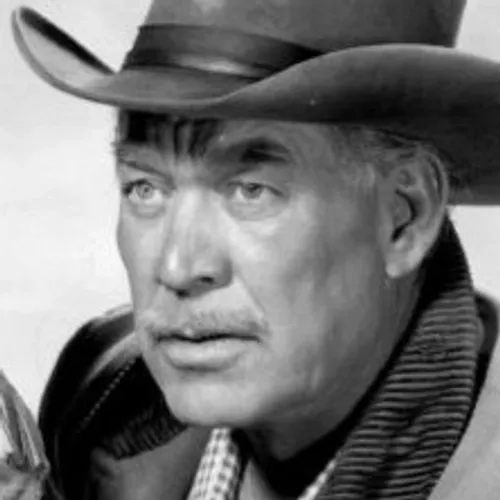
Ward Bond
Ward Bond was a towering presence in American entertainment, a man whose rugged features and commanding voice made him instantly recognizable across film, television, and radio. While he is best remembered for his roles in classic Hollywood westerns and as the trail master in the iconic television series Wagon Train, his career began long before the cameras rolled, rooted in the vibrant world of old-time radio. Bond’s journey from college football to the airwaves and eventually to the silver screen is a testament to his versatility and enduring appeal. His collaborations with legends like John Wayne and John Ford, and his ability to inhabit a wide range of characters, made him a fixture in American pop culture.
Early Life and Background
Wardell Edwin Bond was born on April 9, 1903, in Benkelman, Nebraska. His early life was shaped by a love for sports, particularly football, which would later play a pivotal role in his entry into the entertainment industry. Bond’s athletic prowess earned him a place at the University of Southern California, where he played football alongside a young John Wayne. This friendship would prove to be a cornerstone of Bond’s career, as Wayne would help him secure his first opportunities in Hollywood. Bond’s background in sports instilled in him a sense of discipline and camaraderie, traits that would serve him well in the collaborative world of radio and film. After college, Bond moved to Hollywood, where he initially found work as an extra through a football teammate. His big break came when director John Ford promoted him from extra to supporting player in the film Salute in 1929. This marked the beginning of a long and fruitful relationship with Ford, who would become another close friend and mentor. Bond’s early years in Hollywood were marked by a series of bit parts and uncredited roles, but his distinctive voice and commanding presence quickly set him apart. These qualities would soon make him a sought-after talent in the burgeoning world of radio broadcasting.
Entry Into Radio
Bond’s entry into radio was a natural progression from his work in film. His voice, with its deep, resonant timbre, was perfectly suited for the medium, and his experience as a character actor gave him the versatility needed to bring a wide range of characters to life. While specific details about his early radio work are not provided in the Wikipedia article, it is clear that Bond’s career in radio was intertwined with his film and television work. His ability to adapt to different roles and his knack for improvisation made him a valuable asset to radio producers. Bond’s radio career likely began in the late 1920s or early 1930s, a time when radio was becoming a dominant force in American entertainment. The medium offered actors like Bond the opportunity to reach a vast audience and to experiment with different types of characters. His work in radio would have included everything from dramatic readings to serialized stories, and his collaborations with other actors and writers would have helped him hone his craft. Bond’s experience in radio undoubtedly influenced his later work in film and television, where he continued to bring the same energy and authenticity to his performances.
Notable Radio Shows and Characters
While the Wikipedia article does not provide a detailed list of Bond’s radio shows or characters, it is clear that his work in radio was an important part of his career. His collaborations with John Ford and John Wayne, as well as his frequent appearances in films and television, suggest that he was a versatile and in-demand talent. Bond’s ability to play a wide range of roles, from cowboys to cops to soldiers, would have made him a natural fit for the diverse world of radio drama. One of Bond’s most memorable roles in film was as Bert the cop in Frank Capra’s It’s a Wonderful Life (1946), a performance that showcased his ability to bring warmth and humanity to his characters. This same quality would have served him well in radio, where the voice is the primary tool for conveying emotion and personality. Bond’s work in radio likely included a mix of dramatic and comedic roles, and his collaborations with other actors and writers would have helped him develop a distinctive style.
Broadcasting Style and Signature Techniques
Bond’s broadcasting style was characterized by his deep, resonant voice and his ability to bring a sense of authenticity to his performances. His experience as a character actor gave him the versatility needed to inhabit a wide range of roles, and his collaborations with other actors and writers helped him develop a distinctive style. Bond’s performances were marked by a sense of warmth and humanity, qualities that made him a favorite with audiences. One of Bond’s signature techniques was his ability to improvise and adapt to different situations. This skill was particularly valuable in the world of radio, where actors often had to think on their feet and respond to unexpected challenges. Bond’s experience in film and television also gave him a strong sense of timing and pacing, qualities that were essential for success in radio. His ability to bring a sense of realism to his performances made him a standout talent in the medium.
Legacy and Influence
Ward Bond’s legacy is one of versatility, authenticity, and enduring appeal. His work in radio, film, and television helped shape the landscape of American entertainment, and his collaborations with legends like John Wayne and John Ford cemented his place in pop culture history. Bond’s ability to bring warmth and humanity to his characters made him a favorite with audiences, and his distinctive voice and commanding presence made him a standout talent in every medium he worked in. Bond’s influence can be seen in the many actors who followed in his footsteps, bringing the same energy and authenticity to their performances. His work in radio helped pave the way for future generations of broadcasters, and his legacy continues to inspire actors and writers today. Bond’s career is a testament to the power of versatility and the enduring appeal of authentic storytelling.
Works and Appearances
Television
- Wagon Train (1957–1961)
- The Steve Allen Plymouth Show (1957, 1958)
- General Electric Theater (1958)
Cinema
- Words and Music (1929)
- Salute (1929)
- The Lone Star Ranger (1930)
- Born Reckless (1930)
- Cheer Up and Smile (1930)
- The Big Trail (1930)
- Virtue (1932)