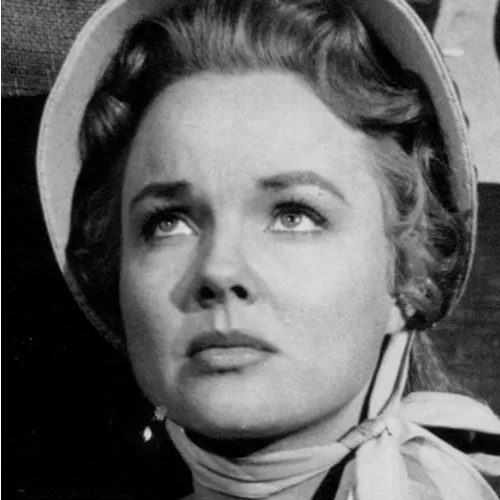
Wanda Hendrix
Dixie Wanda Hendrix emerged as one of Hollywood's most versatile performers, navigating the transition from films to television during a transformative era in entertainment. Born in Jacksonville, Florida on November 3, 1928, she would become a fixture in both cinema and the small screen, though her career trajectory proved far more complex than the typical ingénue's rise to stardom. Her journey through Hollywood's golden age reveals not only her professional accomplishments but also the personal struggles that shaped her resilience as a performer during one of broadcasting and film's most pivotal periods.
Early Career and Film Breakthrough
Hendrix launched her film career at the remarkably young age of 16 with her first picture, Confidential Agent (1945), for Warner Bros., immediately earning featured roles rather than settling for bit parts. This auspicious beginning demonstrated the industry's confidence in her abilities from the outset. Working for Paramount, she quickly established herself in notable productions, earning one of her finest roles in Ride the Pink Horse (1947), a picture that generated Oscar nomination buzz for her performance. The film marked a significant turning point in her career trajectory. By the late 1940s, Hendrix had secured roles in increasingly prestigious productions, moving beyond the B-movie circuit that had dominated her early years. She appeared alongside Tyrone Power in Prince of Foxes (1949) anzad demonstrated her comedic talents in the light entertainment Miss Tatlock's Millions (1948). These roles showcased her range as a performer and solidified her status as a rising talent within the studio system. Her appearance on the cover of Coronet magazine further amplified her visibility and attractiveness to major productions.
Marriage to Audie Murphy and Its Aftermath
A pivotal moment in both Hendrix's personal and professional life came when decorated WWII hero-turned-Universal star Audie Murphy took notice of her and arranged a meeting. The couple married on February 8, 1949, and she co-starred alongside him in the western vehicle Sierra (1950). However, what appeared externally as a glamorous Hollywood union concealed deeper complications. Murphy, suffering from flashbacks and paranoia stemming from his traumatic war experiences, often engaged in violent episodes during which he held her at gunpoint. After enduring only seven months of this traumatic situation, Hendrix summoned the courage to leave him, ultimately divorcing and charging him with mental cruelty. The final decree was granted on April 14, 1950. This highly publicized dissolution damaged Hendrix's standing in Hollywood at a critical moment in her career. The negative publicity that surrounded the marriage's collapse presented an obstacle to her professional advancement. Following the divorce, she appeared in several standard westerns and war stories, including Captain Carey, U.S.A. (1950) with Alan Ladd, The Highwayman (1951) with Charles Coburn, and Highway Dragnet (1954) directed by Roger Corman and starring Richard Conte. Despite these appearances, her film career began its decline during this period, never quite recovering the momentum she had established in the late 1940s.
Television Work and Strategic Retreat
Rather than fade from public view entirely, Hendrix pivoted strategically toward television, which offered renewed opportunities for performers whose theatrical box office appeal had dimmed. She found steady work in live television dramatic anthology shows, becoming a familiar presence in programs such as Pulitzer Prize Playhouse, Robert Montgomery Presents, The Plymouth Playhouse, The Ford Television Theatre, The Revlon Mirror Theater, and Schlitz Playhouse. These programs provided continuous employment and allowed her to demonstrate her versatility across diverse dramatic roles. On June 26, 1954, Hendrix married wealthy sportsman James Langford Stack, Jr., the brother of actor Robert Stack. This marriage prompted her to essentially retire from films, though she continued her television work throughout the mid-to-late 1950s. By 1955, she reconsidered her retirement and received her husband's approval to return to acting. The couple later separated in May 1958, divorcing on November 3, 1958, with Hendrix receiving a $1,100 monthly stipend for ten years, provided she did not remarry during that period.
Later Career and Final Years
Following her divorce from Stack, Hendrix resumed her career with renewed determination. She made her television comeback in December 1957 co-starring with John Smith in Telephone Time, demonstrating that she remained a viable performer in the television industry. Throughout the late 1950s and 1960s, she secured guest appearances in popular television series, including Bat Masterson, My Three Sons, Wagon Train, and Bewitched, appearing as Helen Silverton in the eighth-season episode "TV or Not TV" (1971). She also appeared in films such as Johnny Cool (1963), Stage to Thunder Rock (1964), and the Edgar Allan Poe adaptation The Oval Portrait (1972). In 1969, Hendrix married for the third and final time, to Italian financier and oil company executive Steven LaMonte in Las Vegas. This marriage lasted until November 17, 1980. By the late 1970s, her health began to deteriorate seriously. Hendrix passed away on February 1, 1981, in Burbank, California, from double pneumonia, at the age of 52. She was interred at Forest Lawn Cemetery, with her survivors including her mother, Mary Eliza Bailey Hendrix, and extended family in California and Florida.
Legacy and Historical Significance
Wanda Hendrix's career encapsulates the experience of countless mid-century performers who navigated the uncertainties of the studio system, the transition from film to television, and the personal traumas that often shadowed Hollywood's glamorous facade. While she never achieved the sustained stardom of some contemporaries, her longevity in an unforgiving industry demonstrated both professional competence and personal resilience. Her work across multiple media—from Warner Bros. prestige pictures to live television dramas to series television—provides a valuable record of entertainment during a transformative era. Hendrix's ability to reinvent herself professionally after personal and career setbacks offers a compelling counternarrative to simple success stories, revealing instead the complexity of sustaining a career in show business.
Works and Appearances
Cinema
- Confidential Agent (1945)
- Nora Prentiss (1947)
- Welcome Stranger (1947)
- Hollywood Wonderland (1947, short)
- Variety Girl (1947)
- Ride the Pink Horse (1947)
Television
- Pulitzer Prize Playhouse
- Robert Montgomery Presents
- The Plymouth Playhouse
- The Ford Television Theatre
- The Revlon Mirror Theater
- Schlitz Playhouse –
- Telephone Time (December 1957)
