Walter Burke
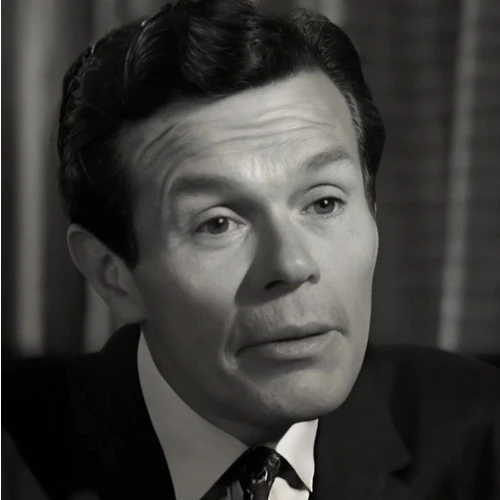
Walter Burke embodied the spirit of the working character actor—a professional who built a remarkable career spanning more than five decades across Broadway, radio, film, and television. Born Walter Lawrence Burke on August 25, 1908, in Brooklyn, New York, this Irish-American performer became a fixture in American entertainment, known for his ability to inhabit diverse roles with authenticity and skill. While television audiences may best remember him as the bodyguard Sugar Boy in All the King's Men (1949) or as Fred Johnson in Support Your Local Sheriff! (1969), Burke's early foundation in Broadway theater and his work in radio set the stage for a career that would span from 1925 until his retirement in 1980.
A Broadway Beginning
Burke's theatrical journey commenced early in his life when he made his Broadway debut as a child actor. The young performer quickly became a fixture on the New York stage during the 1920s, establishing himself in the theatrical world before most actors of his generation had even entered the profession. His early Broadway work included performances in acclaimed productions such as Up in Central Park and Major Barbara, productions that demonstrated his range and versatility as a performer. During the mid-1920s, Burke secured roles in notable theatrical productions that reflected the vibrant musical theater scene of that era. He appeared in Dearest Enemy at the Knickerbocker Theatre during the 1925–1926 season, a significant theatrical engagement that helped establish his credentials in the Broadway community. The following year, he performed in the musical revue Padlocks of 1927 at the Shubert Theatre, further solidifying his presence in New York's theatrical landscape. His theatrical work demonstrated an actor willing to take on diverse material, from straight drama to musical revue. In January 1928, Burke joined the American Opera Company's troupe, where he performed a non-singing role in an English-language adaptation of Faust. This engagement showcased his ability to work within operatic productions, even in roles that didn't require vocal performance. These early theatrical experiences established Burke as a committed and dependable performer, traits that would define his entire career in entertainment.
Radio's Golden Age
The emergence of radio as a dominant entertainment medium in America coincided with Burke's professional maturation, and he became an active participant in the medium during its most vibrant period. Radio provided the perfect outlet for Burke's particular talents—his ability to create distinct characters through voice work, his reliability as a professional, and his willingness to accept supporting roles that moved the narrative forward. Burke appeared in several radio programs that defined the golden age of broadcasting, establishing himself as a dependable character actor whom producers could call upon to fill crucial roles. His radio work included appearances on programs such as Words At War, which dramatized stories related to warfare and military service. This program represented the type of serious dramatic content that radio audiences consumed during and after World War II, and Burke's participation in such productions demonstrated his acceptance by producers seeking experienced theatrical performers for broadcast work. His radio appearances also included work on My Home Town, a program that featured performances from prominent entertainers including Cliff Arquette and Will Rogers. Such programs showcased America's variety entertainment traditions, and Burke's involvement indicated his standing as a professional capable of working alongside established entertainment figures. These radio engagements, while sometimes overshadowed by his later television work, represented an important phase of his career during broadcasting's most influential period.
The Television Era and Diverse Character Work
When Burke transitioned to television in 1951, he brought with him decades of experience in character work and professional reliability. His television debut came when he played a jockey in the early television series Martin Kane. From that point until 1980, Burke would accumulate an extraordinary résumé, appearing in episodes of 103 different television series, along with three made-for-television movies. While never a series regular, Burke developed a reputation for playing different roles in multiple episodes of the same shows, demonstrating versatility that made him invaluable to producers. Throughout the late 1950s and 1960s, Burke became a recognizable presence on television's most popular programs. In 1959–60, he appeared five times as Tim Potter in the ABC western series Black Saddle starring Peter Breck. That same season, he appeared on Andrew Duggan'sBourbon Street Beat and John Cassavetes'sJohnny Staccato detective series, establishing himself as a performer capable of moving fluidly between different dramatic genres. Burke's work on the venerable CBS series Perry Mason exemplified his professional range. He portrayed defendant Freddie Green in the 1959 episode "The Case of the Jaded Joker," the first of five appearances in diverse roles. In 1960, he played prosecutor James Blackburn in "The Case of the Ominous Outcast," demonstrating his ability to inhabit characters on opposite sides of the courtroom. Among his other roles in the series, he played a panhandler and a private detective, showcasing the breadth of character types he could convincingly portray. Burke's western television work extended across multiple programs. Between 1959 and 1969, he made guest appearances on five episodes of the western drama series Gunsmoke, the medium's longest-running narrative series. In the syndicated western series Two Faces West, he guest-starred as Hatfield in the 1961 episode "The Drought." He portrayed the character Billy Neal in an episode of The Virginian titled "The Gift" in 1970, while his work in Bonanza included appearances in three episodes, where he played characters including Jesse Pierson, Tim O'Brien, and Campbell across different episodes. Burke's science fiction and dramatic television appearances demonstrated his versatility beyond the western genre. He appeared on an episode of Lost in Space, playing Mr. O.M. in "The Toymaker" (1967), and guest-starred in Wild Wild West as the mayor of a town under siege. His dramatic television appearances included work on Hogan's Heroes, where he played the master safe cracker Alfie the Artiste, and a guest appearance on The Lloyd Bridges Show, the CBS anthology series, during the 1962–1963 season. He also appeared in episodes of I Dream of Jeannie, The Big Valley, The F.B.I., and The Doris Day Show, among numerous other series.
Legacy and Final Years
From the mid-1970s onward, Burke divided his time between Hollywood and his horse ranch in Monroe County, Pennsylvania. While living back east, he taught dramatics at a local college, passing his decades of professional experience to the next generation of performers. This dual life—maintaining connections to both the entertainment industry and to the land—reflected Burke's character as a grounded professional who never lost sight of his roots despite his extensive career in show business. Burke's career spanned fifty-five years of continuous work, a remarkable achievement in an industry known for its uncertainties and rapid changes. His transition from Broadway to radio to film and television demonstrated his adaptability and professional competence across multiple mediums. Though often uncredited or playing minor roles in theatrical releases, Burke's cumulative body of work represented the kind of steady, reliable professional performance that made American entertainment function during its most vibrant periods. He retired from active work in 1980, having established himself as one of the most dependable character actors of his generation. Burke succumbed to emphysema on August 4, 1984, at the Motion Picture Hospital in Woodland Hills, California, and was buried in Laurelwood Cemetery in Stroudsburg, Pennsylvania.
Works and Appearances
Radio
- Words At War (1940s)
- My Home Town (1940s)
Theater
- Dearest Enemy at the Knickerbocker Theatre (1925–1926)
- Padlocks of 1927 at the Shubert Theatre (1926–1927)
- Faust (English-language adaptation) with American Opera Company (928)
- Up in Central Park
- Major Barbara
Film
- The Plainsman (1966) as Abe Ireland
- Double Trouble (1967) as Mate
- Stranger on the Run (1967, TV Movie) as Abraham Berk
- The President's Analyst (1967) as Henry Lux, FBR Chief
- Support Your Local Sheriff! as Marty Saunders
Television
- Martin Kane (1951, jockey)
- Alfred Hitchcock Presents (1959, "Relative Value," Season 4, Episode 21) as Benny
- Yancy Derringer (1959, "Panic in Town") as Sneaky Joe
- Alcoa Presents: One Step Beyond (1959, "Front Runner") as jockey Sam Barry
- Lawman (1959, "Red Ransom") as Whiskey Jimmie
- Gunsmoke (1959, "Wind") as Bystander
- Gunsmoke (1960, "Hinka Do," Season 5, Episode 21) as Herman