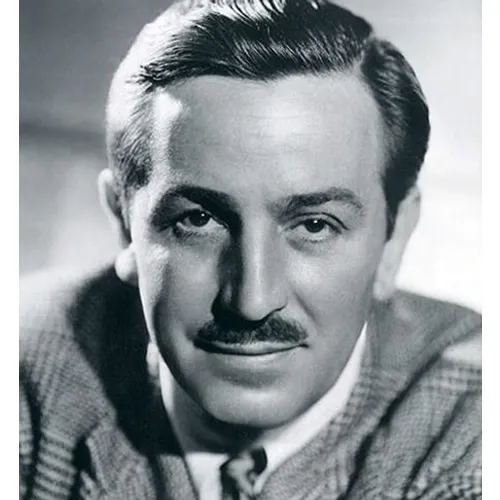
Walt Disney
Walt Disney stands as one of the most transformative figures in entertainment history, though his connection to radio broadcasting remains less celebrated than his monumental achievements in animation and film. Walter Elias Disney, born in Chicago in 1901, developed an early interest in drawing and took art classes as a boy, eventually landing work as a commercial illustrator at a young age. His journey from humble beginnings to becoming an animation industry pioneer would eventually extend into radio, where he helped shape the medium's relationship with family-friendly entertainment and emerging technologies.
The Animator Who Revolutionized Sound in Entertainment
Disney's entry into the entertainment industry coincided with a transformative moment in cinema history. After completing animation work, Disney signed a contract with Pat Powers, a former executive of Universal Pictures, to utilize the "Powers Cinephone" recording system. This partnership proved instrumental in distributing Disney's early sound cartoons, which quickly gained popularity and established Disney as a serious innovator in synchronized sound technology. The Cinephone system became the new distributor for these pioneering works, demonstrating Disney's early recognition that sound and animation together created something far more compelling than silent cartoons alone. This technical achievement during the 1920s positioned Disney at the forefront of entertainment technology adoption. His willingness to embrace new recording and broadcasting systems would become a defining characteristic of his career, one that later extended to his ventures in radio and television. The success of these early sound cartoons established Disney as someone willing to invest in experimental technologies and new distribution methods, qualities that would define his entire business philosophy.
Building an Entertainment Empire and Radio Ventures
By the 1950s, Disney had already transformed the entertainment landscape through animation, feature films, and theme park development. In late 1955, Walt Disney started The Magic Kingdom radio show, which aired Monday through Fridays on ABC Radio. This program represented Disney's deliberate entry into radio broadcasting, though it remained just one component of his increasingly diversified entertainment empire. The show brought Disney's storytelling sensibility to radio audiences, demonstrating that his creative vision could extend successfully across multiple media platforms. Disney's radio aspirations extended further with the launch of Live From Walt Disney World, a weekend radio show starting July 31, 1994, which originated from both Disney World and Disneyland on Radio AAHS. This production showcased Disney's commitment to integrating his theme parks with broadcast media, creating programming that blurred the lines between entertainment venues and radio content. The success of these ventures illustrated the appetite among audiences for Disney-branded radio content and set the stage for more ambitious broadcasting projects. The culmination of Disney's radio strategy came with the launch of Radio Disney. Following Disney's significant acquisition of Capital Cities/ABC Inc. in 1995—a deal valued at $19 billion that represented the 2nd-largest corporate takeover in U.S. history at that time—the company gained control of ABC Radio Networks. This acquisition provided Disney with the infrastructure and resources to launch Radio Disney on November 18, 1996, as a youth-focused radio program on the ABC Radio Network. Through this venture, Disney created a dedicated broadcasting platform that would eventually reach millions of young listeners across the United States.
Legacy in Entertainment Technology and Broadcasting
Walt Disney's influence on broadcasting extended beyond his direct involvement in radio programming. His pioneering work in synchronized sound technology demonstrated to the entertainment industry that audiences craved sophisticated audio experiences integrated with visual or imaginative content. This philosophy influenced how radio networks, including those bearing his name, approached sound design and content quality. Disney understood that radio could reach audiences in their homes and cars, creating intimate connections with listeners who might never visit his theme parks or theaters. The creation of Radio Disney after Disney's ownership of ABC Radio represented the fulfillment of a vision Disney himself had articulated decades earlier—that entertainment media should serve families and younger audiences with quality, wholesome programming. Though Disney did not live to see Radio Disney reach its peak influence, his foundational principles shaped the network's approach to youth-oriented content, music programming, and family entertainment values that would define the network throughout its operational years until its closure in 2021.
The Visionary's Impact on Media Integration
Disney's career exemplified a comprehensive approach to entertainment that treated different media not as competitors but as complementary platforms for storytelling. His animation innovations informed his approach to television, his theme parks influenced his broadcasting ventures, and his understanding of audience psychology shaped every medium he touched. Radio became yet another canvas for Disney to express his fundamental belief that entertainment should be accessible, family-friendly, and technologically sophisticated. The legacy of Walt Disney in broadcasting history reveals a creator unwilling to remain confined to a single medium. While history primarily remembers him for animation and film, his ventures into radio demonstrated his understanding that the future of entertainment lay in multi-platform distribution and integrated media experiences. From the early adoption of the Cinephone system to the establishment of Radio Disney decades later, Disney consistently positioned himself and his company at the intersection of technology and storytelling, creating pathways for entertainment to reach audiences wherever they might be.
Works and Appearances
Radio
- The Magic Kingdom (1955–ongoing)
- Live From Walt Disney World (1994–ongoing)
- Radio Disney (1996–2021)
Cinema
- Early sound cartoons (1920s–1930s)
Theme Parks
- Disneyland (1955–ongoing)
- Walt Disney World (1971–ongoing)
- Epcot Center – Developer (focused on development during the 1970s)