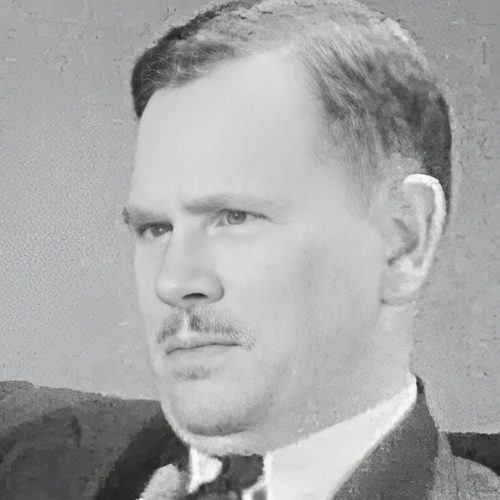
Wallis Clark
Wallis Clark occupies a distinctive place in early twentieth-century entertainment history as a performer who successfully navigated multiple theatrical mediums during a transformative era. Born in Essex, England on March 2, 1882, Clark would eventually become a prolific character actor whose career spanned from the Edwardian stage through the golden age of Hollywood cinema. Though less remembered than some of his contemporaries, Clark's steady presence in numerous productions—particularly his uncredited supporting roles in major studio films—made him an invisible but essential component of Hollywood's studio system during the 1930s and 1940s.
Early Life and Engineering Background
Clark's journey to theatrical prominence began not on a stage but in an engineering workshop. Born the son of William Wallis Clark (1854-1930), an engineer, young Wallis inherited a practical, technical mindset from his father's profession. Before pursuing an acting career, Clark himself worked as an engineer, developing skills in precision and problem-solving that would later inform his meticulous approach to character work. This background in technical fields distinguished him from many of his acting contemporaries who came to performance through purely artistic channels. The decision to abandon engineering for the theater represented a significant departure from his family background. Clark's early professional identity was firmly rooted in the practical and mechanical world, yet something drew him toward the creative possibilities of dramatic performance. This dual heritage—part engineer, part artist—would shape his professional approach throughout his theatrical career.
Transition to Stage Performance
Clark's theatrical career began in earnest when he launched his stage work in Margate, Kent, in 1908, performing in dramatic productions during the height of the Edwardian theater era. After establishing himself in British provincial theater, Clark eventually made the transatlantic crossing to the United States, where he found more extensive theatrical opportunities. He appeared in numerous plays on the stage, including productions at the Little Theatre in Philadelphia, where he spent several formative years honing his craft before transitioning to the screen. His stage experience proved invaluable preparation for his later film work. Theater trained Clark in the fundamentals of character development, voice modulation, and the discipline required to deliver consistent performances night after night. By the time he arrived in Hollywood, he brought with him nearly two decades of theatrical experience and the professionalism that distinguished stage-trained actors from those who came directly to cinema.
A Prolific Film Career in Character Roles
Clark's cinematic career truly flourished once he transitioned to motion pictures in 1932, marking the beginning of an extraordinarily productive period in Hollywood. Between 1931 and 1954, he appeared in a remarkable 136 films, primarily in supporting and character roles. This staggering output reflects both Clark's versatility and the prodigious production schedule of Hollywood's studio system, which relied on dependable contract players to fill supporting roles across numerous productions. What makes Clark's filmography particularly noteworthy is his participation in five Academy Award-winning Best Picture films: It Happened One Night (1934), Mutiny on the Bounty (1935), The Great Ziegfeld (1936), You Can't Take It with You (1938), and Gone with the Wind (1939). However, Clark's contributions to most of these prestige productions went largely unrecognized at the time. In four of these five Oscar-winning films, his work remained uncredited, a common practice for minor supporting roles during the studio era. The sole exception was Mutiny on the Bounty, where he received credit for playing the role of Morrison. Clark's early film appearances included bit parts and small roles in 1932 productions such as Okay, America!, Big City Blues, The Night of June 13, and Washington Merry-Go-Round. Throughout 1933, he maintained steady work in supporting positions, appearing in films like The World Gone Mad, The Working Man, The Kiss Before the Mirror, and Double Harness. By 1934, he had become a fixture in Hollywood productions, appearing in dozens of films including Massacre, I've Got Your Number, and Stand Up and Cheer! This relentless work schedule established Clark as a reliable professional upon whom studios could depend.
Signature Roles and Character Types
Clark's extensive filmography reveals a performer who specialized in authority figures and professional men. He frequently portrayed judges, prosecutors, police officials, and government representatives—roles that capitalized on his dignified bearing and commanding presence. His characters bore names like Judge Mallory in The Crime Doctor (1934), District Attorney William Burnette in Star Reporter (1939), and District Attorney in The Big Guy (1939). These recurring character types suggest that studios typecast Clark in roles requiring gravitas and official authority, which he executed with convincing professionalism. The diversity of his supporting roles extended beyond legal and governmental figures. He played Lovington in It Happened One Night (1934), Yates in Beloved (1934), Hotel Manager in The Line-Up (1934), and Ship's Captain in Transatlantic Merry-Go-Round (1934). His work in the late 1930s demonstrated continued versatility, with roles ranging from Prison Warden in Parole! (1936) to Inspector Gil Pottle in Postal Inspector (1936) and Editor in Ticket to Paradise (1936). This breadth of character work, though consistently in supporting positions, showcases an actor of genuine adaptability.
Legacy and Historical Significance
Wallis Clark's career represents a crucial but often overlooked aspect of Hollywood's development. He exemplified the studio system's dependable character actor—a professional who worked steadily, delivered competent performances, and asked few questions about billing or recognition. While his name appears in no major film histories and he achieved no particular fame during his lifetime, Clark's presence in 136 films between 1931 and 1954 makes him an unwitting document of Hollywood's production practices and aesthetic values during cinema's golden age. Clark's death in 1961 marked the end of a career that spanned nearly five decades of continuous theatrical and film work. His transition from stage to screen, his prolific output, and his consistent professionalism in supporting roles all mark him as representative of a particular moment in entertainment history. Though lacking the star power or distinctive personality of leading actors, Clark remained a working professional throughout the studio era, contributing to the texture and credibility of countless productions that have since become classics.
Works and Appearances
Stage
- Little Theatre Productions, Philadelphia
- Various theatrical productions in Margate, Kent (beginning 1908)
Cinema (Selected)
- Okay, America! – Bit Role
- Big City Blues – Chief of Police
- Lady for a Day – Commissioner
- Bureau of Missing Persons – Mr. Paul
- The World Changes – Mr. Freddie McCord, Clerk
- King for a Night – Judge
- I've Got Your Number – Mr. Madison
- A Woman's Man – Ralph Mallon, Studio Chief
- It Happened One Night – Lovington
- The Crime Doctor – Judge Mallory
- Mutiny on the Bounty – Morrison
