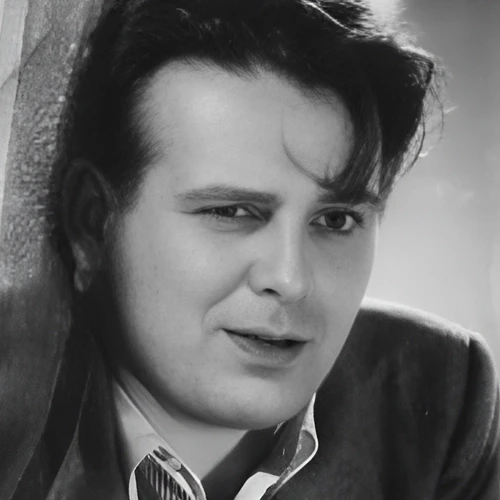
Wallace Ford
Wallace Ford carved out a remarkable entertainment career that spanned nearly five decades, beginning on the vaudeville stage and evolving into one of Hollywood's most prolific character actors. Born Samuel Grundy Jones on February 12, 1898, Ford would become a familiar face to audiences across multiple entertainment mediums, from Broadway stages to silver screens to the emerging medium of television. His journey reflects the transformative entertainment landscape of the twentieth century, as he adapted his talents across platforms with remarkable versatility. Before becoming a fixture in Hollywood's B-movies and supporting roles in prestigious productions, Ford proved himself a capable performer in live theater, establishing the foundation for a career that would ultimately encompass over 150 films.
The Path to Stardom: Vaudeville and Broadway
Ford's entry into professional entertainment came after his military service during the First World War. Following his time as a trooper in the United States Cavalry at Fort Riley, Kansas, he transitioned into the vibrant world of vaudeville performance. In 1919, he appeared in an adaptation of Booth Tarkington's Seventeen, which enjoyed a successful run in Chicago before transferring to Broadway in New York City. The production's reception confirmed Ford's ability to captivate audiences, and he leveraged this success into increasingly prominent stage roles throughout the Roaring Twenties. Ford's Broadway career flourished during this dynamic era. He secured performances in prestigious productions including Abraham Lincoln and the Broadway sensation Abie's Irish Rose, which became one of the defining theatrical successes of its time. Another notable appearance came in Bad Girl, further establishing his credentials as a dependable stage performer. His theatrical work during this period demonstrated his range as an actor and his ability to navigate both comedic and dramatic material, skills that would serve him well as he transitioned into cinema.
The Hollywood Era: From Lead to Character Roles
Ford left Broadway in 1932 to pursue opportunities in the burgeoning film industry, appearing with Joan Crawford in Possessed (1931) and securing a lead role in MGM'sFreaks (1932), though he noted that his fellow actors in that notorious production proved more memorable to audiences. Rather than becoming typecast or fading from the industry, Ford adapted to changing trends and audience preferences, establishing himself as a reliable character actor capable of supporting major productions. Throughout the 1930s and 1940s, Ford became a familiar presence in Hollywood's B-movie landscape, taking lead roles in productions such as The Rogues' Tavern (1936), Murder by Invitation (1941), and Roar of the Press (1941). These films, while lower-budget productions, kept Ford's name before audiences and demonstrated his marketability as a leading man in smaller-scale productions. Simultaneously, he appeared in supporting roles in more prestigious feature films, including The Lost Patrol (1934), The Informer (1935), Shadow of a Doubt (1943), Spellbound (1945), and Dead Reckoning (1947). In 1945, Ford appeared in Blood on the Sun alongside the legendary Jimmy Cagney, a pairing that highlighted the physical similarity between the two actors and their comparable acting styles. The late 1940s and early 1950s marked a significant shift in Ford's career trajectory. As the Western genre gained prominence in American cinema, Ford became a regular performer in these productions and earned distinction as one of John Ford's preferred support players, appearing across multiple of the director's acclaimed Westerns. This specialization allowed Ford to develop expertise in a particular genre while working consistently within Hollywood's studio system.
Broadway Returns and Late-Career Work
Despite his deep involvement in cinema, Ford maintained his connection to the stage. In 1938, he returned to Broadway to play the role of George in the original production of John Steinbeck's Of Mice and Men at the Music Box Theatre, a prestigious assignment that demonstrated his continued relevance as a stage performer even as his film career flourished.
The Transition to Television
As television emerged as a dominant entertainment medium, Ford adapted his skills to this new platform with characteristic flexibility. During the 1950s and early 1960s, he performed with increasing frequency on the small screen. He secured a recurring role in the Western series The Deputy, which paired him with Henry Fonda, establishing him as a familiar television presence for audiences discovering entertainment through their home sets. His final television appearance came in 1964, when he played Roger Hanover, Aunt Bee's old flame who unsuccessfully attempts to secure a payoff from Andy by implying an engagement, in an episode of The Andy Griffith Show. This final credit exemplified the type of supporting character work that had sustained his career for decades—memorable, brief, but effective.
Legacy and Extended Career
Ford's professional longevity remains remarkable in an industry notorious for obsolescence. His career as a character actor extended over 30 years, encompassing more than 150 films and numerous stage and television appearances. Rather than peak dramatically and fade, Ford maintained consistent employment across multiple entertainment mediums, adapting to industry changes and audience preferences without compromising his professional standards. His death on June 11, 1966, marked the end of an entertainment career that had witnessed the transformation of popular entertainment from live performance through cinema to television broadcasting.
Works and Appearances
Theater
- Abraham Lincoln (1920s)
- Abie's Irish Rose (1920s)
- Bad Girl (1920s)
- Pigs (September 1, 1924 – June 1925)
- Gypsy (January 14 – March 1929)
- The Nut Farm (October 14 – November 1929)
- Seventeen (1919)
- Of Mice and Men (November 23, 1937 – May 1938)
- Kindred (December 26, 1939 – January 6, 1940) Theatre, New York
Cinema
- Possessed (1931)
- Freaks (1932)
- The Lost Patrol (1934)
- Another Face (1935)
- The Informer (1935)
- The Rogues' Tavern (1936)
- Murder by Invitation (1941)
- Roar of the Press (1941)
Television
- The Motorola Television Hour (1953)
- Goodyear Television Playhouse (1953)
- Armstrong Circle Theatre (1953)
- Father Knows Best (1954) "