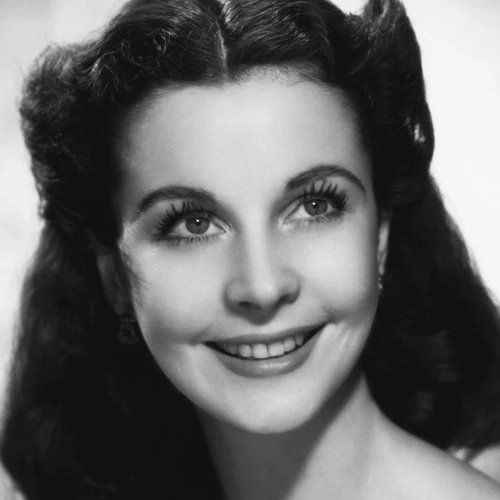
Vivien Leigh
Vivien Leigh remains one of the most celebrated performers of the twentieth century, a name forever linked with her iconic portrayal of Scarlett O'Hara in Gone with the Wind. Yet this assessment captures only a fraction of her extraordinary career. While cinema brought her international fame and multiple Academy Awards, Leigh was a consummate theatrical artist who graced stages across the globe and participated in radio broadcasts that showcased her remarkable range. Her professional journey spanned three decades of exceptional work, during which she demonstrated a commitment to challenging roles and artistic integrity that transcended the constraints of typecasting and studio politics.
Early Career and Rise to Prominence
Born Vivian Mary Hartley on November 5, 1913, Leigh entered the entertainment industry following her completion of drama school education. Her initial film work proved modest in scope—she appeared in small roles across four films in 1935 before securing a more substantial role as the heroine in Fire Over England (1937). These early years represented the typical trajectory of an aspiring actress navigating the competitive landscape of 1930s cinema, though her talent was quickly recognized by those with keen eyes for potential. The turning point in Leigh's career arrived with startling swiftness. Producer Alexander Korda emerged as a pivotal figure in her professional life, playing an instrumental role in shaping her trajectory at his self-contained film studio at Denham. She would later describe Korda as one of the two most influential men in her life, alongside Laurence Olivier. Within just three months of her triumph in St. Martin's Lane—which premiered in the United Kingdom in October 1938 and represented the most successful film of her career to that point—Leigh found herself in Los Angeles, signed to play what has been called the most sought-after female role in Hollywood history: Scarlett O'Hara in David O. Selznick's Gone with the Wind.
The Scarlett Legacy and Hollywood Years
The role that would define Leigh's public image arrived after an exhaustive talent search that captivated Hollywood's attention. Producer David O. Selznick organized a screen test with director George Cukor, who praised Leigh's performance as possessing "incredible wildness." She secured the role of Scarlett soon after, and the 1939 release of Gone with the Wind transformed her into an international icon. The film's massive success brought her the first of two Academy Awards for Best Actress, cementing her status as one of cinema's most significant talents. However, Leigh refused to be confined by the very role that had made her famous. Despite the film's triumph, she recognized the danger of typecasting early in her career. After completing two additional films in Hollywood, she made the bold decision to return to England, prioritizing artistic success over commercial considerations. This defiance of studio expectations—particularly her resistance to remaining in Hollywood to capitalize on her newfound fame—demonstrated her fundamental commitment to challenging material over easy celebrity. During her time in Hollywood before returning to Britain, she also appeared in Waterloo Bridge (1940) opposite Robert Taylor, a wartime romance that proved successful at the box office and earned two Academy Award nominations.
Radio and Broadcast Work
Beyond her celebrated theatrical and film performances, Leigh actively participated in radio broadcasts that demonstrated her versatility across different performance mediums. She appeared on the prestigious Screen Guild Theater program, performing Noël Coward'sPrivate Lives on October 13, 1940, alongside Laurence Olivier, Heather Angel, and Tom Conway—notably the first time that Leigh and Olivier had appeared together on the air in a full-length play. This early radio success established her presence in the growing medium of broadcasting. Leigh's radio work extended throughout the 1940s, including dramatic performances on Theater of Romance. She portrayed Emma, Lady Hamilton on this program on two separate occasions: August 23, 1943, and August 8, 1944. These appearances coincided with her wartime contributions to the entertainment industry. In 1943, Leigh toured through North Africa as part of a revue for armed forces stationed in the region, demonstrating her commitment to supporting the war effort. She reportedly turned down a lucrative studio contract worth $5,000 a week (equivalent to approximately $91,000 in 2024) in order to volunteer for this patriotic service.
Stage Mastery and Shakespearean Achievement
Leigh's theatrical accomplishments proved equally distinguished as her film career, revealing an artist of profound depth and versatility. In 1951 in London, she and Laurence Olivier performed two plays about Cleopatra on an alternating nightly basis: William Shakespeare'sAntony and Cleopatra and George Bernard Shaw'sCaesar and Cleopatra. The productions garnered strong reviews and subsequently transferred to New York, where the couple performed a season at the Ziegfeld Theatre extending into 1952. During her 30-year career, Leigh tackled roles ranging from the heroines of Noël Coward and George Bernard Shaw comedies to classic Shakespearean characters. Her next significant theatrical venture came when she sought and secured the role of Blanche DuBois in the West End stage production of Tennessee Williams'sA Streetcar Named Desire, which opened in 1949. Olivier was contracted to direct this controversial production, which contained a rape scene and references to promiscuity and homosexuality. Despite media discussion about the play's suitability that added to her anxiety, Leigh believed strongly in the importance of the work. After playing the role for 326 performances, she was flown to Los Angeles to begin filming the movie version. Her performance in A Streetcar Named Desire won glowing reviews from critics and audiences alike. Tennessee Williams himself commented that Leigh brought to the role "everything that I intended, and much that I had never dreamed of." The role eventually earned her a second Academy Award for Best Actress, a British Academy of Film and Television Arts (BAFTA) Award for Best British Actress, and a New York Film Critics Circle Award for Best Actress. For the same role at the Venice Film Festival, she won the Volpi Cup for Best Actress. Yet Leigh maintained complex feelings about her association with the character, later reflecting that playing Blanche DuBois "tipped me over into madness." In 1956, Leigh starred in South Sea Bubble, a British theatrical production that opened at the Lyric Theatre in the West End in April 1956. The production proved successful, running for 276 performances and showcasing her continued stage presence.
Personal Struggles and Continued Artistry
The period from 1951 onward marked a complicated chapter in Leigh's life, as she struggled with significant mental health challenges while continuing her demanding professional work. A severe nervous breakdown in 1953 during filming rendered her temporarily uninsurable in Hollywood's eyes, a status typically fatal to an actor's career. Yet Leigh defied conventional industry wisdom by transitioning to freelance status and somehow maintaining her top billing position despite an unconventional work schedule in which she completed a film approximately once every five years. This extraordinary feat stands as testament to both her enduring star power and the respect she commanded within the entertainment industry. Her struggles were compounded by uncontrolled bipolar disorder, a condition that would later contribute to her being labeled as difficult and unpredictable to work with in the entertainment industry. Despite ongoing battles with depression and mental illness, Leigh persisted with her theatrical and film commitments. She later undertook a tour of Australia, New Zealand, and Latin America from July 1961 until May 1962 alongside Jack Merivale, which produced positive reviews without requiring her to share the spotlight. In 1963, she achieved further recognition by winning the Tony Award for Best Actress in a Musical for her role in Tovarich on Broadway. She also made a notable appearance on The Ed Sullivan Show in 1963 as a singer. In 1958, at a time when she was in good form and good spirits, Leigh participated in a rare television talk show appearance on "Small World," the acclaimed program hosted by American broadcast journalist Edward R. Murrow. Appearing alongside her were motion picture executive Samuel Goldwyn and British writer and entertainment critic Kenneth Tynan. The episode showcased Leigh engaging in substantive conversation with some of the most strident male voices of her day, demonstrating her intellectual engagement and refusal to be silenced—a rarity for female performers in 1950s television. In 1959, she also appeared on ITV Play of the Week in the role of Sabina.
Legacy of Excellence and Lasting Impact
Vivien Leigh's professional journey illuminates the career of an artist who consistently prioritized artistic challenge over commercial safety. She navigated the treacherous terrain of studio-era Hollywood while maintaining her integrity, successfully transitioned across multiple performance mediums—from cinema and theater to radio and television—and persevered through personal suffering to deliver performances of lasting significance. Her two Academy Awards, Tony Award, and numerous critical accolades testify to her exceptional abilities, yet her true legacy extends beyond award recognition to encompass her influence on generations of performers who witnessed her commitment to meaningful work and challenging roles. Though she struggled with the psychological toll of her most famous role and battled mental illness throughout her later career, Leigh never abandoned her craft. Her final film appearance, Ship of Fools (1965), demonstrated her continued ability to deliver nuanced performances even as her health declined. Leigh passed away on July 8, 1967, at the age of 53 from tuberculosis and pneumonia, leaving behind a body of work that continues to captivate audiences and inspire performers nearly six decades after her death.
Works and Appearances
Radio
- Screen Guild Theate
- Theater of Romance: Lady Hamilton (1943)
- Theater of Romance: Lady Hamilton (1944)
Cinema
- Fire Over England (1937)
- St. Martin's Lane (1938)
- Waterloo Bridge (1940)
- Gone with the Wind (1939)
- A Streetcar Named Desire (1951)
- The Deep Blue Sea (1955)
- The Roman Spring of Mrs. Stone (1961)
- Ship of Fools (1965)
Theater
- Antony and Cleopatra by William Shakespeare (1951)
- Caesar and Cleopatra by George Bernard Shaw (1951)
- A Streetcar Named Desire by Tennessee Williams (1949)
- South Sea Bubble (April 1956)
- Tovarich (Broadway Musical, 1963) – Tony Award-winning role
Television
- Small World (1958)
- ITV Play of the Week (1959)
- The Ed Sullivan Show (1963)
Military and War Effort
- North Africa tour (1943)
Awards and Recognition
- Academy Award for Best Actress – Gone with the Wind (1939)
- Academy Award for Best Actress – A Streetcar Named Desire (1951)
- BAFTA Award for Best British Actress – A Streetcar Named Desire (1951)
- New York Film Critics Circle Award for Best Actress – A Streetcar Named Desire (1952)
- Volpi Cup for Best Actress (Venice Film Festival, 1951) – A Streetcar Named Desire
- Tony Award for Best Actress in a Musical – Tovarich (1963)

