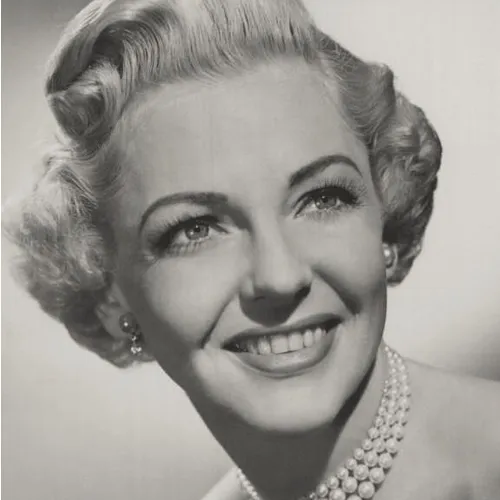
Vivian Blaine
Vivian Blaine stands as one of the most memorable performers of the mid-twentieth century, best known for creating one of Broadway's most iconic roles. Born Vivian Stapleton on November 21, 1921, she rose from humble beginnings to become a celebrated actress, singer, and entertainer whose talents spanned radio, film, television, and the theatrical stage. While her later career would be defined by her legendary portrayal of Miss Adelaide in Guys and Dolls, Blaine's journey through entertainment was far more expansive, showcasing her versatility across multiple mediums during an era when genuine multitalented performers were increasingly rare. Her story is one of artistic ambition, career reinvention, and a commitment to performing that lasted until her final onscreen appearance in the 1980s.
The Formation of a Performer
Vivian Blaine's entry into show business began remarkably early. She attended the Academy of Dramatic Arts at just twelve years old, a bold move for a young girl in the 1930s that set her on a clear trajectory toward professional performance. Following her formal training, she appeared on local stages while still in her youth, preparing herself for what would eventually become a comprehensive career in entertainment. Shortly after these early theatrical experiences, Blaine began touring with various big bands as a singer, establishing herself in the competitive world of popular music during the swing era. This foundational experience in live performance—whether on stage or in front of audiences at dance halls and concert venues—would inform her entire artistic approach throughout her career. The young performer's determination and talent caught the attention of industry professionals, and her talents were eventually recognized by Fox Studios, one of the major motion picture studios of the era. During the war and post-war years, Blaine became established as a prime Fox musical performer, working alongside other major stars of the studio system. During this period, she lagged in popularity only to Alice Faye and Betty Grable, two of the most glamorous and successful performers of the 1940s. This ranking among Fox's elite performers demonstrates the significant respect she commanded within the studio system during her early film career.
The Broadway Triumph and Miss Adelaide
The defining moment of Vivian Blaine's career came in 1950 when she originated the role of Miss Adelaide in the original Broadway production of Guys and Dolls. This role transformed her from a competent studio performer into a theatrical legend. Adelaide, the long-suffering, perpetually engaged chorus girl eternally waiting for gambler Nathan Detroit to set a wedding date, became the perfect vehicle for Blaine's talents. Night after night, she stopped the show with her rendition of "Adelaide's Lament," a comedic tour-de-force in which her character laments having developed a persistent cold as a consequence of her extended engagement. The song's clever lyrics, brilliant comic timing, and Blaine's impeccable delivery made it one of the most talked-about musical theater moments of the era. Blaine maintained this role on Broadway between 1950 and 1953, giving audiences three years of consistently brilliant performances. An original cast album of Guys and Dolls was released during this period, preserving her vocal performance of Adelaide's signature songs for posterity. When the musical was adapted into a 1955 film, Blaine reprised her role, bringing Adelaide to movie audiences and co-starring alongside major names including Marlon Brando, Jean Simmons, and Frank Sinatra. Her work in the film earned her a Donaldson Award for best newcomer of the year, a significant honor that recognized her contributions to musical theater and cinema.
From Studio Contract to Artistic Freedom
Blaine's relationship with the Hollywood studio system, while initially productive, eventually became creatively restrictive. As the years progressed, she grew increasingly frustrated with Fox's insistence on casting her in second leads and their tendency toward typecasting, limiting her ability to demonstrate the full range of her talents. Recognizing that her artistic growth was being stunted by studio politics and contractual obligations, Blaine made a bold career decision: she bought out her contract from Fox, a move that required significant financial resources and confidence in her ability to succeed independently. This decision proved transformative, allowing her to reclaim agency over her career and pursue projects that genuinely interested her. Following her departure from Fox, Blaine returned to New York to pursue singing and theatrical engagements, returning to her first love: the stage. She continued her Broadway career with productions including A Hatful of Rain, Say, Darling, Enter Laughing, Company, and Zorba, in addition to appearing in the touring company of Gypsy. This period of her life demonstrated that her success in Guys and Dolls was no accident; she proved capable of delivering consistently excellent performances across diverse theatrical productions. During this era, Blaine married Milton Rackmill, the President of Universal and Decca Records, a union that reflected her prominence in the entertainment industry. However, when Rackmill preferred that she remain a homemaker, Blaine prioritized her career aspirations over marital expectations and divorced him, continuing to perform and record albums despite domestic pressure to retire.
Television, Later Career, and Humanitarian Work
As her stage career flourished, Blaine found increasing opportunities in the burgeoning medium of television. She appeared as a special guest during a This Is Your Life tribute episode dedicated to the comedy duo Laurel and Hardy on December 1, 1954, appearing on NBC-TV. She had previously worked with the duo in the 1943 film Jitterbugs and brought genuine nostalgia to the reunion. In 1971, she appeared at the 25th annual Tony Awards as a guest performer, singing "Adelaide's Lament" from Guys and Dolls, leaving behind a filmed performance that preserved her interpretation for future generations of theater enthusiasts. Her television career gained significant momentum with guest appearances on popular series including Fantasy Island and The Love Boat, and she earned a recurring role in the cult hit Mary Hartman, Mary Hartman. These appearances kept her visible to audiences throughout the 1970s and into the 1980s. Her final onscreen appearance came in "Broadway Malady," a Season 1 episode of Murder, She Wrote, marking the end of her on-camera work. Beyond her entertainment career, Blaine demonstrated a profound commitment to social causes. In 1983, she became the first celebrity to make public service announcements for AIDS-related causes, a courageous move during a period of widespread stigma and limited understanding of the disease. She made numerous appearances supporting the then-fledgling AIDS Project Los Angeles (APLA), and in 1983 recorded her cabaret act for AEI Records, which donated its royalties to the organization. This contribution included the last recordings of her songs from Guys and Dolls, creating a final artistic legacy while directly supporting an emerging public health crisis.
A Legacy of Excellence
Vivian Blaine's career ultimately encompassed theatrical innovation, film stardom, television prominence, and humanitarian action across more than four decades. She demonstrated that an entertainer could successfully navigate multiple mediums while maintaining artistic integrity and refusing to be confined by industry expectations. In 1998, Blaine, along with her original Guys and Dolls castmates Sam Levene, Robert Alda, and Isabel Bigley, were inducted into recognition alongside the original 1950 Decca cast album, cementing her place in theater history. She passed away on December 9, 1995, leaving behind a body of work that continues to inspire performers and delight audiences through recordings, films, and theater revivals. Her portrayal of Miss Adelaide remains the definitive interpretation of the role, a testament to the power of her talent and the indelible mark she left on American musical theater.
Works and Appearances
Theater
- One Touch of Venus (1948)
- Bloomer Girl (1949)
- Light Up the Sky (1949)
- Guys and Dolls (1950–1953)
- Panama Hattie (1955)
- A Hatful of Rain (1956–1958)
- Say, Darling
- Enter Laughing
- Don't Drink the Water (1968–1969)
- Take Me Along (1968)
- The Marriage-Go-Round (1970)
- Zorba (1970–1971)
- Company (1971–1973)
- Light Up the Sky (1971)
- Gypsy (touring company)
Television
- The Philco Television Playhouse (1953): "Double Jeopardy"
- Center Stage (1954) : "Heart of a Clown"
- The Colgate Comedy Hour (1954) Winnie Potter; Episode: "Let's Face It"
- This Is Your Life (1954)
- Route 66 (1963)
Film
- Jitterbugs (1943)
- Greenwich Village (1944)
- Something for the Boys (1944)
- If I'm Lucky (1946)
- Three Little Girls in Blue (1946) Very Merry Life," "Somewhere in the Night" (uncredited)
Recordings and Other Media
- Original Broadway cast recording of Guys and Dolls (1950)
- Cabaret act recorded for AEI Records (1983) — royalties donated to AIDS Project Los Angeles


