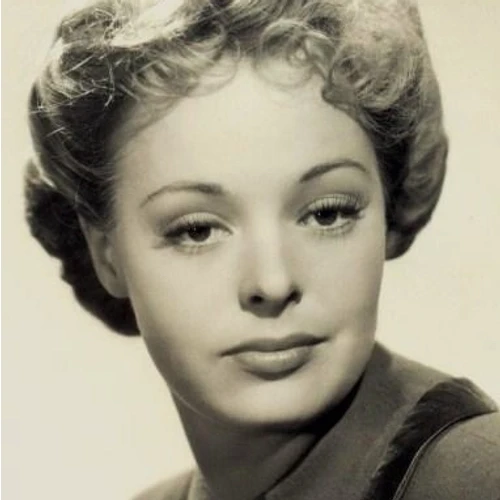
Virginia Gilmore
Virginia Gilmore embodied the contradictions of mid-twentieth-century entertainment: a talented performer caught between the constraints of studio-system Hollywood and the creative fulfillment of Broadway and television. Born Sherman Virginia Poole on July 26, 1919, she would become a respected stage actress, a pioneering television personality, and ultimately, an advocate whose personal journey transcended her professional achievements. Though her film career relegated her to B-pictures and supporting roles, Gilmore's determination to pursue meaningful theatrical work demonstrated a commitment to her craft that defined her legacy far more than any studio contract ever could.
From San Francisco Stages to Hollywood Dreams
Gilmore launched her theatrical ambitions remarkably early, making her stage debut at the age of 15 with a San Francisco theater company. This youthful beginning set the trajectory for a life dedicated to performance. The daughter of a British army officer who retired to California, she was educated at a convent in Hollywood, providing her with both cultural refinement and geographic proximity to the film industry. At 16, she took on a particularly noteworthy role, playing Curley's wife in the premiere of "Of Mice and Men" at the John Steinbeck Theatre in nearby Monterey, bringing one of American literature's most tragic female characters to life on stage. Her early theatrical work eventually caught the attention of one of Hollywood's most powerful producers. Gilmore mustered considerable courage to approach Samuel Goldwyn at his home, an audacious move that paid off when the mogul promised her a screen test. Following this fortuitous encounter, Goldwyn signed her to a seven-year contract at $50.00 a week, and she relocated to Los Angeles in 1939 to pursue motion pictures. Her first film role came in 1939 with "Winter Carnival", where she appeared eighth-billed as a Dartmouth college student in the Ann Sheridan vehicle.
The Hollywood Years: Promise and Limitation
Gilmore's film career began promisingly, with roles opposite established stars and in increasingly prominent positions. She graduated quickly to leading love interests, playing opposite Tim Holt in "Laddie" (1940) and Robert Sterling in "Manhattan Heartbeat" (1940). That same year, she earned a title lead in "Jennie", which led to co-star status with Cesar Romero in "Tall, Dark and Handsome" (1941). Her most notable film appearances came in 1941, including a pivotal role opposite Randolph Scott in "Western Union", directed by the renowned Fritz Lang and based on the Zane Grey novel, in which she played part of a love triangle that also included Robert Young. However, the trajectory that began with such promise began to plateau. Throughout 1942, Gilmore appeared in a succession of increasingly forgettable productions: "Berlin Correspondent", where she played a pro-Nazi sympathizer opposite Dana Andrews; "The Loves of Edgar Allan Poe", in which she portrayed the ill-fated girlfriend of the famed poet; the ensemble piece "Orchestra Wives" with Carole Landis; a secondary role in "The Pride of the Yankees" opposite Gary Cooper; and supporting parts in "Sundown Jim" and "That Other Woman". She also appeared in "Swamp Water" in 1941, directed by the celebrated Jean Renoir. Despite these numerous credits, Gilmore found herself increasingly relegated to supporting and lead roles in B-pictures, the lower-budget productions that filled out studio schedules and double bills. As film offers began to dwindle, she recognized that Hollywood's constraints would not allow her talent to flourish. Following a role in the war film "The Fighting Guerrillas" (1943), Gilmore made the pivotal decision to abandon California and redirect her career toward the stage.
Returning to Broadway: A Career Reborn
Gilmore's relocation to New York City proved transformative. Rather than accepting the diminishment her film career had imposed, she returned to Broadway, where she had previously appeared in "A Successful Calamity" in 1934. Her Broadway renaissance began in 1943 with "Those Endearing Young Charms" and continued that same year with "The World's Full of Girls". Her breakthrough theatrical role came in 1944 when she played the title role in "Dear Ruth", directed by the legendary Moss Hart. Notably, despite winning this role on stage, Gilmore "lost out on the subsequent movie part when it went to Joan Caulfield," a final reminder of how Hollywood had undervalued her talents. The mid-to-late 1940s saw her continue building her Broadway credentials with "Truckline Cafe" (1946), in which she performed alongside the young Marlon Brando. She followed this with "The Grey-eyed People" (1952) and later "Critic's Choice" (1960), demonstrating sustained presence in prestigious theatrical productions. In 1948, she appeared in John Van Druten's play "The Voice of The Turtle" in a Kenley Players production in Deer Lake, Pennsylvania, further expanding her theatrical range.
Television Years and Teaching
As her film career had formally ended by 1952, Gilmore increasingly focused her energies on television, where she found abundant opportunities. Starting in the late 1940s, she accumulated numerous television credits, including appearing with her husband, Yul Brynner, on the NBC television series "We're On" in 1949. The marriage to Brynner, whom she had met in 1944, proved personally eventful but professionally dissolving; they divorced in 1960. Throughout the 1950s and 1960s, Gilmore maintained active television roles, appearing in programs such as "Broadway Television Theatre" (1952), "The Prudential Family Playhouse" (1951), "The Ford Theatre Hour" (1951), "Danger" (1951), "Starlight Theatre" (1950-1951), "Tales of Tomorrow" (1952), "Walk East on Beacon!" (1952), "The United States Steel Hour" (1961), "The Defenders" (1963), and "The Doctors and the Nurses" (1962-1964). She even appeared uncredited in the 1970 TV movie "The Brotherhood of the Bell". Beyond performance, Gilmore significantly contributed to dramatic education. Between 1966 and 1968, she taught drama at Yale University, establishing herself as a mentor to the next generation of theatrical artists. Her commitment to theater education reflected her deep belief in the craft that had sustained her career.
Later Life and Legacy
Virginia Gilmore's personal struggles profoundly shaped her final chapter. She suffered from alcoholism for a significant period but achieved recovery and became instrumental in the Alcoholics Anonymous program, eventually becoming AA's chief spokeswoman despite the organization's traditional emphasis on anonymity. This transformation demonstrated her resilience and her ability to channel personal hardship into service to others. Gilmore passed away on March 28, 1986, leaving behind a career that ultimately vindicated her decision to pursue theater over studio contracts. Her legacy represents not merely the films she appeared in or the television shows on which she performed, but rather the integrity she demonstrated in rejecting Hollywood's limitations and the thoughtful mentorship she provided to younger artists. She proved that a performer's true impact could extend far beyond marquee prominence, encompassing the stages she graced, the students she taught, and the individuals she helped through her work with Alcoholics Anonymous.
Works and Appearances
Theater
- A Successful Calamity (1934)
- Those Endearing Young Charms (1943)
- The World's Full of Girls (1943)
- Dear Ruth (1944)
- Truckline Cafe (1946)
- The Voice of The Turtle (Summer 1948)
- The Grey-eyed People (1952)
- Critic's Choice (1960)
- Sweet Bird of Youth (year not specified)
- Of Mice and Men premiere (age 16)
Cinema
- Winter Carnival (1939)
- Laddie (1940)
- Manhattan Heartbeat (1940)
- Jennie (1940)
- Tall, Dark and Handsome (1941)
Television
- We're On (NBC, 1949)
- Broadway Television Theatre (1952)
- Walk East on Beacon! (1952)
Other Activities
- Drama teacher at Yale University (1966-1968)
- Alcoholics Anonymous spokeswoman and leader (later years)