True Boardman
True Eames Boardman represented a rare breed in entertainment history—a figure whose career spanned nearly a century of American media, from the silent film era through the golden age of television. Born into show business and maintaining an active presence across multiple platforms, Boardman became a distinctive voice in the crafting of popular entertainment, particularly during radio's most vibrant period. His journey from precocious child actor to respected scriptwriter illuminates the evolution of storytelling in broadcast media and the dedication required to sustain a meaningful creative career across generations.
A Hollywood Dynasty
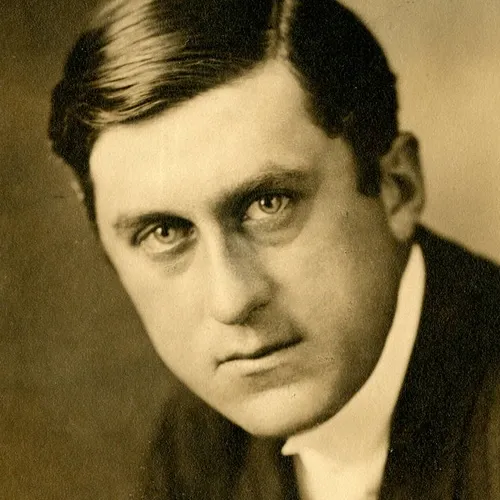
True Eames Boardman entered the world on October 25, 1909, in Seattle, Washington, as the son of two entertainment professionals. His mother was actress Virginia True Boardman, while his father, William True Boardman, was an accomplished silent film actor who appeared in more than 130 films during his career. This heritage placed young True at the heart of early Hollywood's most formative period, a time when the boundaries of entertainment were being fundamentally redefined. The younger Boardman's early exposure to performance came naturally through his family background. By the time he reached his tenth birthday, he had already appeared in six movies, establishing himself as a working child actor during an era when such careers were increasingly common yet seldom led to sustained success. Among his most notable collaborations were appearances in films alongside legendary figures Charlie Chaplin and Mary Pickford, experiences that would become touchstones throughout his life. These early appearances provided invaluable on-set training and networking opportunities that would inform his later work as a writer and creative professional. Despite his promising start in cinema, Boardman's youthful involvement in film ultimately served as a foundation rather than a defining endpoint in his career. His father's death in 1918, when True was still a young boy, shifted family circumstances and priorities. Rather than pursuing child stardom further, Boardman's family encouraged broader educational pursuits, setting him on a path that would eventually lead away from acting and toward the written word.
Education and Early Broadcasting Work
Boardman's formal education proved as significant as his informal training in entertainment. He attended the University of California, Los Angeles (UCLA), where he earned his bachelor's degree in English literature and Spanish in 1934. This academic preparation proved instrumental in launching his professional writing career, as the study of language and literature directly equipped him for the work that would define his professional identity. Following his graduation from UCLA, Boardman transitioned seamlessly into radio writing, a field that was experiencing explosive growth and creative experimentation during the 1930s. He contributed scripts to several prestigious radio programs of the era, including Silver Theater, Screen Guild Theater, and Lux Radio Theater. These assignments placed him among the ranks of professional radio writers at a time when the medium commanded enormous cultural influence and attracted considerable creative talent. The discipline required to write for these live broadcasts—where scripts had to be precise, engaging, and performable without revision during transmission—honed Boardman's craft significantly. The quality of his early radio work earned him increasingly prominent assignments and opportunities for collaboration with established producers and performers. His writing contributed to the distinctive character of these programs, helping to shape the entertainment experience of millions of Americans who relied on radio for drama, mystery, and cultural engagement during the Depression and pre-war years.
Military Service and the Armed Forces Radio Service
With the outbreak of World War II, Boardman's career took an unexpected turn toward public service. He was commissioned as a captain in the Army and assigned a unique responsibility: creating and producing radio programming specifically designed for American troops stationed overseas. This assignment recognized both his expertise in broadcast production and the strategic importance of maintaining troop morale through familiar entertainment. Stationed in Puerto Rico, Boardman undertook a distinctive mission that combined technical broadcasting knowledge with creative problem-solving. He broadcast recordings of major radio network shows, carefully scheduling different programs for different hours each night across the island's three radio stations. This rotation ensured maximum accessibility for troops with varying schedules and duty assignments, while also maximizing the limited number of recorded programs available for distribution. Among Boardman's notable contributions to Armed Forces Radio Service was the formulation of the service's signature closing statement. "When the first hour ended, I signed off with, 'This program was brought to you by the special Armed Forces Radio Service,' and, as far as I know, that was the first time those particular words were said over the air," Boardman recalled years later in an interview with the Washington Times. This seemingly simple statement actually represented an important moment in broadcast history, as it established the branding and identification framework that would continue to define the Armed Forces Radio Service throughout and beyond the war years.
Transition to Television and Extended Creative Success
As radio's dominance gradually shifted during the post-war years, Boardman successfully navigated the industry's transformation toward television. Rather than fading from the entertainment landscape, he demonstrated remarkable adaptability, applying his hard-earned writing skills and understanding of dramatic structure to the new medium. He earned a master's degree in theater from Occidental College, completing this advanced degree 36 years after his UCLA bachelor's, demonstrating his commitment to continuous professional development and intellectual growth. Boardman's television writing credits reflected the breadth of the medium's storytelling possibilities. He wrote for Perry Mason, the acclaimed courtroom drama that became one of television's most successful series. He also contributed to The Virginian, the groundbreaking western that elevated the genre on television, as well as Bonanza, another western that achieved both critical acclaim and substantial longevity. Additionally, he worked on Gunsmoke, the legendary series that defined the television western for generations of viewers. These assignments placed him among the writers helping to establish television drama's fundamental vocabulary and narrative structures during the medium's most formative period.
Industry Recognition and Professional Legacy
Throughout his extensive career, Boardman earned the respect and recognition of his peers in the entertainment industry. He maintained active membership in the Academy of Motion Picture Arts and Sciences for many years and served as chairman of its documentary committee, reflecting his expertise and standing within the Hollywood establishment. His involvement extended to the Screen Actors Guild and the Writers Guild of America, organizations central to protecting and advancing the interests of entertainment professionals. In 1993, the Writers Guild of America presented Boardman with the Valentine Davies Award for lifetime achievement, a distinction that acknowledged his sustained contributions to the craft of screenwriting and his influence on generations of writers who followed. This honor recognized not merely his professional accomplishments but his role in establishing and maintaining the standards of quality writing that defined the entertainment industry's golden age and beyond. Boardman died on July 28, 2003, in Pebble Beach, California, following a brief battle with pancreatic cancer. He was survived by his wife Kathleen Gilmour Boardman, two daughters, six grandchildren, and four great-grandchildren. His life represented an extraordinary span of American entertainment history, connecting the silent film era through the digital age, and his work influenced the storytelling approaches that would shape entertainment for decades to come.
Works and Appearances
Radio
- Silver Theater (1930s) – Script contributor
- Screen Guild Theater (1930s) – Script contributor
- Lux Radio Theater (1930s) – Script contributor
- Armed Forces Radio Service programming (1942-1945) – Creator and broadcaster, Puerto Rico
Television
- The Virginian (1964-1970) – Writer and teleplay contributor (16 episodes)
- Bonanza (1971) – Writer (1 episode)
- Gunsmoke (1971) – Story contributor (1 episode)
- Ironside (1967-1974) – Teleplay writer (3 episodes)
- My Three Sons (1962) – Writer (1 episode)
- The Donna Reed Show (1961) – Writer (1 episode)
- Gunslinger (1961) – Writer (1 episode)
- The Burns and Schreiber Comedy Hour (1973) – Regular performer
- Marcus Welby, M.D. (1972) – Performer as Prof. Lorimer (1 episode)
- Perry Mason (1965) – Performer as Morgue Attendant (1 episode)
Film (as Actor)
- Michael O'Halloran (1923)
- Hips, Hips, Hooray! (1934) – Sports Announcer
- Below the Deadline (1936) – Radio Announcer
- Arabian Nights (1942)
- Between Us Girls (1942)
Film and Television (as Writer/Director)
- The Atom Goes to Sea (1954) – Director
- Of Men and Molecules (1954) – Director
- Man-Made Miracles (1954) – Director
- Horizons of Hope (1954) – Director
- Living Unlimited (1956) – Writer and Director
- Meet Mrs. Swenson (1956) – Director
- The Voice Beneath the Sea (1956) – Director
- The Far Sound (1961) – Writer and Director