Tom Conway
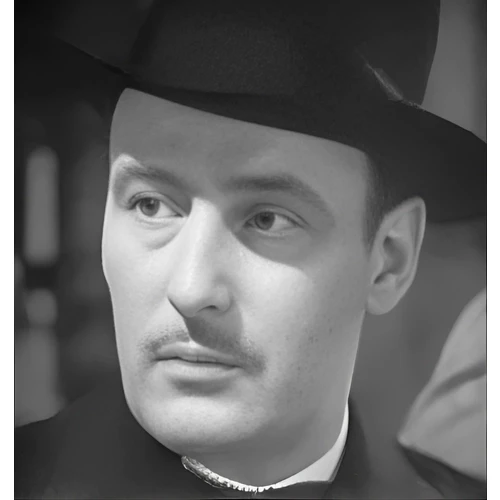
Tom Conway stands as one of broadcasting's most sophisticated personalities, a man whose refined accent and commanding presence made him equally at home in radio studios, film noir productions, and television sets. Born Thomas Charles Sanders on September 15, 1904, Conway would become synonymous with debonair detectives and mysterious characters throughout his long career in entertainment. His journey from English stages to Hollywood fame represents a fascinating chapter in mid-twentieth-century media history, though his contributions to radio have often been overshadowed by his more celebrated film work. Yet it was his distinctive voice and polished delivery that first captured audiences' attention and established him as a memorable figure in broadcasting.
From England to America: A Theatrical Beginning
Conway's early life remains somewhat mysterious, though records indicate he was born into a wealthy family with roots in pre-Bolshevik Revolution Russia. His father worked in rope manufacturing, a trade that might have claimed young Thomas had he followed a conventional path. Instead, Conway pursued performance, beginning his career in amateur theatre before joining a repertory company for a year and a half. These formative years on the English stage proved invaluable, as Conway developed the refined delivery and theatrical presence that would later distinguish his broadcast work. His theatrical ambitions led him through touring productions of plays including Dangerous Corner, Private Lives, and By Candlelight. During this period, Conway also worked extensively in radio, honing his craft as a voice performer and building a foundation in the technical aspects of broadcast drama. It was his brother George Sanders, also destined for Hollywood success, who proved instrumental in redirecting Conway's career toward the American film industry. George's suggestion that Tom join him in California proved transformative for the younger Conway's professional trajectory.
The Hollywood Years and Film Success
May 1940 marked a turning point when Conway signed a contract with Metro-Goldwyn-Mayer. As part of this arrangement, he officially changed his surname from Sanders to Conway, establishing the stage name by which the world would know him. His early MGM roles were modest—small parts in Waterloo Bridge (1940), where audiences heard only his voice, Sky Murder (1940) alongside Walter Pidgeon, and The Wild Man of Borneo (1941). These initial credits, though minor, placed Conway within the studio system and positioned him for greater opportunities. The late 1940s proved especially fortuitous when Conway secured the role that would define his film career: playing the suave adventurer The Falcon in a series of 1940s films. This character perfectly suited Conway's persona—a well-dressed, quick-witted detective whose charm and sophistication matched the actor's own carefully cultivated image. Simultaneously, Conway appeared in three atmospheric horror productions that demonstrated his range: Val Lewton'sCat People (1942), I Walked with a Zombie (1943), and The Seventh Victim (1943). These horror classics showcased that beneath Conway's urbane exterior lay an actor capable of conveying menace and psychological complexity.
Broadcast Excellence: Radio, Television, and Beyond
While Conway's film career flourished, his work in radio and early television remained consistently strong. As a radio actor, his voice became instantly recognizable to listeners tuning into dramatic programs, where his accent and delivery marked him as distinctly different from typical American broadcasting personalities. His transition to television came naturally, as the medium valued performers who could combine vocal skill with on-camera presence. Conway guest-starred in programs including Rawhide (1959), Adventures in Paradise (1959), and Perry Mason (1957), establishing himself as a reliable presence in episodic television. Conway's versatility extended to voice work as well, demonstrating that his talents transcended live performance. He accepted diverse roles ranging from cameo appearances to more substantial parts, always bringing professionalism and a certain Continental sophistication to whatever project employed him. His willingness to work across media—radio, film, television, and voice acting—kept him employed and relevant across changing entertainment landscapes. By the 1950s and 1960s, Conway had become a seasoned professional equally comfortable in any performance venue.
Personal Resilience and Later Work
Conway's later years revealed a man of considerable personal fortitude. In the mid-1960s, he struggled with alcoholism, but by late 1966 he had achieved sobriety and renewed his commitment to his craft. In his own words, he declared: "I'm on the wagon and I find the old brain works better... a couple of gimmicks I devised while lying in the hospital. I've got a million things cooking." This period of recovery sparked genuine creative energy. Conway devised at least two original inventions: tables topped with plastic slabs containing Mexican pebbles, and a pocket-sized travel kit featuring his own blend of shaving cream requiring no water. These inventions suggest a man of genuine ingenuity who viewed performance as only one dimension of a multifaceted creative life. His final film appearance came in 1964 with an uncredited role in What a Way to Go!, though his career had long since transitioned primarily to television and guest appearances. April 22, 1967, marked the end of Tom Conway's remarkable journey through entertainment, leaving behind a legacy of professional achievement spanning radio, film, television, and theatrical performance.
Legacy: The Sophisticated Voice of Broadcasting
Tom Conway's impact on broadcasting rests principally on his ability to embody sophistication and mystery through voice and presence alone. In an era when radio audiences relied entirely on vocal delivery to construct mental images of characters, Conway's refined accent and measured delivery created an immediate impression of intelligence, experience, and worldliness. His willingness to work across multiple media kept him visible and relevant during decades of rapid technological change in entertainment. What distinguished Conway from many contemporaries was his commitment to professionalism in roles both large and small. Whether playing The Falcon in feature films, appearing in Val Lewton's psychological horror productions, or guest-starring on television dramas, Conway brought the same level of dedication and skill. His career path—from English repertory theatre through radio work to Hollywood success—demonstrates the importance of foundational training in broadcasting's golden age.
Works and Appearances
Radio
- Park Plaza 605 (1953) - played Berkeley Gray's private detective Norman Conquest
Television
- Mark Saber (1951) - homicide detective Mark Saber
- Perry Mason (1957) -
- Rawhide (1959)
- Adventures in Paradise (1959)
- Alfred Hitchcock Presents (1957) - Season 3, Episode 1: "The Glass Eye" - played Max Collodi
- Alfred Hitchcock Presents (1960) - Season 5, Episode 35: "The Schartz-Metterklume Method" - played John Wellington (uncredited)
Cinema
- Waterloo Bridge (1940) - film debut (voice only)
- Sky Murder (1940) - Andrew Hendon
- The Great Meddler (1940) - Henry Bergh
- The Wild Man of Borneo (1941) - Actor in Film Scene
- The Trial of Mary Dugan (1941) - Edgar Wayne
- Free and Easy (1941) - Captain Ferris
- The Bad Man (1941) - Morgan Pell
Theater
- Dangerous Corner
- Private Lives
- By Candlelight