Tex Ritter
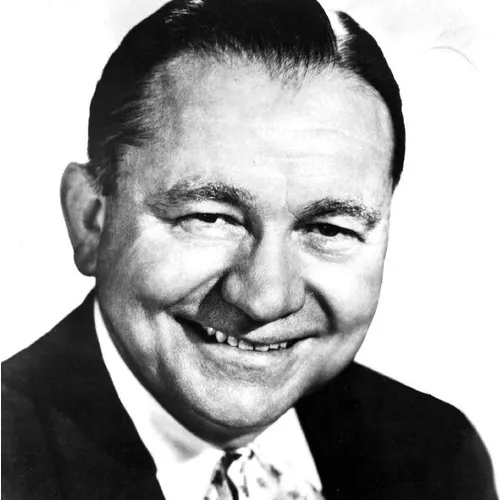
Woodward Maurice "Tex" Ritter stands as one of radio's most distinctive voices and one of the earliest pioneers to successfully navigate the transition from radio to film and television. His career spanned multiple decades and media, making him a crucial figure in understanding how country music and Western entertainment evolved in American broadcasting. What set Ritter apart was not merely his prolific output, but rather his authentic connection to the cowboy narrative and his ability to blend entertainment with genuine musical artistry, establishing a template that countless performers would follow.
The Pioneer Years: From Houston to Broadway
Ritter's journey in entertainment began not in the dusty West of popular imagination, but in the urban landscape of 1920s Houston, Texas. While still studying law in college, the ambitious young performer launched his own weekly radio program on KPRC-AM in Houston, where he performed cowboy songs to an eager audience. This early experience provided the foundation for everything that would follow, establishing his connection to Western music while he was still in his formative years. By 1928, Ritter made the pivotal decision to relocate to New York City, recognizing that Broadway represented the pinnacle of entertainment opportunity. Rather than persist solely as a radio performer, Ritter sought to expand his artistic horizons. He secured a position singing in the men's chorus of the Broadway production The New Moon (1928), a conventional theatrical start that nonetheless opened doors in the entertainment establishment. More significantly, his next Broadway role positioned him as the cowboy in Green Grow the Lilacs (1931), a musical that would later become the prototype for the legendary Oklahoma!. This role proved transformative, establishing Ritter as an authentic Western performer within New York's elite theatrical circles.
Building a Radio Empire
The early 1930s witnessed Ritter's explosion into radio prominence across multiple markets and formats. In 1932, he starred in New York City's first broadcast Western, titled The Lone Star Rangers on WOR, where he combined his singing talents with spoken narratives recounting tales of the Old West. This innovation—blending musical performance with storytelling—would become his signature approach to entertainment. The show's success led to greater opportunities. In 1933, Ritter wrote and starred in Cowboy Tom's Roundup on WINS, a daily children's program that aired not only in New York but across two other East Coast stations for three consecutive years. This demonstrated his ability to reach diverse audiences and his understanding of programming for younger listeners. Beyond these signature shows, Ritter maintained an expansive radio presence that showcased his versatility. He performed on WHN's Barndance, sang on various NBC Radio shows, and appeared in dramatic radio programs including CBS's Bobby Benson's Adventures.
The Recording Revolution and Chart Success
While Ritter's radio work established his name, his recording career proved to be his most commercially successful period. In 1933, he signed with the America Record Company (Columbia Records) and made his first recordings, including "Goodbye Ole Paint" and "Rye Whiskey". Two years later, he switched to Decca Records, where he recorded his first original compositions, most notably "Get Along Little Dogie". The trajectory shifted dramatically when Ritter became the first artist signed to the newly formed Capitol Records in 1942. His association with Capitol during its founding years proved fortuitous. In 1944, he scored a major hit with "I'm Wastin' My Tears on You," which reached number one on the country chart and number eleven on the pop chart. A Billboard article noted years later that with this recording, Ritter "reached the style of rhythmic tune that would assure his musical stature". Perhaps his most enduring recording came later with "High Noon (Do Not Forsake Me)," the title track for the 1952 film of the same name. This song achieved remarkable crossover success, and at the first televised Academy Awards ceremony in 1953, Ritter performed it live, with the song ultimately winning Best Song. His catalog would ultimately include classics like "Jealous Heart," "You Two-Timed Me One Time Too Often," and "Deck of Cards," songs that would be recorded and performed by country artists for generations.
Expanding Into Film and Television
When Ritter's film career began to decline following his earlier Western movie appearances, he strategically pivoted toward other emerging opportunities. His final singing cowboy role came in 1945's Flaming Bullets, though he did return for cameo appearances in several early 1950s films. The 1950s proved transformative as Ritter adapted to television's explosive growth. He began appearing on Town Hall Party in 1953 and co-hosted Ranch Party, a syndicated version of the show, beginning in 1957. His national television debut occurred on ABC-TV's Ozark Jubilee in 1955, and he subsequently became one of five rotating hosts for 1961's NBC-TV spin-off, Five Star Jubilee. In 1966, Ritter appeared in the film Nashville Rebel, playing himself in a production that introduced country music audiences to a performer named Waylon Jennings. This cameo represented a full-circle moment—Ritter, the established legend, passing the torch to the next generation.
Legacy and Institutional Recognition
Beyond his performance career, Ritter became a founding member of the Country Music Association in Nashville, Tennessee, and served as its president in 1963. He spearheaded efforts to establish the Country Music Hall of Fame and Museum, and was inducted as its fifth member and the first singing cowboy in 1964. When Ritter relocated to Nashville in 1965, he began working for radio station WSM and the Grand Ole Opry, ultimately earning a lifetime membership in the latter in 1970. His influence extended beyond the entertainment industry into the political sphere. In 1970, Ritter sought the Republican nomination for one of Tennessee's U.S. Senate seats, though his bid proved unsuccessful. This venture reflected his stature within Tennessee society and his willingness to leverage his celebrity for public service. Ritter's career trajectory demonstrated how a performer could build a sustainable entertainment presence across radio, recording, film, and television without being confined to any single medium. His authentic approach to Western music and storytelling established a template that would influence country performers well into subsequent decades.
Works and Appearances
Radio
- KPRC-AM Houston
- The New Moon (1928) – Singing cowboy radio program appearances
- The Lone Star Rangers on WOR (1932) – Star, singing and storytelling
- Cowboy Tom's Roundup on WINS (1933–1936)
- WHN Barndance
- NBC Radio shows
- Bobby Benson's Adventures on CBS
- Death Valley Days
- Town Hall Party (radio and television version, 1953)
- WSM Radio (1965 onward)
Theater
- The New Moon (1928) – Men's chorus
- Green Grow the Lilacs (1931) – Cowboy, Cord Elam
Recording
- America Record Company/Columbia Records (1933)
- Decca Records (1935 onward)
- Capitol Records (1942–ongoing)
- "I'm Wastin' My Tears on You" (1944) – Hit single
- "High Noon (Do Not Forsake Me)" (1952) – Academy Award-winning song
Television
- Town Hall Party (1953)
- Ranch Party (1957–1959)
- Ozark Jubilee on ABC-TV (1955)
- Five Star Jubilee on NBC-TV (1961)
- Tom and Jerry (1965, TV Series)
Film
- Flaming Bullets (1945) – Singing cowboy role (final such role)
- Early 1950s cameo appearances in various films
- Nashville Rebel (1966) – Himself
Other Notable Contributions
- Vidor Publications (1955) – Co-founder with Johnny Bond, music publishing company specializing in Western music
- Country Music Association – Founding member; served as president in 1963
- Country Music Hall of Fame and Museum – Instrumental in establishment; inducted in 1964 as fifth member and first singing cowboy
- Grand Ole Opry (1965) – Member; earned lifetime membership in 1970