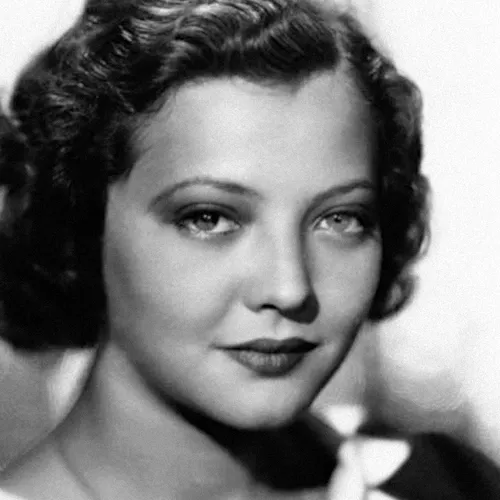
Sylvia Sidney
Sylvia Sidney was a versatile American actress whose career spanned stage, radio, film, and television for over seven decades. While she is widely recognized for her 1930s film work in dramas and crime thrillers, Sidney also made a significant mark in radio, lending her distinctive voice to a variety of programs that showcased her range and emotional depth. Her radio contributions helped bridge the worlds of theater and mass media during the golden age of American broadcasting.
Early Life and Theatrical Beginnings
Born in The Bronx, New York, to Romanian and Russian Jewish immigrant parents, Sidney faced family upheaval early, with her parents’ divorce and subsequent adoption by her stepfather, Sigmund Sidney. Encouraged by her mother, she pursued acting as a means to overcome shyness, studying at the Theater Guild's School for Acting. By age 15, she had begun performing, demonstrating a natural talent for expressive storytelling. Her stage debut came at age 16 in The Squall (1926) on Broadway, establishing her early reputation as a skilled actress capable of nuanced emotional portrayals. This theatrical foundation directly informed her work in radio, where subtle vocal expression was essential. Sidney’s early experiences on stage honed her timing, diction, and ability to convey character through voice alone—skills that would make her a sought-after talent in radio dramas.
Entry into Radio
Sidney began performing on radio during the 1930s, a time when the medium was growing rapidly in both audience and artistic ambition. Her early radio work included guest appearances and recurring roles on dramatic anthologies, where she could translate her stage presence into purely vocal performance. She became known for her ability to portray emotionally complex characters, often embodying vulnerable yet resilient women—a persona she had cultivated in films like Dead End (1937). Her transition from screen to radio was seamless, as producers sought actors who could carry programs with intensity and credibility. Sidney’s distinctively husky, expressive voice made her a natural choice for suspenseful dramas and character-driven series, allowing listeners to engage deeply with the stories she narrated or acted in.
Notable Radio Shows and Characters
Among Sidney’s most prominent radio appearances was her work on Suspense, the long-running anthology series known for psychological thrillers. She delivered memorable performances in episodes that demanded a combination of vulnerability and tension, such as in The House in Cypress Canyon, where her emotional expressiveness heightened the story’s eerie atmosphere. Sidney also appeared on The Campbell Playhouse, a continuation of Orson Welles’ Mercury Theatre on the Air, where she adapted literary works for radio, playing complex characters ranging from literary ingenues to morally conflicted women. On The Screen Guild Theater, she brought her cinematic experience to adaptations of contemporary films, often reprising her own movie roles in condensed audio versions that required precise vocal nuance. Other radio credits included appearances on Lux Radio Theater and Philip Morris Playhouse, where Sidney’s performances were celebrated for their authenticity and emotional resonance. Across these shows, she frequently portrayed strong-willed women facing extraordinary circumstances, establishing her as one of radio’s leading dramatic actresses.
Broadcasting Style and Signature Techniques
Sidney’s radio performances were characterized by her controlled, evocative use of tone and timing. She had a remarkable ability to convey internal conflict and layered emotion without visual cues, making her characters immediately compelling to listeners. Colleagues often noted her professionalism and meticulous approach to scripts, emphasizing subtle shifts in pitch and cadence to communicate psychological complexity. Her experience in theater and film informed her radio technique, allowing her to move seamlessly between naturalistic dialogue and heightened dramatic moments. Sidney’s performances were distinguished by emotional honesty, capturing vulnerability, determination, and moral ambiguity with equal skill. This made her a go-to talent for suspense, mystery, and dramatic adaptation programs.
Legacy and Influence
While Sidney is remembered for her film work in the 1930s and 1940s, her contributions to radio helped define the medium’s golden age. She brought a cinematic sensibility to radio storytelling, enhancing the emotional realism of dramatic broadcasts. Her portrayals of complex female characters influenced subsequent generations of radio actors, demonstrating the power of voice in shaping audience engagement. Sidney continued to work in film and television, including a celebrated late-career resurgence in Beetlejuice (1988) and Summer Wishes, Winter Dreams (1973), but her radio performances remain an underappreciated aspect of her career. By blending stage, screen, and radio techniques, she exemplified the versatility required of mid-20th-century American performers.
Works and Appearances
Radio
- Suspense – 1939–1948
- The Campbell Playhouse – 1938–1940
- Lux Radio Theater – 1937–1945
- Philip Morris Playhouse – 1940s
- Screen Guild Theater – 1940s
Film
- Dead End (1937)
- Fury (1936)
- Summer Wishes, Winter Dreams (1973)
- Beetlejuice (1988)
Television
- Guest appearances in dramas and anthologies, including Alfred Hitchcock Presents
Theater
- The Squall (1926) – Anita
- Other Broadway performances in the 1920s–1930s