Susan Peters
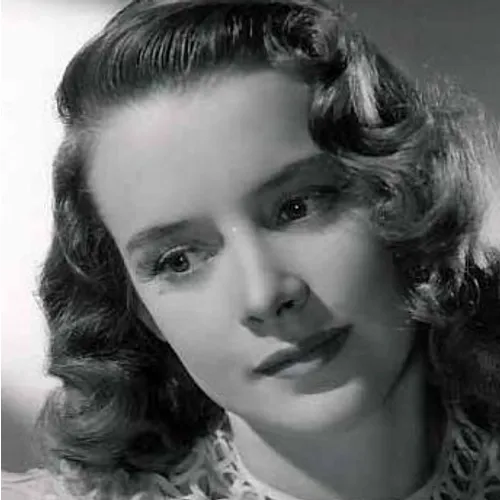
Susan Peters was a multifaceted performer whose career spanned radio, film, and theater, marked by both early acclaim and extraordinary personal resilience. Despite facing life-altering physical challenges, she continued to engage audiences through her versatile performances, leaving a lasting impression on mid-20th-century American entertainment.
Early Life and Theatrical Foundations
Born Suzanne Carnahan on July 3, 1921, in Spokane, Washington, Peters grew up under the care of her widowed mother, moving through Portland, Oregon, and later Los Angeles. She attended Hollywood High School and pursued acting training with the renowned Austrian theater director Max Reinhardt, whose mentorship instilled a deep understanding of character and performance technique. Her early career began with small roles at Warner Bros., including an uncredited appearance in Santa Fe Trail (1940). While her first film efforts were modest, they demonstrated her screen presence and potential, which would soon be recognized by Metro-Goldwyn-Mayer (MGM).
Film Stardom and the Onset of Challenges
Peters’ breakthrough came with her performance in Random Harvest (1942), earning her an Academy Award nomination for Best Supporting Actress. She subsequently appeared in a string of MGM productions, including Young Ideas (1943), Assignment in Brittany (1943), Song of Russia (1944), and Keep Your Powder Dry (1945). Her talent for portraying emotionally complex characters made her a rising star in Hollywood. Tragedy struck on January 1, 1945, when a hunting accident left Peters paraplegic, abruptly halting her film career. Her resilience, however, would allow her to adapt and continue performing in both radio and theater.
Radio Career and Continued Performance
Beginning in 1945, Peters turned to radio as a primary medium, embracing the opportunity to reach audiences through voice and dramatic expression. She appeared on hundreds of radio programs, showcasing her ability to convey emotion without visual cues—a skill that her theater and film experience had honed. Among her notable radio work was her involvement in the radio version of The Guiding Light, where she played a character navigating complex personal storylines. Peters faced a unique challenge: as her character was unmarried, her real-life pregnancies during her tenure required creative solutions from producers. For the first child, her character was written as sick and in an oxygen tent, for the second, she used a wheelchair, and by her third pregnancy, her character was ultimately killed off. Peters’ professionalism and adaptability made these transitions seamless for the listening audience, reflecting both her skill and dedication to her craft. Her radio work extended beyond soap operas, allowing Peters to experiment with dramatic narration and serial storytelling, which highlighted her expressive vocal abilities. This period solidified her reputation as a performer capable of sustaining compelling performances despite severe physical limitations.
Theater, Film, and Resilience
Peters continued to perform on stage, taking on physically demanding roles adapted to her wheelchair-bound condition. In 1949, she starred as Laura Wingfield in a wheelchair-adapted production of Tennessee Williams’ The Glass Menagerie, receiving critical praise for her nuanced interpretation. She later portrayed Elizabeth Barrett Browning in The Barretts of Wimpole Street, demonstrating that her disability did not limit her artistic ambitions. Her return to film included The Sign of the Ram (1948), where she played a wheelchair-bound character, blending personal experience with dramatic storytelling. Peters’ courage and determination in adapting her performances for both radio and stage underscored her commitment to the craft.
Personal Struggles and Legacy
Peters’ personal life was marked by both physical and emotional challenges. Her marriage to Richard Quine ended in divorce in 1948, and she faced ongoing struggles with clinical depression. Despite these hardships, she remained professionally active, inspiring audiences with her resilience and talent. Tragically, Peters passed away on October 23, 1952, in Visalia, California, at the age of 31. Her legacy is particularly notable in the field of radio drama, where she demonstrated that performers with disabilities could continue to deliver compelling, emotionally resonant performances. Peters’ work continues to be remembered for its combination of vulnerability, professionalism, and artistic integrity.
Works and Appearances
Radio
- The Guiding Light (1946–1959)
- Numerous radio appearances (1945–1952)
Film
- Santa Fe Trail (1940)
- The Big Shot (1942)
- Random Harvest (1942)
- Young Ideas (1943)
- Assignment in Brittany (1943)
- Song of Russia (1944)
- Keep Your Powder Dry (1945)
- The Sign of the Ram (1948)
Theater
- The Glass Menagerie (1949)
- The Barretts of Wimpole Street