Sterling Holloway
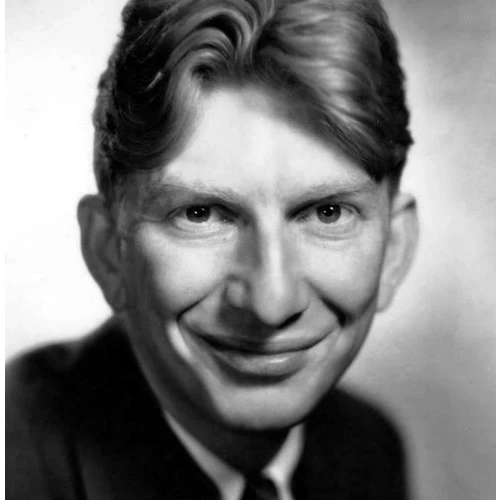
Sterling Price Holloway Jr. is a voice and character actor whose idiosyncratic tone and genial presence made him a defining figure of mid-20th-century American entertainment. Born in Georgia in 1905 and active across stage, screen, radio, television, and commercial work for almost half a century, Holloway’s career bridged silent pictures to animated classics. He became especially beloved for his work with Walt Disney, and for generations his voice conveyed warmth, whimsy, and a touch of Southern drawl.
Early Life and Background
Sterling Price Holloway Jr. was born on January 14, 1905 in Cedartown, Georgia, into a family that owned a local grocery store. His father, also named Sterling Price Holloway, served as mayor in 1912, and the family environment was rooted in small-town civic life. Holloway had a younger brother, Boothby, and his mother was Rebecca DeHaven Boothby. Educated at the Georgia Military Academy, Holloway left home at fifteen and moved to New York City to study at the American Academy of Dramatic Arts. Those early years in New York set the stage for a lifetime in performance; he toured in stock companies and cut his teeth in musical revues, developing the vocal and comic instincts that would define his screen persona. On arrival in the professional world, Holloway formed friendships that lasted beyond the stage. Among his acquaintances from that era was actor Spencer Tracy, whom Holloway considered one of his favorite working colleagues — a testament to how early relationships in New York shaped his outlook and craft.
Hollywood Career and Disney Collaborations
Holloway relocated to Hollywood in 1926, beginning a film career that would span nearly five decades and include more than a hundred motion pictures. His distinctive, foggy voice and memorable appearance often cast him into comic or character roles rather than leading-man parts, creating a reliable niche in both feature films and shorts. During World War II Holloway enlisted in the United States Army at age 37 and worked in Special Services, helping to develop troop entertainment that also benefited wartime relief efforts. After the war he returned to steady screen work, continuing to bring his recognizable vocal quality and affable presence to a wide range of productions. His collaboration with Walt Disney marked the second major arc of his career: a long association as a voice actor whose contributions shaped the sound of several animated features and shorts. For decades he lent a human, whimsical touch to animated characters, a specialty that made him a sought-after performer in family entertainment. Recognition for that contribution came late in his life: Holloway was honored as a Disney Legend in 1991, the first recipient specifically recognized in the voice category — a formal acknowledgment of the unique place his voice occupied in American animation history.
Radio, Television, and Commercial Voice Work
Parallel to his film work, Holloway maintained an extensive career in radio. He lent his voice to a variety of dramatic and musical radio programs and was known for narrating children’s recordings. His tone retained a hint of Southern inflection that made him immediately identifiable over the air, and producers frequently called on him for character parts and narration. As broadcasting moved into the television age, Holloway transitioned smoothly, appearing in numerous episodic series and guest roles. His on-camera appearances demonstrated the same comic timing and easy warmth as his voice work, allowing him to remain a familiar face in households across America. In later decades Holloway diversified into commercial voice-overs and public service campaigns, singing jingles and creating memorable radio and television spots. He also auditioned for contemporary animated projects late in life, demonstrating an eagerness to continue performing even as casting trends shifted.
Personal Life, Art Collection, and Legacy
Holloway remained a bachelor throughout his life and once explained his choice plainly: "he felt lacking in nothing and did not wish to disturb his pattern of life." He did, however, adopt a son, Richard Holloway, and adhered to Methodism. Holloway spent his later years in California, where his home doubled as a display space for a prominent art collection. An avid and influential collector, Holloway supported early careers of Los Angeles artists and built a house in Laguna Beach specifically to showcase paintings and sculpture. He instructed his architect that the dwelling should be "primarily for his paintings and sculpture and only secondarily for himself," integrating storage and display features into the home's design to prioritize the artworks. Holloway died of cardiac arrest on November 22, 1992. By then his voice had been woven into American popular culture across multiple generations. His gentle delivery, comic instincts, and unmistakable timbre ensured that even when other performers inherited certain roles, Holloway’s influence and style continued to inform subsequent voice work.
Works nd Appearances
Radio
- The Railroad Hour
- Suspense
- Lux Radio Theater
- The Shadow
- Fibber McGee and Molly
- Narrated children’s records including Uncle Remus Stories (Decca), Mother Goose Nursery Rhymes (Disneyland Records), Walt Disney Presents Rudyard Kipling's Just So Stories (Disneyland Records), and Peter And The Wolf (RCA Victor).
Television
- Guest and recurring roles on series including Adventures of Superman (as "Uncle Oscar")
- The Life of Riley (recurring)
- The Andy Griffith Show, Gilligan's Island
Cinema (selected)
- The Battling Kangaroo (1926)
- Final film role: Thunder and Lightning (1977)
Animation and Disney voice roles
- Dumbo (1941)
- Bambi (1942)
- The Three Caballeros (1944)
- Make Mine Music (1946)
- Alice in Wonderland (1951)
- Series of narrated shorts and featurettes in the 1950s–1970s, including a long association as the voice of Winnie the Pooh through 1977.
- Later animated roles include work in The Jungle Book (1967), Goliath II (1960), Ben and Me (1953), and The Aristocats (1970).
Commercials and other media
- 1970s Purina Puppy Chow commercials (sang the jingle).
- Voice of Woodsy Owl in United States Forest Service spots (1970s–1980s).
- Auditioned for the voice of a well-known comic-strip cat (1982).