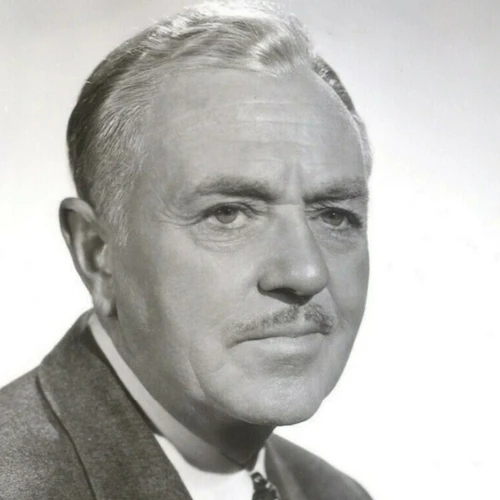
Stanley Ridges
Stanley Ridges, born Stanley Martin Ridges on November 7, 1890, in Liverpool, England, was an English-born actor who made a significant mark on American stage, radio, and screen. Emigrating to the United States, Ridges developed a career that spanned silent films, talkies, and radio drama, ultimately becoming a familiar voice and face in mid-20th century entertainment. Known for his dramatic versatility and commanding presence, Ridges exemplified the adaptability required to navigate the shifting media landscape of his era.
Early Life and Theatrical Beginnings
Ridges grew up in England before relocating to the United States, where he immersed himself in the performing arts. His theatrical career began on stage, and he quickly became recognized for his talent in both dramatic and comedic roles. His early experiences in live theater cultivated a mastery of timing, diction, and emotional nuance—skills that later translated seamlessly to radio and film. By the 1920s, Ridges had established himself in stock companies, honing his craft in productions that demanded a high degree of versatility. He demonstrated an ability to inhabit a wide range of characters, from authoritative figures to conflicted protagonists, an adaptability that became a hallmark of his career. His stage work also provided him with the stamina and precision necessary for the emerging demands of radio performance.
Transition to Radio and Notable Roles
Ridges’ entrance into radio allowed him to reach a broader audience. Leveraging his rich, expressive voice, he became a regular presence in dramatic radio programming. While specific programs are less documented, his reputation as a reliable and versatile performer positioned him well for recurring roles in serialized dramas. His radio work emphasized clarity of speech and the ability to convey complex emotion solely through voice—a skill developed during years of stage acting. This period solidified Ridges’ status as a multi-talented actor capable of adapting his stage experience to the intimate, sound-driven medium of radio. His ability to project authority, warmth, and subtlety made him a natural choice for leading and supporting roles alike, bridging the worlds of live performance and recorded storytelling.
Film Career and Screen Presence
Ridges maintained an extensive film career, appearing in numerous productions from the 1930s onward. He demonstrated remarkable range, often portraying complex characters in both major and supporting roles. Notable films include I Walked with a Zombie, where he played Dr. Maxwell, and The Miracle of Morgan’s Creek, demonstrating his capacity for both drama and subtle humor. He also appeared in The Scarlet Claw, The House of the Seven Gables, and The Body Snatcher, frequently cast in roles that required gravitas, intellect, or moral complexity. His cinematic work reflected his adaptability; he transitioned from silent films to talkies with ease, consistently delivering performances that were both credible and compelling. Ridges’ screen presence was marked by precision and nuance, qualities that distinguished him in an era when character actors were essential to studio productions.
Television Appearances and Later Years
In the 1950s, Ridges expanded into television, appearing in a variety of programs including anthology series and dramatic presentations. His experience in stage, radio, and film allowed him to navigate the demands of the small screen with professionalism and reliability. While television roles were less numerous than his film credits, they demonstrated his continued relevance and adaptability in a rapidly evolving entertainment landscape. Ridges passed away on May 17, 1951, in Hollywood, California, leaving behind a career that exemplified the multifaceted demands of mid-20th century performance. His legacy lies in his ability to traverse media platforms successfully, maintaining a consistent level of craft and professionalism throughout his career.
Legacy and Influence
Stanley Ridges’ career serves as a testament to the versatility required of performers in the early to mid-20th century. He seamlessly transitioned from stage to radio, from silent films to talkies, and eventually to television. His work in radio and film, particularly in dramatic roles requiring nuanced expression, influenced both audiences and peers, setting a standard for professionalism and adaptability. Ridges exemplified how an actor could thrive across multiple media while maintaining a distinct artistic identity, and his contributions remain a noteworthy chapter in American entertainment history.
Works and Appearances
Radio
- Various dramatic programs (dates unspecified)
- Suspense
Television
- Anthology series and dramatic presentations (1950s)
Cinema
- I Walked with a Zombie (1943) – Dr. Maxwell
- The Miracle of Morgan’s Creek (1944)
- The Scarlet Claw (1944)
- The House of the Seven Gables (1940)
- The Body Snatcher (1945)
- Numerous additional film roles from the 1930s–1950s, often in authoritative or complex character parts
Theater
- Various stock and repertory productions (1920s–1930s)
Stanley Ridges’ enduring versatility and consistent craft across stage, radio, film, and television make him a significant figure in the history of American performing arts.
