Spring Byington
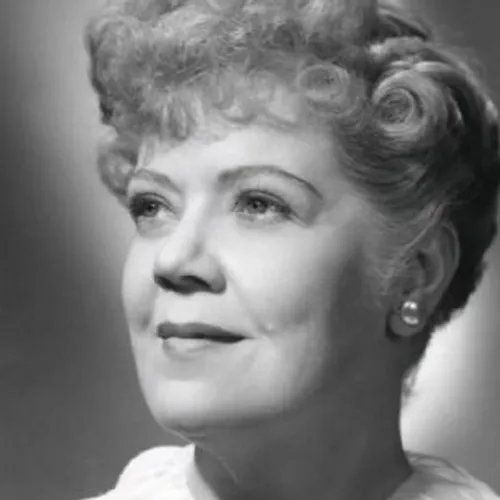
Spring Byington was a distinguished American actress whose career spanned over six decades, encompassing stage, film, radio, and television. Best remembered for her warm and maternal presence, Byington became a beloved figure in American households, particularly through her starring role in December Bride. Her versatility, charm, and professionalism made her a standout personality in old-time radio and beyond, leaving a lasting mark on the entertainment industry.
Early Life and Theatrical Beginnings
Spring Dell Byington was born on October 17, 1886, in Colorado Springs, Colorado, to Edwin Lee Byington, an educator, and Helene Maud Byington, later a practicing doctor. After her father’s death in 1891, Spring was raised by relatives in Denver, while her younger sister lived with grandparents in Port Hope, Ontario. Byington’s early life was marked by both loss and opportunity, shaping her resilience and independence. Byington’s interest in performing emerged in school productions, and she graduated from North High School in 1904. She joined the Elitch Garden Stock Company, beginning her professional acting career. Though she briefly tried newspaper reporting, Byington quickly realized that acting was her calling, famously stating in 1949, “I can’t do anything else very well.” Byington’s early stage work laid the foundation for her nuanced performances, blending charm with a strong sense of character.
Entry Into Radio and Breakthrough Roles
Byington transitioned to radio in the late 1930s, bringing her theatrical skills to the airwaves. Her articulate diction, expressive voice, and maternal warmth resonated with audiences, allowing her to excel in serialized storytelling. She became best known for her seven-year run as the titular character in December Bride on radio, which later transitioned successfully to television. The show, which debuted on radio in 1952, featured Byington as Lily Ruskin, a widow navigating family life with humor and grace, endearing her to millions of listeners. Her radio work was complemented by continued film appearances, as she was an MGM contract player. Byington’s seamless ability to move between stage, radio, and film distinguished her from many contemporaries, and she became a reliable character actress whose presence added depth and warmth to any production.
Notable Film and Radio Achievements
Byington’s screen career was equally impressive. She earned an Academy Award nomination for Best Supporting Actress for her role as Penelope Sycamore in You Can’t Take It with You (1938), a performance celebrated for its wit and sincerity. Other notable film appearances included Little Women (1933), Mutiny on the Bounty (1935), Jezebel (1938), and In the Good Old Summertime (1949). Her radio persona, however, was where she truly captured American hearts. Beyond December Bride, she was recognized for her consistent warmth, clarity of speech, and gentle humor, traits that made her a reliable and beloved voice during the golden age of radio. Byington’s performances often portrayed strong, maternal figures, resonating with listeners during both wartime and peacetime.
Television Career and Later Years
Byington successfully transitioned from radio to television, reprising her role in December Bride from 1954 to 1959. Her television work demonstrated the same charm and relatability that had made her a radio favorite, securing her place as a pioneering performer in early TV sitcoms. She also appeared in other television productions, maintaining a steady presence on screen until her retirement in 1968. Byington’s professional approach and dedication earned her respect from colleagues across media. Despite her fame, she remained known for her humility and professionalism, qualities that endeared her not only to audiences but also to directors, producers, and fellow actors.
Legacy and Personal Life
Spring Byington passed away on September 7, 1971, in Los Angeles, California, at the age of 84. She left behind a legacy defined by versatility, consistency, and warmth, bridging stage, radio, film, and television with grace. Her maternal portrayals influenced generations of actresses and helped shape the archetype of the nurturing, intelligent, and witty female character in American media. Byington’s personal life included a marriage to Roy Chandler from 1909 until their divorce in 1920, with whom she had two children. Despite personal challenges, she devoted her life to her craft, embodying professionalism and dedication that would inspire those who followed in her footsteps.
Works and Appearances
Radio
- December Bride (1952–1959) – Starred as Lily Ruskin
Television
- December Bride (1954–1959) – Lily Ruskin, reprising her radio role
Film
- Little Women (1933) – Marmee
- Mutiny on the Bounty (1935) – Mrs. Christian
- You Can’t Take It with You (1938) – Penelope Sycamore (Academy Award Nomination)
- Jezebel (1938) – Mrs. Peck
- In the Good Old Summertime (1949) – Miss Blossom
Theater
- Elitch Garden Stock Company (1904 onwards) – Early stage work
Spring Byington’s career reflects a remarkable journey across multiple media, demonstrating her adaptability and enduring appeal. Her contributions to old-time radio, in particular, cemented her as one of the era’s most beloved and influential performers.