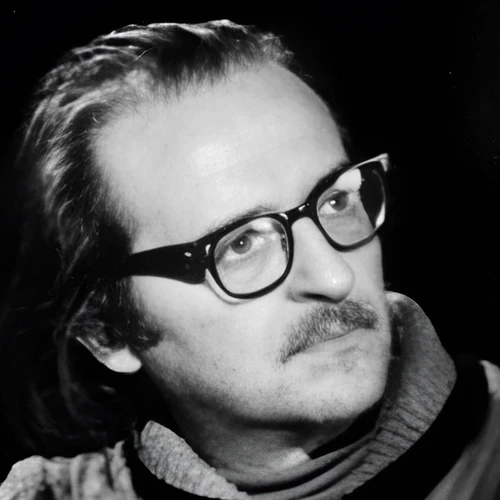
Sidney Lumet
Sidney Lumet occupies a unique place in American entertainment history: a performer who began as a child in live radio and theatre, a director who learned his craft in the pressure cooker of live television, and a filmmaker whose work helped define decades of socially engaged cinema. Born into a theatrical family and trained in the immediacy of performance, Lumet translated those instincts into a directorial approach prized for its clarity, speed, and actor-centered focus. This article traces the arc from those early microphone days through a lifetime behind the camera, closing with a detailed catalog of his recorded work.
Early life and radio beginnings
Sidney Lumet was born on June 25, 1924 in Philadelphia, Pennsylvania, into a family already involved in performance. He spent his childhood immersed in the practical world of stage and broadcast, learning the rhythms of scripted live entertainment at an early age. As a boy he found steady work in acting, including employment in live radio dramatic productions. Those formative years on the air taught him how to respond instantly to co-performers and technical constraints—skills that would later inform his methods as a director. The demands of radio's live format cultivated an appreciation for rehearsal, timing, and tonal clarity. Lumet’s early exposure to performance also anchored him in the collaborative nature of production. Working with actors, writers, and technicians on live broadcasts instilled a respect for each contributor's role. That respect ultimately became a hallmark of his later career behind the camera. While still young he also appeared on stage, reinforcing a lifelong belief in the primacy of performance over spectacle. Those dual roots—radio immediacy and theatrical discipline—created a hybrid sensibility that he would carry into every medium he touched.
From live television to feature filmmaking
After establishing himself as a reliable presence in live performance, Lumet moved into production roles, gaining experience on the other side of the camera. The explosion of live television drama in mid-century America provided a proving ground where he learned to direct under tight schedules and with high expectations for dramatic truth. Working in live television during the 1950s, Lumet honed skills that would be vital to feature work: precise blocking, rapid rehearsal, and the ability to elicit focused performances on cue. The need to marry theatrical pacing with the mechanical demands of broadcast television sharpened his instincts for staging actors within confined technical parameters. These years in television led directly to the opportunity to direct feature films. In 1957 he made the leap to the cinema, carrying with him a working method born in radio and polished in live television. His early film work exhibited the same economical preparation and actor-centric emphasis that characterized his broadcast origins. The transition also reflected a broader mid-century trend: television as an incubator for talent, supplying directors and performers who would reshape American movies. Lumet’s trajectory from airtime to silver screen exemplified that movement.
Directing approach, collaborations, and themes
Lumet’s technique emphasized collaboration and clarity. He favored extensive rehearsal, clear staging, and a willingness to let actors explore character choices within a disciplined framework. This approach made him a director actors trusted and writers valued for preserving the integrity of their material. A through-line in his career was an interest in morally charged, socially conscious stories. He often gravitated toward narratives that examined institutional power, individual conscience, and the friction between private motives and public consequences. His films regularly foregrounded human dilemmas rather than relying on spectacle. Professionally, Lumet cultivated durable relationships with seasoned actors, playwrights, and screenwriters—collaborators who appreciated his efficiency and his insistence on performance truth. He was known for running tight schedules without sacrificing nuance, a reputation that made him both trusted by studios and respected by performers. The melding of theatrical sensitivity with cinematic practicality allowed Lumet to work across genres while maintaining a consistent voice: procedural rigor coupled with moral inquiry. That distinct blend is a key reason his films continue to be studied in film and theater programs alike.
Legacy, recognition, and later life
Over a career spanning many decades, Lumet became known as one of America's steadyest and most conscientious directors. His peers recognized the range and depth of his filmmaking with numerous award nominations and career honors. Among these acknowledgments was the presentation of an Honorary Academy Award in 2005, a symbolic capstone to a long and influential career. Lumet continued working into the 21st century, bringing the same disciplined rehearsal habits and commitment to actors to his late projects. His longevity in the industry reflected both his adaptability and the enduring value of his craft principles. He died on April 9, 2011, leaving behind a body of work that continues to influence directors, actors, and writers. The film and television communities remember him for a pragmatic, actor-friendly style and for films that asked uncomfortable but necessary questions about American institutions and human behavior. Though his roots lay in the ephemeral medium of live radio, Lumet’s legacy is permanent: a director who brought theatrical rigor and broadcast discipline to cinema, shaping performances and productions with an unflashy, deeply rooted professionalism.
Conclusion
Sidney Lumet’s life maps an arc from the microphone of a radio studio to the director’s chair on major film sets. His early training in live performance gave him tools—speed, sensitivity to actors, and a belief in rehearsal—that he translated into a singular cinematic practice. The films that emerged from his career interrogated moral choices and institutional power while showcasing finely drawn performances. His influence persists in directors who prize actor collaboration and in industry professionals who value rigorous preparation. Lumet’s work stands as a testament to a craftsman’s devotion to clarity, truthfulness, and the power of performance.
Works and Appearances
Radio
- Child and teenage radio work (1930s–early 1940s)
Television
- Live television dramas (1950s)
Cinema (selected, chronological)
- 12 Angry Men (1957)
- The Pawnbroker (1964)
- Fail-Safe (1964)
- Serpico (1973)
- Murder on the Orient Express (1974)
- Dog Day Afternoon (1975)
- Network (1976)
- Prince of the City (1981)
- The Verdict (1982)
- Before the Devil Knows You're Dead (2007)