Shelby Storck
Shelby Storck’s career spanned news desks, cockpits, microphones, and film sets, stitching together a uniquely Midwestern story of public service and persuasive media. A trusted newscaster, deft radio actor, and deft hand at documentaries and political films, he moved with unusual ease between reportage and dramatic storytelling—always with a steady, credible voice.
Early Years and Newsroom Foundations
Born October 3, 1916, in Kansas City, Missouri, Shelby William Storck descended from General Joseph O. Shelby, a heritage of civic presence that echoed throughout his work. He graduated in 1937 from the University of Kansas City (now University of Missouri–Kansas City), where he was active in student government, theatrical productions, and as an editor of the campus newspaper—an early fusion of performance and public communication. By 1939, Storck had joined the Kansas City Star and WDAF as a newscaster, laying the groundwork for a career defined by clarity and credibility on air. His newsroom training complemented his stage experience, giving him the poise to carry complex stories in an unflappable, personable style. In 1942, he enlisted in the U.S. Navy, serving as a bomber pilot and rising to lieutenant. He spent two years in the Mediterranean theater during World War II, seeing action before his honorable discharge in 1945—service that instilled a discipline and focus mirrored in his later broadcast and film work.
Return to the Heartland: From Radio Actor to TV Pioneer
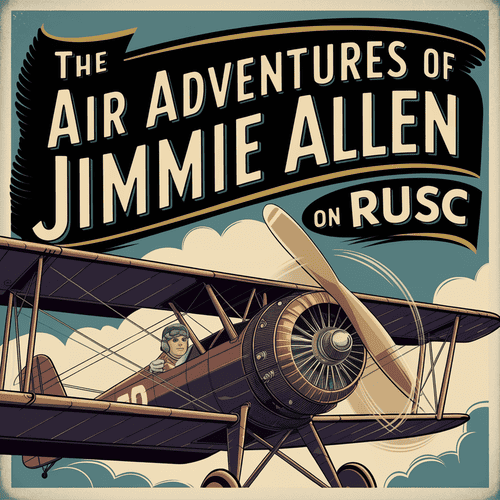
Back in Kansas City after the war, Storck rejoined WDAF as a newscaster, then shifted into public-facing roles beyond journalism. He managed attorney Jerome Walsh’s congressional campaign; served as publicity director at T. R. Finn & Associates; worked with the Consumers Cooperative Association (assistant director of education and organization, 1947–1949); and became public relations director and assistant manager of the North Kansas City Development Company (1949–1950). Alongside these posts, he acted semi-professionally in local radio, television, and civic theater, including turns on the adventure series The Air Adventures of Jimmie Allen. Personal tragedy marked 1950, when his first wife, Barbara Marsh, died of bulbar polio. He honored her memory by establishing the Barbara Storck Memorial award for poetry at the University of Kansas City, reflecting his lasting commitment to community culture. In 1951, Storck joined WDAF-TV (Channel 4)—Kansas City’s first television station—and became the region’s first television weather presenter. He played a pivotal on-air role during the Great Flood of 1951, bringing calm, authoritative coverage to a regional crisis. Despite his popularity, he left WDAF-TV in 1953 after a labor dispute.
Documentaries, Collaborations, and Political Filmmaking
Through the 1950s, Storck worked between Kansas City and St. Louis, producing and narrating documentaries while acting in educational and industrial films for the Calvin Company and Centron Corporation. He collaborated with Robert Altman and Herk Harvey, sharpening a narrative style that combined journalistic precision with accessible storytelling. He became general manager of KETC (St. Louis) in 1954, anchoring his public media leadership. From 1955 to 1966, Storck partnered with Charles Guggenheim as a director and narrator on documentary and commercial films, including several award-winning works on St. Louis history. He married longtime friend Jacqueline Field in 1956 and moved to St. Louis in 1960, consolidating his professional base. When Guggenheim moved operations to Washington, D.C., in 1966, Storck founded Shelby Storck & Associates, Inc. in St. Louis. He became especially known for half-hour campaign biographies, often guided by media consultant Joe Napolitan, crafting persuasive films for Milton Shapp, Winthrop Rockefeller, and Mike Gravel. In 1968, Storck wrote, produced, and directed What Manner of Man, a promotional documentary for Hubert Humphrey that proved hugely instrumental in Humphrey’s late surge in the polls. As an actor, Storck also appeared in the features The Delinquents and The Cool and the Crazy (1958), playing a hard-nosed, wise-to-the-world detective; his wife Jackie made a cameo in the latter.
Conclusion: A Voice That Bridged News, Drama, and Persuasion
In declining health with diagnosed heart disease, Shelby Storck died in his sleep in April 1969 at home in St. Louis, while his wife was en route to Taiwan; funeral arrangements were delayed for her return. He was survived by three children—Shelby Randall Storck (1943–1987), Phillip Alan Storck (b. 1944), and Gael Winslow Storck (b. 1950)—and a stepdaughter, Kathy Field (b. 1948). Storck’s legacy centers on the political films of the 1960s, especially What Manner of Man, and on his defining detective turn in The Cool and the Crazy. Institutional tributes endure: the Shelby Storck Award for Excellence in Undergraduate Teaching at UMKC and the Storck Awards for Notable Achievement in the Political Advertising Arts (established by the Washington Post in 1980). Preservation efforts keep his on-camera craft in circulation. Educational and industrial films featuring Storck, including What About Drinking? (1954) and the award-winning, groundbreaking The Innocent Party (1959), can be viewed via archival collections curated by Rick Prelinger—a fitting afterlife for a communicator whose voice helped guide the Midwest through news, instruction, and persuasion.
Works and Appearances
Radio
- WDAF (Kansas City Star affiliate), 1939–1942
- The Air Adventures of Jimmie Allen
Television
- WDAF-TV (Channel 4), 1951–1953
- KETC (St. Louis), 1954
Cinema: Feature Films
- The Delinquents
- The Cool and the Crazy, 1958
Cinema: Documentaries and Industrial/Educational Films
- Calvin Company (Kansas City), 1950s
- Centron Corporation (Lawrence, Kansas), 1950s
- What About Drinking?, 1954
- The Magic Bond (Part 2), 1956
- Coffee Break, 1958
- Promotion Bypass, 1958
Political Media
- Campaign biographies (under media consultant Joe Napolitan), 1960s
Theater
- Kansas City civic theater, late 1940s–1950s
Books/Publications
- University of Kansas City campus newspaper, mid-1930s
Other Media and Professional Activity
- Shelby Storck & Associates, Inc. (St. Louis), 1966–1969