Sammy Kaye
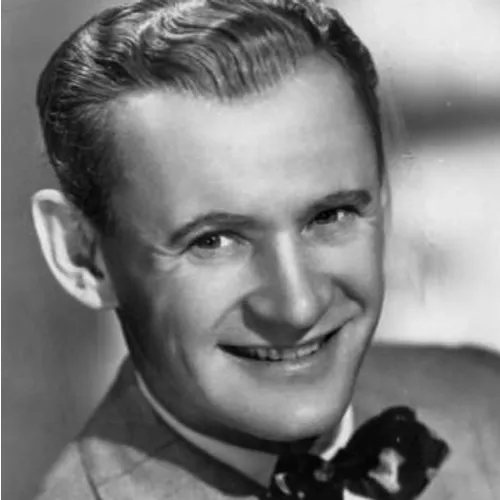
In the golden age of big-band music, Sammy Kaye was a master of charm, melody, and audience connection. With his trademark “sweet” style and a flair for showmanship, he became one of America’s most beloved bandleaders — not just on the dance floor, but on radio and television as well.
Early Life and Musical Beginnings
Sammy Kaye was born Samuel Zarnocay Jr. on March 13, 1910, in Lakewood, Ohio. He grew up playing clarinet and saxophone, instruments that would later anchor his orchestra’s sound, though he rarely featured himself as a soloist. He graduated from Rocky River High School and went on to study civil engineering at Ohio University — but even during his college years, his musical ambitions were already taking shape. He formed a student band, which laid the foundation for his future career. After finishing his degree, rather than pursuing engineering, Kaye stayed in music. In the mid-1930s, while playing at Cleveland’s Cabin Club, he developed a smooth, danceable musical style that came to define his orchestra. He also crafted a memorable slogan — “Swing and Sway with Sammy Kaye” — which soon became his calling card.
Rise to Radio and Popularity
Sammy Kaye rose to national prominence largely through radio. He understood the power of broadcasting early on and tailored his music for radio audiences. His orchestra became widely known for a participatory gimmick: “So You Want to Lead a Band?” In this show, audience members were invited on stage to conduct his orchestra — sometimes winning a baton, often winning applause. This interactive concept became a long-running staple of both his radio and live performances. He also hosted a soothing radio program called Sunday Serenade, where his band played gentle, melodic arrangements. On this show, he sometimes read poetry sent in by listeners, blending music and verse in a way that made the program feel warm and personal. During World War II, Kaye co-wrote the patriotic tune “Remember Pearl Harbor”, which struck a deep chord with listeners at the time. His orchestra’s style — relaxed, melodic, and accessible — offered a comforting counterpoint to more frenetic swing bands.
Recording Success and Signature Songs
Kaye’s recordings were consistently popular. He made records for major labels throughout his career, such as Vocalion, RCA Victor, Columbia, Bell, and Decca. Among his biggest hits were “Swing and Sway”, which inspired his slogan, “Blueberry Hill”, “Daddy”, and “Harbor Lights” — songs that endeared him to dancers and radio listeners alike. His band’s “sweet” sound—characterized by smooth arrangements and heartfelt melodies—was not always embraced by critics, some of whom called it too restrained. But audiences loved it: his music was perfect for ballroom dancing and radio listening, and it helped him maintain a high profile even as musical tastes evolved.
Television and Later Career
In the 1950s, Kaye successfully transitioned to television. He hosted several shows, including The Sammy Kaye Show (on both CBS and NBC), So You Want to Lead a Band (on ABC), and Sammy Kaye’s Music from Manhattan. These programs showcased not just his orchestra but his affable personality and knack for involving the audience, maintaining that sense of connection he’d built on radio. He also composed a number of songs throughout his career, such as “Until Tomorrow”, “Hawaiian Sunset”, and “Tell Me You Love Me.” While many of his contemporaries disbanded after the peak of the big-band era, Kaye persisted — continuing to tour and record for decades, even adapting to changing musical trends.
Personal Life and Legacy
Sammy Kaye married Ruth Knox Elden in 1940; they later divorced. He was known not only as a bandleader but also as a savvy businessman, creating publishing ventures and branding his orchestra very effectively. He died of cancer on June 2, 1987, in Ridgewood, New Jersey, at the age of 77. His influence endured after his death. He was inducted posthumously into the Big Band and Jazz Hall of Fame, and his contributions to popular music and broadcasting are still celebrated by fans of swing and big-band music. His “swing and sway” legacy lives on in his recordings, in archive radio shows, and in memories of a gentler, dance-filled era.
Works and Appearances
Radio
- So You Want to Lead a Band
- Sunday Serenade
Television
- The Sammy Kaye Show (early 1950s)
- So You Want to Lead a Band (1954–55)
- Sammy Kaye’s Music from Manhattan
Compositions / Songs
- “Swing and Sway”
- “Remember Pearl Harbor”
- “Daddy” — chart-topping song
- “Blueberry Hill”
- “Harbor Lights”
- “Until Tomorrow”
- “Hawaiian Sunset”
- “Tell Me You Love Me”