Ruth Ford
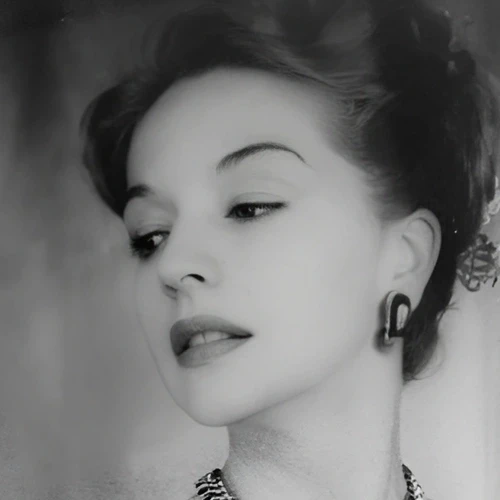
In the landscape of American broadcasting, Ruth Ford emerged as a strikingly versatile actress whose contributions to radio complemented her later work on stage and screen. While Ford is often remembered for her enigmatic presence in film and theater, her early radio performances revealed a deft ability to convey nuance and emotion solely through voice, laying the groundwork for a career that would span multiple media.
Early Life and Background
Ruth Ford was born on January 7, 1911, in Philadelphia, Pennsylvania. Growing up in a family that encouraged artistic pursuits, she developed an early affinity for performance. Details of her childhood indicate exposure to literature, theater, and the arts, which nurtured her expressive talents. Ford's formative years laid the foundation for her remarkable versatility, which would later distinguish her among radio and stage performers of her generation. She pursued acting with a dedication that brought her to New York City, where she honed her craft on stage and began building connections that would lead to opportunities in emerging media such as radio. Ford's early exposure to dramatic literature and her stage experience became critical in shaping the vocal precision required for radio performance.
Entry Into Radio
Ford's foray into radio coincided with the medium's golden age. She became associated with Orson Welles’s Mercury Theatre, a prestigious ensemble that sought to innovate and elevate radio drama. Joining The Mercury Theatre on the Air in 1938, Ford took part in several broadcasts that showcased her capacity for dramatic interpretation and vocal clarity. Her performances helped establish her reputation as an actress capable of bringing depth and complexity to her characters, even without visual cues. The Mercury Theatre was known for its experimental approach to radio, blending literary adaptations with innovative sound techniques. Ford’s involvement allowed her to work alongside future stars and gain exposure to audiences nationwide, offering a platform that few young actresses of the time could access. Her radio work also sharpened her ability to adapt quickly, a skill that would serve her throughout her diverse career.
Notable Radio Shows and Contributions
While her radio career was brief compared to her stage and film work, Ford made notable contributions that reflected her artistic sensibilities. Her work on The Mercury Theatre on the Air included roles in adaptations of literary works and dramatic sketches, demonstrating her capacity to inhabit complex characters. These performances emphasized subtleties in tone, pacing, and diction—hallmarks of the Mercury ensemble's style. In addition to acting, Ford participated in discussions and interviews about the burgeoning medium, revealing her intellectual engagement with radio as an art form. She recognized its potential to bring theater into American homes and contributed to the elevation of radio drama during a formative period in broadcasting history. Her work reflected a balance of technical skill and emotional authenticity, which distinguished her among contemporaries.
Transition to Other Media
Following her early successes in radio, Ford transitioned to film and stage, where she became known for her distinctive beauty, presence, and versatility. In the 1940s, she moved to Hollywood and appeared in supporting roles that drew on the experience and confidence she had cultivated in radio. Although her radio work was not extensive, it served as a proving ground, allowing her to refine skills in vocal expression, timing, and character development that translated effectively to screen and stage. Her career in theater remained significant, with performances that highlighted her range and adaptability. The early radio experience reinforced her professionalism and ability to engage audiences through voice, contributing to the sophistication she brought to later roles in other media.
Legacy and Influence
Ruth Ford’s legacy lies in her contributions to early radio drama and her embodiment of the seamless transition between stage, screen, and audio performance. Her work with the Mercury Theatre on the Air represents a key moment in broadcasting history, illustrating how emerging media could be both experimental and profoundly expressive. Ford’s artistry in radio helped set standards for vocal performance and interpretive nuance, influencing contemporaries and successors alike. Though her radio career was concentrated in the late 1930s, it remains a noteworthy part of her professional journey. Ford exemplified the adaptability required of performers during radio’s golden age, and her achievements continue to be studied by historians and enthusiasts of American broadcasting and theater.
Works and Appearances
Radio
- The Mercury Theatre on the Air (1938)
Stage
- Early New York theater work (1930s)
Film
- Hollywood appearances (1940s onward)