Ralph Richardson
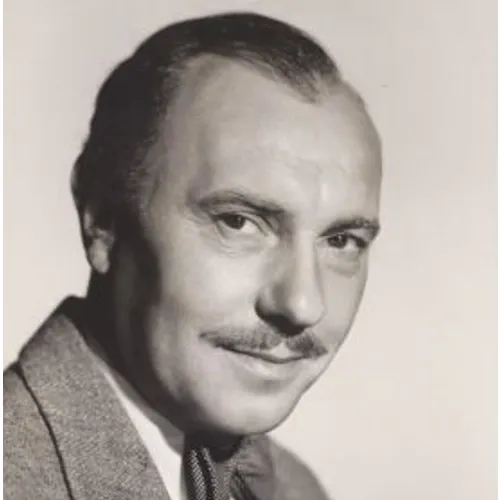
Sir Ralph Richardson was a towering figure in 20th-century British theater, renowned for his extraordinary acting prowess and unique, eccentric approach to performance. Though primarily known for his stage and film work, his contributions to radio were equally significant and fascinating.
Early Life and Theatrical Awakening
Ralph Richardson's journey to acting was anything but conventional. In 1919, at just sixteen years old, he worked as an office boy for an insurance company, earning ten shillings a week. The mundane office life did not suit his creative spirit, and he frequently made mistakes and engaged in pranks that alarmed his superiors . A transformative moment came when his paternal grandmother left him £500, which he used to explore his artistic potential. After briefly considering careers in pharmacy and journalism, Richardson's life changed dramatically when he saw a touring production that inspired him to become an actor .
Entry into Professional Performance
Determined to learn acting, Richardson paid a local theatrical manager, Frank R. Growcott, ten shillings a week to teach him the craft. He made his stage debut in December 1920 with the St Nicholas Players, performing in various adaptations and gradually gaining more substantial roles . His professional acting career began in earnest in August 1921 when he joined Doran's touring company, performing Shakespeare roles like Lorenzo, Banquo, and Mark Antony . These early years were crucial in developing his distinctive performance style.
Radio and Broadcasting Career
While Richardson was primarily celebrated for his stage and film work, his radio contributions were noteworthy. In 1964, he lent his distinctive voice to a significant BBC documentary series, demonstrating his versatility as a performer . Richardson's radio work often complemented his stage performances. For instance, he recreated his stage role of an amnesiac bank clerk from The Astonished Heart in a radio broadcast, showcasing his ability to translate complex characters across different media . His last radio broadcast in 1982 was a documentary about a performer he had watched before the First World War, reflecting his deep connection to theatrical history .
Legacy and Influence
Richardson was part of the legendary trinity of British actors, alongside John Gielgud and Laurence Olivier, who dominated the theatrical landscape for much of the 20th century. His performances were often described as poetic and magical, characterized by an eccentric and detached approach to acting . Throughout his career, he received numerous nominations and awards, including two BAFTA nominations, highlighting his significant contribution to British performing arts .
Conclusion
Sir Ralph Richardson's career was a testament to his extraordinary talent, versatility, and unique approach to performance. From stage to screen, and including his radio work, he remained a transformative figure in British entertainment, remembered not just for his roles, but for his distinctive artistic vision.
Works and Appearances
Radio
- BBC Documentary Series (Voice Role, 1964)
- The Astonished Heart (Radio Broadcast, Year Unspecified)
- Documentary Programme about Pre-WWI Performance (1982)
Stage
- Numerous Shakespeare productions
- The School for Scandal (Sir Peter Teazle, 1962)
- Inner Voices (Don Alberto, 1983 - Final Stage Role)
Film
- The Heiress (1949)
- Richard III (1955)
- Time Bandits (Supreme Being, 1981)
Television
- Blandings Castle Stories (1967)
- No Man's Land (Studio Recording, 1978)
- Early Days (Studio Recording, 1982)