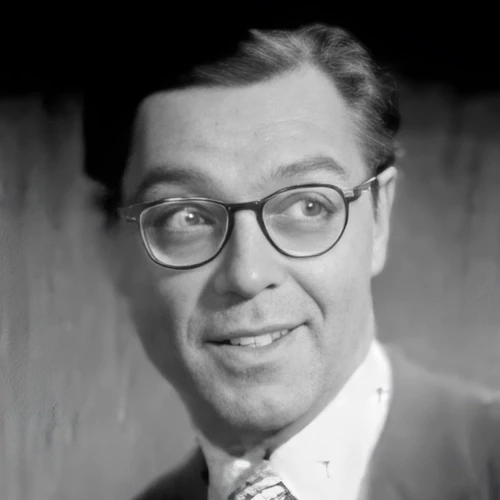
Philip Terry
In the golden age of Hollywood and radio, Phillip Terry emerged as a versatile performer whose career spanned multiple entertainment mediums. Born Frederick Henry Kormann in San Francisco, California, Terry would become a notable actor whose journey through entertainment would include significant contributions to radio broadcasting and film.
Early Life and Theatrical Foundations
Phillip Terry was born on March 7, 1909, in San Francisco to Frederick Andrew Kormann and Ida Ruth Voll. His early education was unconventional, spanning schools in the oil regions of Texas and Oklahoma. He attended Iona High School in New York and Sacred Heart College in San Francisco, laying the groundwork for his future artistic pursuits. After his initial education, Terry studied at the Royal Academy and spent four years touring British provinces, performing in theatrical productions. This early stage experience would prove crucial in developing his performance skills and versatility.
Entry into Radio and Broadcasting
Terry's transition into radio was marked by his work in broadcast performances, where he specialized in Shakespearean roles. His talent caught the attention of a talent scout during one of his radio broadcasts in 1937, which led to his first significant break in entertainment. During this period, Terry honed his craft by performing in numerous radio plays, demonstrating his ability to bring characters to life through voice alone. His Shakespearean background likely contributed to his ability to create nuanced and compelling audio performances.
Hollywood and Cinematic Career
While radio was an important part of his early career, Terry quickly transitioned into film. He signed with Paramount Pictures and appeared in numerous movies throughout the late 1930s and 1940s. Despite many early roles being small and uncredited, he gradually gained more substantial parts. Notably, Terry was classified as "4F" during World War II, unfit for military service due to defective vision. This classification allowed him to continue his entertainment career while many of his contemporaries were serving in the armed forces.
Personal Life and Relationships
Terry's personal life was as dynamic as his professional career. He was married three times, most famously to film star Joan Crawford from 1942 to 1946. During their marriage, Crawford adopted a child and named him Phillip Terry, Jr., who was later renamed Christopher Crawford after their divorce.
Legacy and Later Years
Even as Hollywood changed, Terry never completely abandoned acting. Throughout the 1950s, 1960s, and early 1970s, he continued to take occasional movie roles and made guest appearances on television shows like Perry Mason. Terry passed away on February 23, 1993, in Santa Barbara, California, leaving behind a legacy of performances across radio, stage, and screen.
Works and Appearances
Radio
- Various Shakespearean radio plays (1930s)
- Multiple broadcast performances
Film
- The Last Gangster (1937) - Reporter (Uncredited)
- Bataan (1943) - Matthew Hardy
- The Lost Weekend (1945) - Wick Birnam
- To Each His Own (1946) - Alex Piersen
- The Navy vs. the Night Monsters (1966) - Base Doctor
Television
- Multiple guest appearances on Perry Mason
- Various episodic roles in 1950s and 1960s television shows
Phillip Terry's career exemplified the versatility required of performers in mid-20th century entertainment, seamlessly moving between radio, theater, and film with remarkable adaptability.
