Phil Silvers
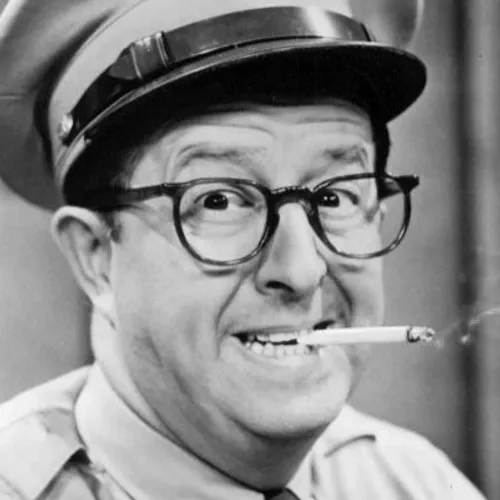
An American entertainer and comedy actor, known as "The King of Chutzpah." He is best known for starring in The Phil Silvers Show, a 1950s sitcom set on a U.S. Army post in which he played Sergeant Bilko.
Phil Silvers was a legendary entertainer whose dynamic comedic talents transcended multiple entertainment mediums, with radio serving as a crucial launching pad for his remarkable career. Born Phillip Silver on May 11, 1911, in New York City, Silvers would become one of the most influential comedic performers of the mid-20th century, earning the moniker "The King of Comedy" through his extraordinary timing, quick wit, and unparalleled character work.
Early Beginnings and Radio Roots
Silvers' journey into entertainment began remarkably early. As the eighth and youngest child of Russian Jewish immigrants, he discovered his performance skills by age 11, singing in theaters during movie reel breakdowns. This unconventional start demonstrated his natural ability to entertain and capture an audience's attention. By age 13, he was already working as a singer in the Vitaphone Revue, showcasing his precocious talent. His radio career quickly took shape, with appearances on numerous popular programs. The Command Performance series featured Silvers multiple times, including broadcasts on June 23, 1942, and September 29, 1947. He was also a regular on prestigious radio shows like The Kraft Music Hall and The Dinah Shore Program, gradually building his reputation as a versatile comedic performer.
Developing a Unique Comedic Style
What set Silvers apart was his distinctive approach to comedy. Unlike many of his contemporaries, he was not a traditional stand-up comedian but a character-driven comic actor. His performances were characterized by rapid-fire dialogue, impeccable timing, and the ability to create memorable, nuanced characters that resonated with audiences. Silvers' radio work was marked by his ability to adapt quickly and entertain diverse audiences. He appeared on various radio programs, demonstrating remarkable versatility. His performances on shows like The Phil Silvers Show on NBC and ABC radio between 1946 and 1947 helped establish him as a rising star in the entertainment world.
Transition to Television and Film
While radio was crucial to his early career, Silvers truly became a household name with television. His breakthrough came with The Phil Silvers Show, where he portrayed Sergeant Ernest G. Bilko, a character that would define his comedic legacy. The show, which ran from 1955 to 1959, showcased his exceptional talent for portraying a fast-talking, scheming military character. His success on television didn't diminish his radio credentials but instead amplified them. Silvers continued to be celebrated for his comedic prowess, winning two Primetime Emmy Awards for his television work and maintaining the quick-witted style he had developed during his radio years.
Legacy and Lasting Impact
Phil Silvers' influence extended far beyond his own performances. He inspired countless comedians and became a benchmark for character comedy. In a 2005 poll of comedy professionals, he was ranked #42 among the top 50 comedy acts of all time. Voice actors like Daws Butler even modeled cartoon characters after Silvers' distinctive comedic style. His memoir, This Laugh Is On Me, provides insight into his remarkable journey. Despite personal challenges, including compulsive gambling and health issues, Silvers continued entertaining audiences until his final years. On November 1, 1985, he passed away in Los Angeles, leaving behind a comedy legacy that continues to inspire performers today.
Works and Appearances
Radio
- Command Performance (1942, 1947)
- The Kraft Music Hall (1943-1944)
- The Dinah Shore Program (1943)
- The Phil Silvers Show (NBC, 1946; ABC, 1947)
Television
- The Phil Silvers Show (1955-1959)
- The New Phil Silvers Show (1963-1964)
- Gilligan's Island (1966)
- The Beverly Hillbillies (1967-1970)
Film
- It's a Mad, Mad, Mad, Mad World (1963)
- A Funny Thing Happened on the Way to the Forum (1966)
- Follow That Camel (1967)
Theater
- High Button Shoes (1947)
- Top Banana (1951)
- Do Re Mi (1960)
- A Funny Thing Happened on the Way to the Forum (1972)