Paul Rhymer
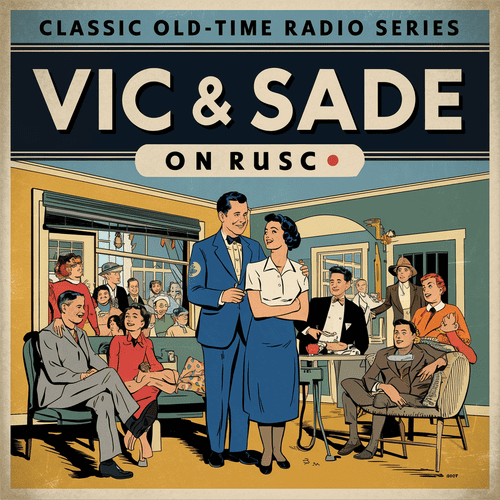
In the golden age of radio comedy, few writers captured the essence of everyday American life as brilliantly as Paul Mills Rhymer. With his groundbreaking series Vic and Sade, Rhymer revolutionized radio comedy, creating an intimate, slice-of-life narrative that resonated with millions of listeners across the United States.
Early Life and Midwestern Roots
Born on November 21, 1905, Paul Rhymer emerged from the heartland of America with a keen eye for observational humor. Growing up in the mid-1920s, his early life was marked by financial challenges. After his father's death, Rhymer was forced to drop out of college to support his mother, taking on various jobs that would later inform his unique comedic sensibilities. His professional journey was anything but straightforward. Working as a cabdriver and then a reporter for a local Bloomington newspaper, Rhymer's creativity and mischievous spirit were already evident. He was even fired from his reporting job after the editor discovered he had been fabricating interviews with non-existent people – a hint of the imaginative storytelling that would define his later career.
The Birth of Vic and Sade
In 1929, Rhymer moved to Chicago and joined NBC Radio's continuity department, initially writing station breaks and introductions for dance band broadcasts. However, his true calling emerged on June 29, 1932, when he launched Vic and Sade, a radio series that would become his magnum opus. Vic and Sade was revolutionary in its approach to radio comedy. Unlike the broad, vaudevillian style prevalent at the time, Rhymer created an intimate portrait of small-town American life, focusing on the mundane yet hilarious interactions of an ordinary family. The show's popularity was extraordinary – by 1942, it boasted a listening audience of 7,000,000 and was voted the number one daytime radio series.
Prolific Writing and Artistic Range
Between 1932 and 1946, Rhymer demonstrated remarkable productivity, writing over 3,500 episodes of Vic and Sade. His talent extended beyond radio, as he also wrote book reviews and freelance magazine articles. In 1952, he even scripted a five-minute NBC-TV series called The Public Life of Cliff Norton, showcasing his versatility as a writer.
Legacy and Recognition
Rhymer's contributions to American comedy were significant. He is widely regarded as one of the great humorists of the 20th century, with his unique ability to find extraordinary humor in ordinary life. His hometown of Bloomington recognized his talent by celebrating Paul Rhymer Day on April 28, 1938. The impact of Vic and Sade extended beyond radio. The show's characters made television appearances in NBC's Colgate Theater in July 1949 and returned for a two-month run on WNBQ in Chicago in 1957, demonstrating the enduring appeal of Rhymer's comedic vision.
Final Years and Lasting Impact
Paul Rhymer passed away on October 26, 1964, leaving behind a remarkable legacy in American entertainment. His innovative approach to comedy influenced generations of writers and performers, proving that humor could be found in the most unexpected places.
Works and Appearances
Radio
- Vic and Sade (1932-1946) - Creator, Writer
- Wrote over 3,500 episodes
- Voted #1 Daytime Radio Series in 1942
Television
- The Public Life of Cliff Norton (1952) - Writer
- Colgate Theater (July 1949) - Character Adaptation
- WNBQ Chicago Show (1957) - Character Adaptation
Writing
- Freelance Magazine Articles
- Book Reviews
Paul Rhymer may have started as a small-town reporter with a penchant for fictional interviews, but he became a pivotal figure in American radio comedy, transforming the medium with his unique, observational humor.