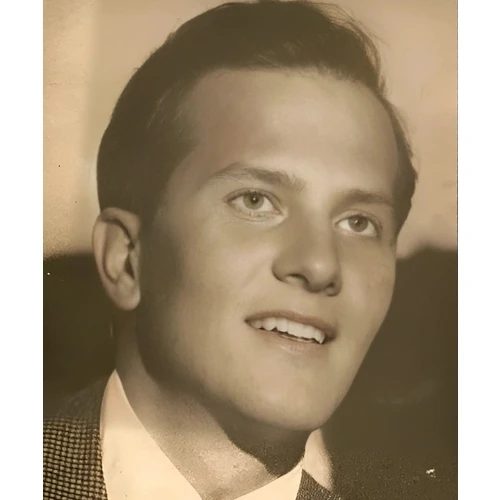
Pat Boone
An American singer, actor, and writer. He was a successful pop singer in the United States during the 1950s and early 1960s. His hit songs were cover versions of black R&B artists' hit songs, when parts of the country were racially segregated and black musical artists were not played on white radio stations.
Pat Boone emerged as a quintessential American entertainer who transcended the boundaries of music, radio, and television during the 1950s and 1960s. With his clean-cut image and versatile talents, he became a cultural icon who represented a more conservative alternative to the emerging rock and roll scene.
Early Life and Musical Beginnings
Patrick Charles Eugene Boone was born on June 1, 1934, in Jacksonville, Florida, and grew up in Nashville, Tennessee. From an early age, Boone displayed musical talent, beginning his performance career by singing at Sunday concerts in Nashville's Centennial Park. His musical journey began in earnest when he started recording for Republic Records in April 1953, and subsequently signed with Dot Records in 1955. Boone's early career was marked by his unique approach to popular music. He became known for covering rhythm and blues songs originally performed by Black artists, adapting them for mainstream white audiences. His first significant hit was a cover of Fats Domino's "Ain't That a Shame" in 1955, which set the tone for his early musical style.
Rise to National Prominence
By 1956, Boone had become a national sensation. He scored a number-one single with his cover of "I Almost Lost My Mind" and was rapidly becoming a cultural phenomenon. A 1957 opinion poll revealed his immense popularity, with high school students favoring him nearly two-to-one over other contemporary musicians. Boone cultivated a wholesome, advertiser-friendly image that distinguished him from the emerging rock and roll scene. He secured long-term endorsement deals with major brands, including Chevrolet, for whom he sang the iconic jingle "See the USA in your Chevrolet". His television presence expanded with the half-hour variety series he hosted from 1957 to 1960, which featured numerous celebrity guests.
Diversification of Talents
Beyond music, Boone proved to be a multifaceted entertainer. He authored the bestselling advice book 'Twixt Twelve and Twenty in 1958, demonstrating his appeal to younger audiences. His career expanded into film, with notable appearances in movies like April Love (1957) and State Fair (1962). Boone was also deeply committed to his Christian faith, which significantly influenced his career choices. He consistently declined roles and songs that he felt compromised his beliefs, maintaining his reputation as a family-friendly performer.
Later Career and Legacy
In the 1970s, Boone transitioned into gospel music and continued to evolve as an entertainer. He founded his own record label and continued to perform and speak as a motivational figure. His influence extended beyond entertainment, as he became known for his conservative political commentary and Christian activism. Despite changing musical landscapes, Boone remained relevant. In 2006, he released We Are Family: R&B Classics, covering 11 R&B hits, demonstrating his continued musical adaptability. In 2024, at the age of 90, he even released a single titled "Where Did America Go?"
Works and Appearances
Radio
- The Pat Boone Hour (ongoing) - Weekly radio show on 50s Gold channel
Television
- The Pat Boone Chevy Showroom (1957-1960) - Host
- Various guest appearances and documentary features
Film
- April Love (1957)
- State Fair (1962)
- The Mulligan (2022)
Music
- Over 38 Top 40 hits
- Numerous studio albums across pop, gospel, and country genres
- Notable singles: "Ain't That a Shame", "Love Letters in the Sand"
Books
- 'Twixt Twelve and Twenty (1958)
- Culture-Wise Family (2007)
- Multiple self-help and motivational books
Pat Boone's career represents a unique chapter in mid-20th century American entertainment, bridging musical genres and maintaining a consistent, principled public persona through decades of cultural change.